




Polymarket question
Will the U.S. invade Iran before 2027?
YesNo
Escalating Tensions and Humanitarian Concerns Shape U.S. Military Strategy Towards Iran
Recent military actions and geopolitical dynamics raise questions about a potential U.S. invasion of Iran before 2027, highlighting humanitarian impacts and regional instability.
WHAT CHANGED
Recent materials reveal a troubling trend of U.S. military actions targeting civilian infrastructure in Iran, raising humanitarian concerns and complicating the likelihood of a direct invasion. The interplay of regional conflicts, particularly between Iran and Israel, further complicates U.S. decision-making.
SITUATION
The U.S. has engaged in military strikes against Iranian infrastructure, notably damaging water reservoirs, which has led to immediate humanitarian crises affecting tens of thousands. This strategy raises significant concerns about the long-term impacts on civilian populations and the environment. Concurrently, escalating military tensions between Iran and Israel have created a volatile regional environment, prompting discussions about U.S. military intervention. The complexities of U.S.-Israel relations and ongoing diplomatic efforts may limit the likelihood of direct military involvement, despite a proposed record military budget that indicates readiness for operations. Additionally, the perception of American reliability in negotiations with Iran is low, complicating any potential military or diplomatic actions.
WATCHLIST
- Monitor developments in U.S.-Iran negotiations and regional military actions.
CONCLUSION
The situation remains fluid, with significant humanitarian concerns and geopolitical complexities shaping the likelihood of a U.S. invasion of Iran before 2027. Ongoing monitoring of regional dynamics and U.S. military strategies will be crucial.
Art Argentum scoring
#1Yes
60.00%moderate
#2No
40.00%strong
Source-material body
6 indexed items
SOURCE

MATERIAL SUMMARY
U.S. military strikes have damaged drinking water reservoirs in southern Iran, affecting water supply for tens of thousands. The attacks are part of a broader trend of targeting civilian infrastructure in conflict, raising concerns about long-term impacts on human health and ecosystems.
The strikes have led to immediate water shortages in 10 villages and threaten long-term environmental consequences, including pollution from damaged oil and petrochemical facilities. The situation underscores the vulnerability of civilian populations in conflict zones and the transgenerational effects of such military actions.
GENERAL ANALYSIS
Argument
The normalization of targeting civil infrastructure in warfare raises significant humanitarian concerns. Attacking essential resources like water reservoirs not only impacts immediate civilian access but also has long-term consequences for health and environmental stability. This strategy may lead to severe repercussions for vulnerable communities, suggesting that military actions could exacerbate existing humanitarian crises rather than resolve them.
Quotes
00:00-05:00
So you want to take out a government, your different strategies are insufficient. And at some points, you start attacking infrastructure and to paralyze your enemy. Who suffers from the consequences of this, the poor community, the vulnerable communities.
MECHANISM
Mechanism
The normalization of targeting civil infrastructure in warfare raises significant humanitarian concerns, suggesting that military actions could exacerbate existing crises. Attacking essential resources like water reservoirs impacts civilian access and has long-term health and environmental consequences, particularly for vulnerable communities. This strategy may influence public and political sentiment regarding military intervention.
VIDEO INSIGHTS 1
00:00-05:00U.S. military strikes on Iranian infrastructure
U.S. military actions have targeted two concrete water reservoirs in Iran, cutting off water supply to tens of thousands and affecting 10 villages. The strikes exemplify a troubling trend of targeting civilian infrastructure, with long-term implications for health and environmental stability.
U.S. militaryIranian governmentAyatollah KhameneiDonald Trump10 villagestens of thousands of peoplecivilian infrastructure targetingIranian water supply disruptionlong-term environmental impact

MATERIAL SUMMARY
Iran and Israel have escalated their military conflict, with Iran halting attacks on Israel while threatening severe retaliation if aggressions continue. The U.S. has raised concerns over Israeli intelligence operations against American negotiators working on a ceasefire, as Israeli airstrikes have resulted in significant casualties in Lebanon and Gaza.
In Ukraine, a Russian drone strike damaged a nuclear fuel storage facility in Chernobyl, prompting international concern. Meanwhile, U.S. Secretary of Defense Pete Hegseth criticized European immigration policies during a D-Day ceremony, and a federal lawsuit seeks to block a UFC event at the White House, alleging financial conflicts involving President Trump.
GENERAL ANALYSIS
Argument
The recent escalation of military actions between Iran and Israel could influence U.S. military intervention decisions. Iran's threats of 'much more severe and crushing actions' in response to Israeli attacks indicate a volatile regional environment that may compel the U.S. to reassess its strategic posture. However, the complexity of U.S.-Israel relations and ongoing diplomatic efforts may limit the likelihood of direct military involvement.
Quotes
00:00-05:00
Iran said it's halting its attacks on Israel, saying, quote, if the aggressions and acts of mischief continue, including in southern Lebanon, much more severe and crushing actions than before will follow, unquote.
MECHANISM
Mechanism
Escalating military tensions in the Middle East, particularly between Iran and Israel, could influence U.S. military strategies. Iran's threats of severe retaliation in response to Israeli actions suggest a precarious regional stability that may prompt U.S. reassessment of its involvement. However, the intricate dynamics of U.S.-Israel relations and ongoing diplomatic efforts may act as a counterbalance to direct military engagement.
VIDEO INSIGHTS 1
00:00-05:00Iran-Israel military conflict escalation
Iran has launched missile attacks on northern Israel, claiming retaliation for Israeli strikes, while Israel has responded with airstrikes on Iranian targets, including a petrochemical plant. The conflict has resulted in over 3,500 deaths in Lebanon since March, with significant casualties in Gaza as well.
IranIsraelU.S.President TrumpLebanonGaza3,5009501071520U.S.-Iran ceasefire negotiationsIsraeli military operationsMiddle East conflict casualties
00:00-05:00U.S. intelligence concerns
The Pentagon's Defense Intelligence Agency has raised Israel's counter-intelligence threat assessment to critical, amid fears of Israeli espionage on U.S. negotiators involved in ceasefire discussions with Iran.
PentagonDefense Intelligence AgencyIsraelU.S.U.S.-Iran negotiationsIsraeli espionage concerns
VIDEO INSIGHTS 2
05:00-10:00UFC event lawsuit
A federal lawsuit aims to block a UFC event at the White House, alleging it would financially benefit President Trump and UFC President Dana White, violating National Park Service regulations.
UFCPresident TrumpDana White$50,000U.S. federal regulationscommercial events on federal land
10:00-15:00Albania luxury resort controversy
Plans for a luxury resort proposed by Ivanka Trump on an ecologically sensitive area of Albania have sparked protests and warnings from the European Commission regarding environmental regulations, potentially jeopardizing Albania's EU membership bid.
Ivanka TrumpAlbaniaEuropean CommissionEU environmental regulationsAlbania EU membership
MATERIAL SUMMARY
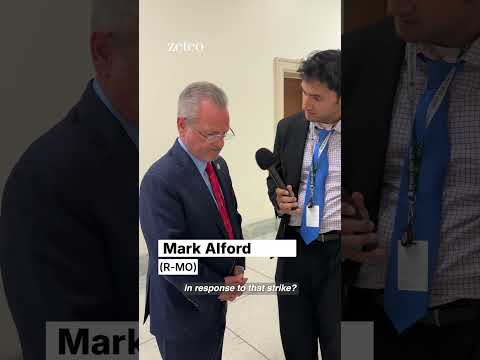
The U.S. airstrike on the Manab School in Iran, which reportedly killed over 150 people including more than 100 schoolgirls, has sparked outrage and calls for accountability. Despite the gravity of the incident, members of Congress have shown a lack of urgency in addressing the consequences of the strike, with many expressing ignorance about the event and its implications.
As the 100-day mark since the strike approaches, there is a notable absence of investigations or inquiries from Congress regarding the U.S. military's actions. While some lawmakers acknowledge the tragedy, there is a prevailing sentiment that business continues as usual, with little political will to confront the ramifications of the attack on civilians.
GENERAL ANALYSIS
Argument
The U.S. military's actions in Iran have raised significant concerns regarding civilian casualties, particularly the reported deaths of over 100 schoolgirls in a recent strike. This incident has prompted questions about the accountability and response from Congress, with many members seemingly unaware of the strike's details or the implications of such actions. The lack of a cohesive response from lawmakers may hinder any potential for a shift in U.S. military strategy in the region.
Quotes
00:00-05:00
It's been 100 days since the US allegedly bombed a girl school in Iran killing more than 150 people including over 100 kids. I want to emphasize, on the first day of the so-called liberating US-Israeli war on Iran, the Trump administration likely killed more than 100 little kids.
MECHANISM
Mechanism
Recent U.S. military actions in Iran, particularly a strike that reportedly resulted in significant civilian casualties, have raised concerns about the potential for further military engagement. The lack of a unified response from Congress regarding these actions may limit the likelihood of a strategic shift in U.S. policy towards Iran. The implications of such military operations could influence public and political sentiment regarding future interventions.
VIDEO INSIGHTS 1
00:00-05:00U.S. military accountability in foreign strikes
The U.S. airstrike on the Manab School in Iran resulted in the deaths of over 100 schoolgirls, raising serious questions about military conduct and accountability. Despite the scale of the tragedy, Congress has not initiated significant inquiries or investigations into the incident, reflecting a troubling indifference to civilian casualties in military operations.
U.S. CongressTrump administrationIran100150U.S. military accountabilitycivilian casualties in conflictCongressional investigations
SOURCE

MATERIAL SUMMARY
Ryan Grim moderates a panel featuring Chris Hedges and Stephen Walt, discussing the implications of the U.S. military presence in the Middle East, particularly in relation to Iran. Walt argues that a diminished American footprint could lead to a more stable region, while Hedges critiques the ideological failures of U.S. foreign policy and its impact on global stability and supply chains.
The conversation reveals concerns about the U.S. decision-making process, particularly under the Trump administration, and the influence of Israeli interests on American military actions. Both speakers emphasize the potential for economic repercussions, including rising energy and food prices, as well as the challenges of exiting a conflict that lacks public support and is driven by flawed ideologies.
GENERAL ANALYSIS
Argument
The U.S. military presence in the Middle East is under scrutiny, with calls for a reduced footprint to potentially stabilize the region. However, the current situation raises doubts about American judgment and competence, particularly among allies who are affected by rising energy and food prices due to the conflict. This skepticism could hinder U.S. decision-making regarding military intervention in Iran.
Quotes
00:00-05:00
the effect of the war in Iran, of course, is even more egregious or even more harmful to many other countries around the world who are facing much higher energy prices, because they depend on that oil more than the United States does, are facing much higher food prices, because fertilizer isn't getting out of the Persian Gulf. And what I think this is really doing is raising real doubts about American judgment and competence.
MECHANISM
Mechanism
Skepticism regarding U.S. military judgment and competence is growing, particularly among allies affected by rising energy and food prices due to ongoing conflicts. This scrutiny may complicate U.S. decision-making on potential military interventions, including in Iran, as the implications of such actions resonate beyond immediate geopolitical concerns.
VIDEO INSIGHTS 1
00:00-05:00U.S. military footprint in the Middle East
Walt suggests that a reduced U.S. military presence in the Middle East could lead to greater regional stability, contrasting with the destabilizing effects of past interventions, such as the Iraq War in 2003. He notes that current conflicts are exacerbating global energy and food prices, impacting countries reliant on oil and fertilizer from the region.
United StatesIranISISal Qaeda30-40 years2003U.S. military footprint reductionMiddle East stabilityglobal energy prices
05:00-10:00Impact of U.S. foreign policy on global supply chains
Hedges highlights the degradation of U.S. diplomatic capabilities and the influence of war industry interests on foreign policy decisions. He warns that ongoing conflicts, particularly with Iran, could disrupt global supply chains, leading to increased prices for essential goods like diesel and fertilizer, and potentially driving the U.S. economy towards recession.
Elliot AbramsRobert KaganDonald Trump20 years10 billion15-20 billionU.S. diplomatic service degradationglobal supply chain disruptioneconomic recession risks
VIDEO INSIGHTS 2
10:00-15:00U.S.-Israel relations and military strategy
Walt discusses the influence of Israeli pressure on U.S. military decisions, particularly regarding Iran. He argues that absent Israeli lobbying, the U.S. may not have engaged in military action, emphasizing the need for the U.S. to recognize its own interests separate from those of Israel to effectively navigate the conflict.
Donald TrumpNetanyahuU.S.-Israel military relationsAmerican foreign policy interests
15:00-20:00Public sentiment towards U.S. military actions
Hedges notes a significant shift in American public sentiment regarding military intervention, with a lack of enthusiasm for the current conflict compared to past wars. This change reflects a broader disillusionment with government narratives and a growing awareness of the consequences of military actions.
Trump administrationAmerican publicpublic sentiment on military interventionU.S. war narratives
VIDEO INSIGHTS 3
20:00-25:00Military industrial complex and effectiveness
The discussion reveals deficiencies in the U.S. military industrial complex, where advanced technology is rendered ineffective by cheaper, asymmetrical warfare tactics employed by adversaries like Iran. This raises questions about the sustainability and strategic effectiveness of U.S. military spending.
IranU.S. military$1 trillionmilitary industrial complex effectivenessasymmetrical warfare
MATERIAL SUMMARY
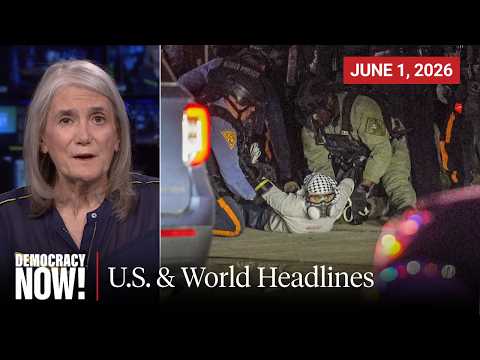
New Jersey law enforcement has established a protest zone outside Delaney Hall, where detainees are on a hunger strike against their conditions. The U.S. military has engaged in strikes against Iranian targets, while tensions escalate in Israel and Lebanon, with significant military actions reported.
The House Armed Services Committee proposed a record $1.15 trillion National Defense Authorization Act, emphasizing U.S.-Israel defense technology cooperation. In Colombia, a pro-Trump candidate leads in the presidential election, promising to continue a hardline approach against crime.
GENERAL ANALYSIS
Argument
The proposed 2027 National Defense Authorization Act includes a record $1.15 trillion for the U.S. military, indicating a significant commitment to military readiness. This financial backing could facilitate various military operations, including potential actions against Iran. However, the focus on technology sharing and co-production with Israel may also suggest a strategic partnership that could influence U.S. military decisions in the region.
Quotes
05:00-10:00
The House Armed Services Committee has unveiled its proposed 2027 National Defense Authorization Act, which would see a record-shattering $1.15 trillion spent on the U.S. military over the next fiscal year. Among the bills many provisions is Section 224 entitled, The United States Israel Defense Technology Cooperation Initiative.
MECHANISM
Mechanism
The proposed 2027 National Defense Authorization Act allocates a record $1.15 trillion for military spending, which could enhance U.S. military capabilities and readiness. This financial commitment may enable various military operations, including potential actions in the Middle East. However, the emphasis on technology cooperation with Israel suggests a strategic partnership that could influence U.S. military decisions in the region, potentially complicating direct actions against Iran.
VIDEO INSIGHTS 1
00:00-05:00New Jersey immigration protests
New Jersey law enforcement has set up a protest zone outside Delaney Hall amid ongoing hunger strikes by detainees. Activists are targeting Citizens Bank for its financing of private prisons linked to ICE operations.
New Jersey law enforcementCitizens BankDelaney Hall11 days3 protesters6 peopleprivate prison financingimmigration detention protests
05:00-10:00U.S.-Israel military cooperation
The proposed 2027 National Defense Authorization Act includes a provision for unprecedented U.S.-Israel defense technology cooperation, covering areas such as AI and cyber warfare.
House Armed Services CommitteeU.S.Israel$1.15 trillionU.S.-Israel defense technology cooperationmilitary spending
VIDEO INSIGHTS 2
05:00-10:00Iran-U.S. tensions
The U.S. military conducted strikes on Iranian radar and drone sites, while Iran retaliated against a U.S. base in Kuwait, indicating escalating tensions despite claims of potential negotiations.
U.S. militaryIranKuwaitIran-U.S. military engagementMiddle East conflict
10:00-15:00Colombian presidential election
In Colombia's presidential election, far-right candidate Abbalardo de la Aspreaia leads with 44% of the vote, promising to build mega-prisons and crack down on crime, setting the stage for a runoff.
Abbalardo de la AspreaiaIván SopéraGustavo Petro44%41%Colombian presidential electioncrime policy

MATERIAL SUMMARY
Tensions in the Strait of Hormuz persist as US-Iran negotiations stall, with President Trump failing to finalize a deal aimed at extending a ceasefire and addressing Iran's nuclear program. Distrust towards the US administration is growing, particularly as public negotiations have not yielded the expected results, and Iran's demands include broader regional peace.
The ongoing conflict is unpopular among Americans, with two-thirds believing the war was unjustified. As the election year approaches, President Trump's focus on legacy and public perception is critical, especially as he faces mounting pressures from both domestic and international fronts.
GENERAL ANALYSIS
Argument
The U.S. administration's public negotiations with Iran are fraught with complications, as the perception of American reliability is low. The Iranian leadership expresses skepticism towards U.S. intentions, stating, 'First of all, this is not just my view. The whole world is saying that he is a crazy stupid person. He does not stand by his word.' This distrust complicates any potential military or diplomatic actions, as the Iranians are unlikely to engage in negotiations that do not align with their security interests, particularly in light of ongoing conflicts in the region.
Quotes
00:00-05:00
First of all, this is not just my view. The whole world is saying that he is a crazy stupid person. He does not stand by his word.
MECHANISM
Mechanism
Distrust between the U.S. and Iran complicates the likelihood of military action. The Iranian leadership's skepticism towards U.S. intentions, highlighted by their assertion of American unreliability, suggests that any potential negotiations or military engagements would face significant hurdles. This skepticism is rooted in ongoing regional conflicts and a broader perception of U.S. foreign policy.
VIDEO INSIGHTS 1
00:00-05:00US-Iran Negotiation Dynamics
Negotiations between the US and Iran are hindered by public posturing and distrust, with Iran seeking a deal that includes regional peace, particularly concerning Lebanon and Israel. The US's initial expectation of a quick Iranian collapse has proven misguided, complicating the negotiation process.
Donald TrumpIranHezbollahMarco Rubio60 daystwo-thirdsUS-Iran nuclear negotiationsMiddle East regional stabilityUS public opinion on war
Loading more...