

CCTV, China Daily and Caixin: Chinese Press Daily Overview
INFO
YOUTUBE2026-08-31cctv

Every Second Counts: Battling in Jilong | CCTV 'Focus Interview' 20260830
STANCE
00:00
05:00
10:00
3 intervals • swipe left
Every Second Counts: Battling in Jilong | CCTV 'Focus Interview' 20260830
A press conference was held in Jilong, Tibet, on August 30 to discuss the aftermath of the August 26 mudslide disaster, which resulted in 16 confirmed deaths and 546 individuals reported missing. Rescue operations are on…
SUMMARY
PART 01
On August 30, a press conference in Jilong, Tibet, addressed the aftermath of the devastating mudslide that occurred on August 26, resulting in 16 confirmed deaths and 546 individuals reported missing. The rapid onset of the disaster, which struck within minutes, left little time for warning or preparation, complicating rescue efforts significantly.
Read more
SUMMARY
PART 02
Rescue operations are ongoing, with over 2,141 personnel and 3,922 pieces of equipment deployed to the affected areas. However, the challenging terrain and severe weather conditions, including heavy rainfall, have severely hampered these efforts. The situation is further complicated by critical infrastructure damage, including destroyed roads and communication lines.
SUMMARY
PART 03
As of now, no survivors have been found, and the search efforts are likened to finding a needle in a haystack due to the vast area affected. The local government has made some progress, clearing 345 meters of the damaged National Route 216, but the overall pace of recovery remains slow.
SUMMARY
PART 04
Helicopters have been utilized to deliver personnel and supplies, although adverse weather has limited their operational capacity. Monitoring efforts are in place, with drones tracking new landslide risks to ensure the safety of rescue teams and the local population.
SUMMARY
PART 05
The disaster has raised questions about the government's preparedness for such natural calamities, particularly regarding timely response and resource allocation. Public scrutiny may increase as the scale of the disaster becomes more apparent, potentially threatening the government's standing.
INFO
YOUTUBE2026-08-31cgtn

The 'Super' El Niño & climate change – RAZOR Conversations: Professor Adam Scaife
STANCE
00:00
05:00
10:00
15:00
20:00
25:00
6 intervals • swipe left
The 'Super' El Niño & climate change – RAZOR Conversations: Professor Adam Scaife
2026 has been marked by unprecedented extreme weather events, indicating a critical phase in the climate crisis affecting ecosystems and communities globally. The frequency of extreme temperature days is rising exponenti…
SUMMARY
PART 01
The year 2026 has been characterized by unprecedented extreme weather events, underscoring a critical phase in the ongoing climate crisis. The frequency of extreme temperature days is rising exponentially, posing serious risks to infrastructure and public health, particularly in Europe where record-breaking heatwaves have been reported.
Read more
SUMMARY
PART 02
Professor Adam Scaife from the UK's Met Office emphasizes that climate change is an undeniable reality, with recent heat waves in Europe demonstrating severe impacts on daily life. The rapid rise in mean temperatures is attributed to complex changes in atmospheric circulation and increased greenhouse gases, rather than solely to reductions in air pollution.
SUMMARY
PART 03
The upcoming Super El Niño is projected to be one of the most intense on record, with significant implications for global weather patterns. This phenomenon, characterized by periodic warming of the Pacific Ocean, is expected to exacerbate existing extreme weather conditions, potentially leading to increased risks of drought and agricultural impacts in various regions.
SUMMARY
PART 04
Historical data indicates that past El Niño events have resulted in substantial casualties and economic losses, highlighting the importance of accurate predictions for preparedness. The United Nations World Food Programme warns that the upcoming Super El Niño could lead to an additional 50 million people facing hunger by the end of next year.
SUMMARY
PART 05
The interconnectedness of atmospheric and oceanic systems is evident, as El Niño disrupts usual trade winds, leading to poor fishing conditions and significant changes in climate patterns. The chaotic nature of El Niño and La Niña events complicates precise predictions, making it crucial for governments and aid agencies to prepare for potential disasters.
INFO
YOUTUBE2026-08-31cgtn
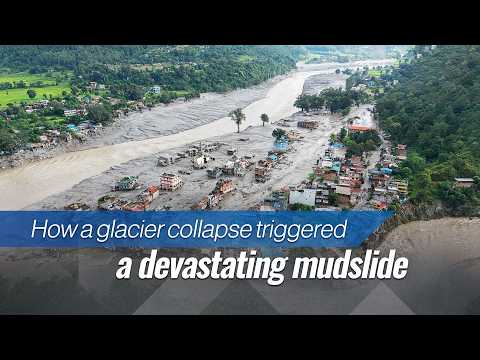
Hot Take: How a glacier collapse triggered a devastating mudslide
STANCE
00:00
1 intervals • swipe left
Hot Take: How a glacier collapse triggered a devastating mudslide
A glacier collapse in the Himalayas initiated a destructive ice rock avalanche that traveled nearly 20 kilometers to the Julem border port, dropping 3,000 to 4,000 meters in just seven minutes. Scientists are investigati…
SUMMARY
PART 01
A recent glacier collapse in the Himalayas has triggered a catastrophic ice rock avalanche, which traveled nearly 20 kilometers to the Julem border port, descending 3,000 to 4,000 meters in a mere seven minutes. This event, originating from an altitude of over 5,200 meters, raises significant concerns regarding the stability of glaciers in the region.
Read more
SUMMARY
PART 02
Scientists are currently investigating the factors contributing to the glacier's instability, including the roles of meltwater, weather conditions, and geological processes. However, it remains too early to definitively link this specific incident to climate change, despite the broader implications of long-term climate trends affecting high mountain regions.
SUMMARY
PART 03
The cascading nature of this disaster exemplifies how one environmental hazard can precipitate another, leading to amplified impacts downstream. As glaciers retreat and slope stability is altered, the risk of such multi-hazard events increases, posing threats to both local communities and geopolitical stability.
SUMMARY
PART 04
The discussion surrounding this incident underscores the interconnectedness of environmental issues and international relations, particularly in sensitive regions like the Himalayas. The potential for future disasters of this nature raises urgent questions about preparedness and response strategies in the face of climate change.
Loading more...