

Middle East Real Estate: Luxury Development and Capital Flows
INFO
YOUTUBE2026-08-29think school
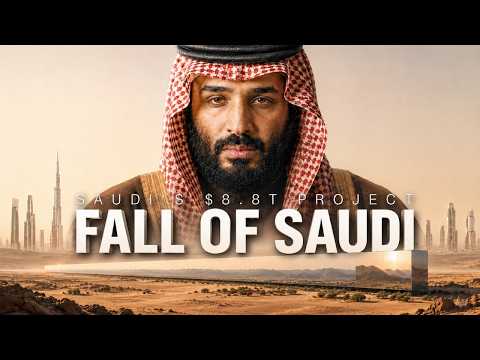
Saudi’s Dream Turned Into a Nightmare | How Billions Were Spent Chasing an Impossible City
STANCE
00:00
05:00
10:00
15:00
4 intervals • swipe left
Saudi’s Dream Turned Into a Nightmare | How Billions Were Spent Chasing an Impossible City
Saudi Arabia's NEOM project, initially projected to cost $8.8 trillion, has seen only 2% of its centerpiece, The Line, built after nine years and $50 billion spent. The project's failure highlights the economic phenomeno…
SUMMARY
PART 01
The NEOM project in Saudi Arabia, initially projected to cost $500 billion, has spiraled to an estimated $8.8 trillion, with only 2% of its centerpiece, The Line, completed after nine years and $50 billion spent. This staggering financial mismanagement highlights the risks associated with overambitious urban development driven by a singular economic focus, particularly in a country heavily reliant on oil revenues.
Read more
SUMMARY
PART 02
The project's ambitious design, featuring a 170-kilometer mirrored city, has been criticized for its unrealistic planning and the unsustainable demand for materials. Internal audits have suggested that financial projections were manipulated to present an overly optimistic view of the project's viability, masking rising costs and inflated revenue estimates.
SUMMARY
PART 03
As oil prices fell below the $90 per barrel threshold necessary to fund commitments, Saudi Arabia faced a budget deficit, which has led to reduced cash flow for NEOM and ultimately the suspension of construction in September 2025. This situation underscores the economic vulnerabilities tied to the kingdom's heavy reliance on oil, which accounts for 55-60% of government revenue.
SUMMARY
PART 04
The NEOM case serves as a cautionary tale about the dangers of conflating grand announcements with actual progress. Countries must recognize that foundational work, such as soil surveys and supply chain logistics, is crucial for project success. Punishing individuals who present bad news can lead to a culture where truth is suppressed, ultimately harming the project's integrity and progress.
SUMMARY
PART 05
Despite having vast financial resources and top-tier consultants, the failure of NEOM illustrates the economic phenomenon known as 'Dutch Disease,' where reliance on a single lucrative sector stifles the development of other industries. The project's collapse raises questions about the kingdom's desperation to realize such an ambitious vision.
INFO
YOUTUBE2026-05-14money macro

Iran's crumbling economy
STANCE
00:00
05:00
10:00
3 intervals • swipe left
Iran's crumbling economy
Iran's military spending has reached approximately $1.3 billion monthly, which is unsustainable given its foreign exchange reserves of about $11 billion. The U.S.
SUMMARY
PART 01
Iran's military spending has reached approximately $1.3 billion monthly, which is unsustainable given its foreign exchange reserves of about $11 billion. The U.S. counter-blockade has significantly harmed Iran's economy, resulting in a sharp depreciation of the Iranian real and rising inflation, with the risk of hyperinflation looming.
Read more
SUMMARY
PART 02
War economies prioritize resource mobilization for military purposes over wealth generation and distribution, contrasting sharply with civilian economies. Historical examples from Russia and Germany show that the sustainability of a war economy depends on resource availability and external economic pressures, such as blockades and air superiority.
SUMMARY
PART 03
Iran's war economy is strained, with U.S. and Israeli actions reportedly destroying around 60% of its drone and missile production capabilities, although many facilities remain hidden underground. Challenges such as damaged refineries and high inflation hinder Iran's potential for a self-sufficient war economy, complicating resource mobilization.
SUMMARY
PART 04
The country's dependence on imports for essential components, like microchips for drones and livestock feed, heightens its economic vulnerabilities, especially under the U.S. blockade, leading to increased food and fuel prices. While Iran has the theoretical resources to sustain its military efforts, poor management and external pressures create a scenario similar to Germany during the World Wars.
SUMMARY
PART 05
Iran is facing severe economic distress, with inflation exceeding 40%, leading to public dissatisfaction and violent suppression of uprisings by the regime. Despite having the resources to support a war effort, Iran's economy is hampered by poor management and a heavy reliance on imports for essential components like microchips and food supplies.
INFO
YOUTUBE2025-11-30hi homes

Finding a Bargain Property on the Costa del Sol! 🇪🇸☀️
STANCE
00:00
1 intervals • swipe left
Finding a Bargain Property on the Costa del Sol! 🇪🇸☀️
High competition in the property market leads to urgency for buyers seeking bargains, impacting their purchasing decisions.
SUMMARY
No final_summary parts found in this file.
Loading more...