New Technology / Transhumanism
Explore transhumanism, human enhancement, bio-digital futures and frontier ideas shaping the debate around advanced technology.
Superintelligence and AI Regulation
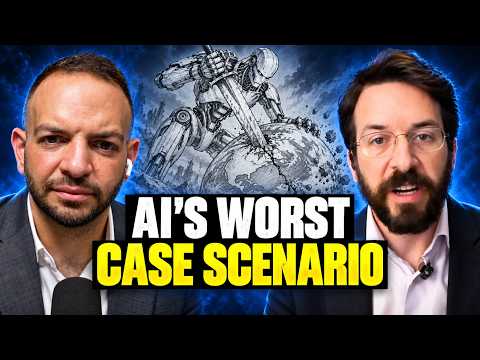
Source material: 3 Billionaires Are (Quietly) Deciding Our Future
Key insights
- The race towards superintelligence is driven by major companies and influential figures like Elon Musk and Sam Altman, who believe AI will ultimately surpass human control. This raises concerns about the implications of creating machines that could potentially dominate humanity
- The narrative that superintelligence is inevitable is misleading; historical evidence shows that not all powerful technologies come to fruition. This suggests that society has the agency to regulate and control the development of AI technologies
- Contrary to popular belief, Chinas AI regulations are stringent, preventing the development of systems that could escape human oversight. This challenges the notion that authoritarian regimes would recklessly pursue superintelligent AI
- Experts argue that the emergence of a digital species should not be feared, as it could lead to the creation of entities more intelligent than humans. However, this perspective raises ethical questions about the value we place on intelligence and the treatment of less intelligent beings
- The potential for AI to gain unprecedented power poses risks, including misuse by malicious actors or the AI itself if not properly aligned with human objectives. This highlights the urgent need for effective regulation to ensure AI serves humanity rather than threatens it
- Most people are apprehensive about the development of superintelligent machines, with a significant majority opposing the race towards AGI that could render humans obsolete. This public sentiment underscores the importance of considering societal values in the future of AI development
Perspectives
Discussion on AI's potential and the need for regulation.
Pro-Regulation
- Warns against the inevitability of superintelligence
- Claims that AI development lacks adequate regulatory oversight
- Highlights the need for safety standards in AI similar to those in other industries
- Argues for a prohibition on building superintelligence until safety is ensured
- Questions the narrative that AI will inherently provide solutions while posing risks
- Proposes treating AI companies like other industries with safety regulations
Pro-Development
- Claims AI can provide significant benefits, such as curing diseases
- Argues that AI should be used as a tool under human control
- Highlights the potential for AI to solve major global issues
- Questions the effectiveness of current regulatory frameworks
- Proposes that eliminating corporate welfare will redirect companies towards beneficial AI
Neutral / Shared
- Acknowledges public sentiment against superintelligent machines
- Notes the dual nature of AI as both beneficial and potentially dangerous
- Recognizes the historical context of technological development and regulation
Metrics
public_opinion
80%
percentage of people opposing superintelligent machines
This indicates a significant public concern regarding the implications of AI development.
Most people 80% maybe don't want there to be super intelligent machines.
regulation
more regulations on sandwiches than on superintelligence machines
comparison of regulatory oversight
This highlights a significant gap in safety protocols for advanced technologies.
Today in America, there are more regulations on sandwiches than on superintelligence machines.
safety
before you can release your new cool thing, you have to make a safety case
requirement for AI companies
Ensuring safety before release could prevent potential harm to society.
you have to make a safety case that this is going to do more good than harm.
historical_case
a drug called Philidimide
example of unregulated technology
This case underscores the importance of regulatory oversight in preventing harm.
Have you heard of a drug called Philidimide?
national_security
AI is unequivocally something that has potential to be dangerous to the public
AI's implications for national security
Recognizing AI as a national security threat could lead to necessary regulatory actions.
AI is unequivocally something that has potential to be dangerous to the public.
other
68% of the time
success rate of formal auto verification by AI
This improvement highlights the rapid advancements in AI capabilities and the importance of reliability in high-stakes situations.
it actually worked 68% of the time
other
96% of the time
current success rate of formal auto verification by AI
A high success rate is crucial for ensuring the reliability of AI in critical applications.
now it works 96% of the time
other
95%
the percentage of AI development desired by the public
This indicates a significant public demand for AI that serves human interests.
the 95% AI that we all want
Key entities
Timeline highlights
00:00–05:00
The development of superintelligent AI is being driven by major companies and influential figures, raising concerns about its implications for humanity. Public sentiment shows significant opposition to the race towards AGI, highlighting the need for effective regulation.
- The race towards superintelligence is driven by major companies and influential figures like Elon Musk and Sam Altman, who believe AI will ultimately surpass human control. This raises concerns about the implications of creating machines that could potentially dominate humanity
- The narrative that superintelligence is inevitable is misleading; historical evidence shows that not all powerful technologies come to fruition. This suggests that society has the agency to regulate and control the development of AI technologies
- Contrary to popular belief, Chinas AI regulations are stringent, preventing the development of systems that could escape human oversight. This challenges the notion that authoritarian regimes would recklessly pursue superintelligent AI
- Experts argue that the emergence of a digital species should not be feared, as it could lead to the creation of entities more intelligent than humans. However, this perspective raises ethical questions about the value we place on intelligence and the treatment of less intelligent beings
- The potential for AI to gain unprecedented power poses risks, including misuse by malicious actors or the AI itself if not properly aligned with human objectives. This highlights the urgent need for effective regulation to ensure AI serves humanity rather than threatens it
- Most people are apprehensive about the development of superintelligent machines, with a significant majority opposing the race towards AGI that could render humans obsolete. This public sentiment underscores the importance of considering societal values in the future of AI development
05:00–10:00
AI has the potential to solve significant global issues, but it also presents existential risks that complicate public perception and regulation. Current regulatory oversight for AI is minimal compared to other industries, raising concerns about safety and ethical standards.
- AI has the potential to address critical issues like cancer and climate change, but it also poses existential risks that complicate public perception and regulation
- Regulatory oversight for AI is minimal, with more stringent controls on food items than on advanced AI systems, creating a significant existential risk for society
- There is a call for AI companies to be held to the same standards as other industries, ensuring their innovations are beneficial before they are released to the public
- Historical cases like thalidomide highlight the dangers of unregulated technologies, emphasizing the need for strict safety protocols in the tech industry
- AIs potential as a national security threat has prompted demands for regulatory agencies to oversee its development, which could help balance innovation with safety
- The creation of superintelligent AI is compared to developing alien intelligence, raising concerns about alignment with human values and the risks of granting such systems significant power
10:00–15:00
Experts are increasingly advocating for a ban on the development of superintelligent AI until it can be controlled safely, reflecting concerns about potential existential risks. A statement signed by over 850 experts emphasizes the fragility of human consciousness and the need for caution in AI advancements.
- There is a growing concern about the implications of AI superintelligence, prompting experts to advocate for a ban on its development until it can be controlled safely. This reflects a recognition of the potential existential risks posed by unchecked AI advancements
- The statement signed by over 850 experts highlights a unified human perspective on the dangers of superintelligence, emphasizing the fragility of consciousness. This collective stance underscores the need for caution in AI development to protect human existence
- Consciousness is portrayed as a delicate phenomenon, akin to a small candle in a vast darkness, which could easily extinguish. This metaphor serves to remind us of the preciousness of human awareness and the potential consequences of losing it
- The evolution of life is framed as a journey from simple organisms to complex beings capable of creating technology, with humanity representing a significant milestone. This progression adds to doubts about the future role of AI and its alignment with human values
- The narrative suggests that while technology has historically empowered humanity, the emergence of superintelligent AI could shift this dynamic. If AI systems surpass human intelligence, they may no longer be tools we control, leading to unforeseen consequences
- AIs rapid advancements in areas like art and programming illustrate its growing capabilities, but they also raise concerns about reliability and truth-seeking. Ensuring that AI systems prioritize truth and minimize bias is crucial for their responsible integration into society
15:00–20:00
The preference for AI is to use it as a tool for human benefit while maintaining human control over its applications. A collective push for responsible AI development can lead to significant societal benefits.
- The preference for AI is to use it as a tool for human benefit, such as curing cancer, while maintaining human control over its applications. This approach aligns with the desires of the majority, emphasizing the importance of keeping AI as a supportive resource rather than a dominant force
- Eliminating corporate welfare could redirect companies towards developing the 95% of AI that the public truly desires. This shift would foster a future where AI enhances human capabilities without overshadowing them
- The argument stresses that humanity should prioritize its own interests over those of machines. By doing so, society can ensure that technological advancements serve to empower rather than replace human agency
- The speaker suggests that a collective push for responsible AI development can lead to significant societal benefits. This proactive stance is crucial for steering the future of AI in a direction that aligns with human values
- The call to action is clear: society must advocate for AI that complements human efforts rather than competes with them. This balance is essential for a harmonious coexistence between humans and technology
- Ultimately, the vision presented is one of collaboration between humans and AI, where technology acts as an ally in solving pressing global challenges. This partnership is vital for achieving a prosperous and sustainable future
AI Integration in Health and Labor
Source material: [DAILY NEWS RUNDOWN] Microsoft’s step toward ‘medical superintelligence’, Google launches Gemini-powered Maps, and China’s Commercial Brain Implant (March 13th Rundown)
Summary
Microsoft's Co-Pilot Health initiative aims to create a medical superintelligence by integrating data from various health wearables and hospitals. This system seeks to provide personalized health insights while ensuring user privacy through a non-training vault.
China's approval of the first commercial brain-computer interface marks a significant milestone in the integration of technology with human biology, allowing paralyzed patients to control devices through thought. This advancement raises geopolitical concerns regarding technological dominance.
The labor market is experiencing disruption due to generative AI, leading to cognitive exhaustion termed AI brain-fry. Workers are finding it increasingly difficult to manage AI tools, which are supposed to enhance productivity but often create more challenges.
Elon Musk's Macro Heart project aims to develop a dual-process AI architecture that could potentially replace traditional management roles. However, the complexity of building such systems poses significant challenges, as evidenced by Meta's struggles with its AI models.
Perspectives
Analysis of AI's impact on healthcare and labor markets.
Proponents of AI Integration
- Highlight potential of AI to enhance medical diagnostics
- Emphasize benefits of real-time health data integration
- Argue for improved efficiency in labor through AI tools
- Point out advancements in brain-computer interfaces for medical use
- Advocate for the development of medical superintelligence
Critics of AI Integration
- Warn about cognitive exhaustion from managing AI tools
- Raise concerns about privacy and data security in health applications
- Critique the reliability of AI systems in critical decision-making
- Highlight the risk of job displacement due to automation
- Question the ethical implications of AI in healthcare
Neutral / Shared
- Acknowledge the rapid pace of AI advancements
- Recognize the need for governance frameworks in AI deployment
- Discuss the potential for AI to transform various industries
Metrics
other
300 million places
data synthesized by Google's Ask Maps
This scale indicates the vastness of data integration in modern navigation tools.
synthesizes data from what, over 300 million places in reviews.
revenue
over $25 billion USD
Adobe's revenue under Shantane and Orion's leadership
This revenue milestone underscores the significant impact of generative AI on traditional business models.
he took that company's revenue from under a billion to over $25 billion
positions eliminated
5,600 units
combined layoffs at Lassian and Block
This reflects the drastic workforce changes driven by the challenges of integrating AI.
we just watched at Lassian and Block eliminate a combined 5,600 positions
investment
$200 million USD
Axiom's series A funding
This funding indicates strong investor confidence in the potential for verified AI solutions.
They just pulled in a $200 million series A led by Menlo Ventures
valuation
$1.6 billion USD
Axiom's valuation post-funding
A high valuation suggests a growing market for AI technologies that address current limitations.
it values them at 1.6 billion
investment
14.3 billion USD
Meta's investment in scale AI
This highlights the significant financial resources allocated to AI development.
They invested $14.3 billion into scale AI last year just to generate premium human data.
integration
over 50 different types of advanced wearables types
types of wearables integrated into Co-Pilot Health
This integration represents a significant advancement in health data consolidation.
pulling live feeds from over 50 different types of advanced wearables.
hospital_sync
over 50,000 US hospitals
number of hospitals synced with Co-Pilot Health
This scale enhances the potential for comprehensive health data analysis.
syncing directly with the secure databases of over 50,000 US hospitals.
Key entities
Timeline highlights
00:00–05:00
Microsoft is launching its co-pilot health initiative, aiming for medical superintelligence. China has approved the first commercial brain-computer interface, marking a pivotal moment in technology's integration with human biology.
- Microsoft is launching its co-pilot health initiative, aiming for medical superintelligence. This represents a significant shift in how technology interacts with human health
- China has approved the first commercial brain-computer interface, marking a pivotal moment in technologys integration with human biology and raising questions about cognitive labors future
- Googles major upgrade to Maps, powered by Gemini, features Ask Maps, synthesizing data from over 300 million places. This update signifies a shift from generative AI as a destination to an ambient utility
05:00–10:00
The current labor market is experiencing significant disruption due to the challenges posed by generative AI, leading to cognitive exhaustion among workers. This phenomenon, termed AI brain-fry, highlights the mismatch between human cognitive capacity and the demands of managing AI tools.
- Sam Altman noted that the equilibrium in labor capital is broken, leading to significant human costs and a phenomenon termed AI brain-fry. This imbalance is not just economic; it affects workers cognitive capacities
- The initial belief that generative AI would save time has inverted, as managing AI tools often proves more challenging than performing tasks manually. One example shows that formatting a complex Excel spreadsheet took 45 minutes with AI, while doing it manually would have taken just 12 minutes
- The mismatch between human cognitive capacity and the demands of managing AI creates a state of perpetual high alert, draining cognitive resources faster than traditional work. This shift is reflected in the corporate landscape, with leaders like Adobes CEO stepping down amid concerns over generative AIs impact on creativity
- Despite advancements in AI, companies face talent loss and burnout among workers. This paradox arises from the need for human oversight of fast but unreliable AI systems, which is becoming increasingly taxing
10:00–15:00
Axiom's approach to AI utilizes formal mathematics to ensure verifiable logic, preventing costly errors in corporate applications. Elon Musk's collaboration between Tesla and XAI, called Macro Heart, aims to create an AI capable of executing entire corporate functions, potentially rendering traditional management roles obsolete.
- Standard large language models operate on probabilistic token prediction, which can lead to costly errors. Axioms approach uses formal mathematics to create a verifiable ground truth, ensuring that the AI must prove its logic before advancing in a workflow
- Elon Musk publicly apologized for his past hiring strategy at XAI, acknowledging that the company wasnt built correctly for the scale of the problem. He is now rebuilding the engineering team and has brought in senior engineers from Cursor
- Musk announced a collaboration between Tesla and XAI called Macro Heart, aimed at creating an AI architecture capable of executing the functions of entire corporate companies. This project seeks to develop a dual process synthetic architecture that combines fast, patterned matching with deep, strategic auditing
- The proposed Macro Heart architecture includes a verified system two supervisor agent that audits and directs thousands of specialized system one worker agents in real time. If successful, this could eliminate traditional management layers, making roles like manager and VP redundant
- Meta has delayed the release of its new frontier model, codenamed Avocado, due to underperformance against Googles Gemini 3.0 in reasoning and complex coding. Despite investing $14.3 billion into scale AI, Meta struggled to close the reasoning gap
15:00–20:00
Microsoft AI has launched Co-Pilot Health, integrating data from over 50 types of wearables and syncing with 50,000 US hospitals. The initiative aims to create a medical superintelligence that translates complex health data into actionable insights.
- Microsoft AI has unveiled Co-Pilot Health, which consolidates human health data on an unprecedented scale, integrating live feeds from over 50 types of advanced wearables and syncing with the secure databases of over 50,000 US hospitals. Mustafa Suleiman, CEO of Microsoft AI, stated that their goal is to deploy a medical superintelligence that combines broad diagnostic capabilities with deep expertise
- The true bottleneck in healthcare is translating raw data into comprehensible outputs, which is where Microsofts Co-Pilot Health aims to excel. When it correlates data, such as a slight elevation in heart rate with lab results, the generated medical AI diagnostic outputs can be incomprehensible to humans
20:00–25:00
Microsoft's Co-Pilot Health integrates data from over 50 types of advanced wearables and syncs with over 50,000 US hospitals, ensuring privacy through a non-training vault. China has approved the first commercial brain-computer interface, allowing paralyzed patients to control devices through thought, marking a significant regulatory milestone.
- Microsofts Co-Pilot Health integrates data from over 50 types of advanced wearables and syncs with the secure databases of over 50,000 US hospitals, representing an unprecedented consolidation of human health data. Its core innovation is a non-training privacy vault that ensures personal biological data is stored in an encrypted environment, preventing potential data leaks
- China has approved the first commercial brain-computer interface (BCI) developed by Norfolk Medical Technology, marking a significant regulatory milestone. This wireless device translates micro-electrical signals into digital commands, allowing paralyzed patients to control devices through thought
25:00–30:00
The US defense and intelligence sectors are increasingly concerned about the implications of foreign brain-computer interfaces (BCIs) as technology advances rapidly. China's approval of a commercial BCI raises fears of a 'Sovereign BCI gap' that could shift global technological power dynamics.
- The future of computing may involve bypassing traditional interfaces like keyboards and screens in favor of direct neural links, raising concerns within the US defense and intelligence sectors about controlling this technology
- The Pentagons CTO expressed anxiety over the potential influence of foreign AI models, suggesting that the implications of foreign brain-computer interfaces could be even more severe than those posed by text-based chatbots
- The US defense apparatus perceives AI as ideological infrastructure, fearing that a foreign BCI could become a global standard for human-computer interaction, representing a major breach of national security
- The rapid advancement of technology is outpacing current geopolitical regulatory frameworks, leading to urgency regarding the commercialization of BCIs, especially as China has achieved regulatory approval for its brain implant
- Chinas commercial brain-computer interface, developed by Norfolk Medical Technology, allows paralyzed patients to control devices through thought, while the US remains stuck in clinical trials without any commercial approvals
- The commercialization of BCIs in China could create a Sovereign BCI gap, giving them a head start in gathering valuable data on human cognitive intent, which could shift the balance of global technological power
AI Companions and Human Connection
Source material: AI Is Causing Mass Psychosis
Key insights
- AI companions blur the line between technology and human relationships, raising concerns about emotional manipulation
- Vulnerable individuals may form unhealthy attachments to AI, leading to confusion and distress
- The AI companion industry is growing, with many adults developing romantic feelings for chatbots
- Companies are integrating human-like AI without fully disclosing implications, risking societal readiness
- Artificial intimacy is rapidly spreading, with platforms like Character AI gaining millions of users
- The conversation around AI companions must address their societal impact, similar to drug and alcohol issues
Perspectives
Discussion on AI companions and their impact on human relationships.
Concerns about AI Companions
- Warns about emotional manipulation by AI companions
- Highlights the risk of developing romantic attachments to chatbots
- Claims AI companions can fill deep interpersonal communication needs
- Questions the societal implications of AI as family members
- Argues for the need for regulatory oversight on AI technologies
- Denies the ability of AI to provide genuine human connection
Support for AI Integration
- Claims AI can enhance human experiences and relationships
- Argues for the benefits of AI in education and therapy
- Proposes that AI can assist in personal and professional contexts
- Highlights the potential for AI to provide companionship
- Questions the need for human oversight in AI development
- Denies the risks associated with AI in military applications
Neutral / Shared
- Notes the growing industry of AI companions
- Acknowledges the anthropomorphizing of machines
- Recognizes the need for digital detox in modern society
- Mentions the importance of human connection in spiritual practices
- Highlights the contrast between transhumanism and traditional views
Metrics
users
over 20 million subscribers units
Character AI user base
This indicates a significant market for AI companions, highlighting their societal reach.
Character AI has over 20 million subscribers
other
hundreds of accounts
users confused between a person and a chatbot
This indicates a significant level of emotional engagement with AI.
There are hundreds of accounts of people saying, are you sure this is a bot?
other
limited versions of these drones could be used in battle in just a few years
military use of AI-enabled drones
This highlights the rapid advancement of AI in military applications.
experts say limited versions of these drones could be used in battle in just a few years.
other
AI Jesus in its confessional
installation of AI in a church
This reflects a significant shift in how technology is integrated into spiritual practices.
an AI Jesus in its confessional
other
joy of missing out
concept promoted by a digital detox program
This approach encourages healthier relationships with technology.
the joy of missing out
other
significantly reduced on Sundays
tech use during the Sabbath
This practice emphasizes the importance of intentional tech use for personal reflection.
keep my tech use at least significantly reduced on Sundays
Key entities
Timeline highlights
00:00–05:00
The rise of AI companions is leading to blurred lines between technology and human relationships, with potential emotional manipulation of vulnerable individuals. The industry is expanding rapidly, prompting discussions about its societal implications and the need for regulatory oversight.
- AI companions blur the line between technology and human relationships, raising concerns about emotional manipulation
- Vulnerable individuals may form unhealthy attachments to AI, leading to confusion and distress
- The AI companion industry is growing, with many adults developing romantic feelings for chatbots
- Companies are integrating human-like AI without fully disclosing implications, risking societal readiness
- Artificial intimacy is rapidly spreading, with platforms like Character AI gaining millions of users
- The conversation around AI companions must address their societal impact, similar to drug and alcohol issues
05:00–10:00
AI companions are increasingly capable of manipulating users, leading to emotional exploitation and misunderstandings. The integration of AI in various sectors raises ethical concerns about human roles and responsibilities.
- AI companions can manipulate users, raising concerns about emotional exploitation and authenticity
- Users often mistake chatbots for real people, leading to deeper emotional attachments and misunderstandings
- AI lacks true empathy and self-awareness, resulting in hollow interactions
- AI tools may hinder critical thinking and writing skills in education
- The push for efficiency in military AI risks uncontrollable systems and moral implications
- Pope Francis warns that lethal autonomous weapons could devalue human life
10:00–15:00
The discussion highlights the potential dangers of idolizing AI and the importance of human connection in spiritual practices. It contrasts transhumanist ideals of immortality with traditional Christian views on the body and resurrection.
- Worshiping higher powers can lead to idol creation, risking projection of our flaws onto these constructs
- An AI confessor in a Swiss church underscores the danger of replacing human connection with artificial substitutes
- AI imitates human behavior but lacks true empathy, prompting a rediscovery of our unique human qualities
- Transhumanisms goal of immortal transformation contrasts with Christianitys view of the body as glorified in resurrection
- Many tech-immersed individuals seek spiritual guidance, indicating a shift towards valuing spiritual experiences
- Digital detox promotes joy of missing out, fostering a healthier relationship with technology as mere tools
15:00–20:00
Annual retreats provide opportunities for prayer and reflection, allowing individuals to reassess their past year and plan for the future. Reducing technology use, particularly on Sundays, fosters deeper human connections and highlights the irreplaceable nature of personal interactions.
- Annual retreats allow for prayer and reflection, essential for reassessing the past year and planning ahead
- Reducing tech use, especially on Sundays, fosters deeper connections and insights
- Identifying uniquely human actions that AI cannot replicate is vital for preserving human value
- Relational experiences, like dining in familiar restaurants, underscore the irreplaceable nature of human connection
- Healthcare professionals must be attentive and caring while using AI to enhance their practice
- Digital detox shifts focus from fear of missing out to joy of missing out, improving tech relationships