

INFO
MARKET MEDIA2026-09-15
OPEN SOURCECHANNELSchwab Network

Crude Oil Supply Woes Will Take "Quite a Bit of Time" to Fix
BLOCKS
00:00
05:00
2 intervals • swipe left
Crude Oil Supply Woes Will Take "Quite a Bit of Time" to Fix
Ellen Wald attributes the current oil prices exceeding $100 to a supply crunch, intensified by geopolitical issues such as the outage in the East West pipeline from Saudi Arabia.
FULL
00:00–05:00
- Ellen Wald attributes the current oil prices exceeding $100 to a supply crunch, intensified by geopolitical issues such as the outage in the East West pipeline from Saudi Arabia.
- Stuart Glickman warns that while high oil prices can benefit producers, they also bring volatility risks, citing the historical drop from $147 to below $35 in 2008-2009.
- Diesel prices have surged to $6.25, significantly affecting truckers and contributing to broader economic pressures.
- Ellen Wald asserts that Venezuelan oil cannot substitute for Middle Eastern oil supply despite its substantial reserves, indicating ongoing dependence on Middle Eastern sources.
- Stuart Glickman advises caution for investors in the energy sector due to potential volatility, while recommending specific companies such as Marathon Petroleum and Diamondback Energy for consideration.
- Our interpretation: The current oil supply constraints and high prices are likely to exert inflationary pressures on the economy, which may influence monetary policy decisions and dollar liquidity as central banks respond to rising costs.
INSTRUMENTS
WTICOUSD
The block discusses current oil prices exceeding $100, directly impacting WTI crude oil.
BCOUSD
The discussion on oil supply issues also relates to broader energy commodities.
AUDUSD
The discussion on oil prices and inflation suggests a monetary policy impact.
EURUSD
The discussion on oil prices and inflation suggests a monetary policy impact.
GBPUSD
The discussion on oil prices and inflation suggests a monetary policy impact.
NZDUSD
The discussion on oil prices and inflation suggests a monetary policy impact.
USDCAD
The discussion on oil prices and inflation suggests a monetary policy impact.
USDCHF
The discussion on oil prices and inflation suggests a monetary policy impact.
USDJPY
The discussion on oil prices and inflation suggests a monetary policy impact.
XAUUSD
High oil prices can lead to increased inflation, which may drive demand for gold as a safe haven.
XAGUSD
Similar to gold, silver may also benefit from inflationary pressures.
FULL
05:00–10:00
- Ellen Wald indicates that Venezuela's oil will not be available to offset current supply losses in the near term due to substantial investment and infrastructure challenges.
- Wald predicts that oil prices are more likely to reach $110 than $90 in the coming months, influenced by the current geopolitical landscape and stagnant negotiations with Iran.
- Stuart Glickman highlights that even if the East West pipeline is restored, ongoing regional conflicts pose risks that could disrupt oil flow, complicating efforts to achieve lower prices.
- Glickman points out that higher oil prices can significantly affect inflation and GDP, noting that each $10 increase in oil prices has considerable economic implications.
- Our interpretation: The persistent oil supply constraints and elevated prices are likely to exert inflationary pressures on the economy, potentially influencing monetary policy decisions and market liquidity as central banks react to rising costs.
INSTRUMENTS
WTICOUSD
The block discusses oil supply constraints and price predictions directly impacting WTI crude oil.
AUDUSD
The discussion on oil prices and inflation suggests a direct link to USD through commodity pricing.
EURUSD
The discussion on oil prices and inflation suggests a direct link to USD through commodity pricing.
GBPUSD
The discussion on oil prices and inflation suggests a direct link to USD through commodity pricing.
NZDUSD
The discussion on oil prices and inflation suggests a direct link to USD through commodity pricing.
USDCAD
The discussion on oil prices and inflation suggests a direct link to USD through commodity pricing.
USDCHF
The discussion on oil prices and inflation suggests a direct link to USD through commodity pricing.
USDJPY
The discussion on oil prices and inflation suggests a direct link to USD through commodity pricing.
BCOUSD
The discussion on oil supply issues may also impact Brent crude oil prices.
INFO
MARKET MEDIA2026-09-14
OPEN SOURCECHANNELSchwab Network

Rosen: "We're in a Bull Market Until Proven Otherwise"
BLOCKS
00:00
05:00
2 intervals • swipe left
Rosen: "We're in a Bull Market Until Proven Otherwise"
Michael Rosen asserts that despite prevailing low sentiment, the economy is robust, with corporate profits and profit margins reaching record highs.
FULL
00:00–05:00
- Michael Rosen asserts that despite prevailing low sentiment, the economy is robust, with corporate profits and profit margins reaching record highs.
- He acknowledges that current high oil prices, with WTI nearing $105 per barrel and Brent Crude exceeding $109, are contributing to market apprehensions, but he believes these price levels are unlikely to be sustained long-term.
- Rosen points out that the economy has become less sensitive to energy price fluctuations, indicating that corporate profits are expected to remain strong despite variations in oil prices and interest rates.
- He suggests that as long as corporate profits continue to be strong, market dips should be viewed as buying opportunities, reflecting a generally positive outlook for equities.
- Rosen recommends diversifying investment portfolios across various asset classes and geographies, moving away from a heavy focus on large-cap U.S. tech companies, and identifies healthcare as a sector with potential for investment.
- Our interpretation: The current market dynamics suggest that while energy prices and interest rates may introduce volatility, the underlying strength in corporate profits and the shift towards diversified portfolios could mitigate risks, emphasizing the importance of monitoring corporate earnings as a key indicator for future market movements.
INSTRUMENTS
WTICOUSD
The block discusses high oil prices directly, indicating a significant impact on the oil market.
AUDUSD
The discussion on high oil prices and their impact on corporate profits suggests a connection to inflation and economic conditions.
EURUSD
The discussion on high oil prices and their impact on corporate profits suggests a connection to inflation and economic conditions.
GBPUSD
The discussion on high oil prices and their impact on corporate profits suggests a connection to inflation and economic conditions.
NZDUSD
The discussion on high oil prices and their impact on corporate profits suggests a connection to inflation and economic conditions.
USDCAD
The discussion on high oil prices and their impact on corporate profits suggests a connection to inflation and economic conditions.
USDCHF
The discussion on high oil prices and their impact on corporate profits suggests a connection to inflation and economic conditions.
USDJPY
The discussion on high oil prices and their impact on corporate profits suggests a connection to inflation and economic conditions.
FULL
05:00–10:00
- Michael Rosen emphasizes the necessity for regulation in AI, while expressing doubt about the timely implementation of effective international regulations.
- He believes the market will continue to progress until a significant issue arises, indicating that market reactions are often reactive rather than proactive.
- Rosen highlights the importance of upcoming corporate earnings reports, which are expected to show profits exceeding forecasts, in determining market direction.
- He asserts that we are currently in a bull market, noting that while fluctuations will occur, corporate balance sheets remain strong.
- Rosen advises viewing market dips as buying opportunities, contingent on the strength of corporate profits, which he identifies as a key driver of market performance.
- Our interpretation: The current market volatility, influenced by factors such as AI regulation and corporate earnings, suggests that a potential market correction could occur if earnings begin to decline, prompting a reassessment of risk across equities.
INSTRUMENTS
SPX500USD
The block discusses the overall market performance and corporate earnings, which are central to the S&P 500 index.
BAC
Bank of America is referenced regarding market targets and earnings expectations.
JPM
JPMorgan is mentioned in the context of market forecasts and earnings expectations.
AUDUSD
The discussion on corporate earnings and market performance suggests a connection to US economic conditions.
EURUSD
The discussion on corporate earnings and market performance suggests a connection to US economic conditions.
GBPUSD
The discussion on corporate earnings and market performance suggests a connection to US economic conditions.
NZDUSD
The discussion on corporate earnings and market performance suggests a connection to US economic conditions.
USDCAD
The discussion on corporate earnings and market performance suggests a connection to US economic conditions.
USDCHF
The discussion on corporate earnings and market performance suggests a connection to US economic conditions.
USDJPY
The discussion on corporate earnings and market performance suggests a connection to US economic conditions.
INFO
MARKET MEDIA2026-09-14
OPEN SOURCECHANNELSchwab Network

Monday's Final Takeaways: China ADRs Outperform U.S., Russia & Ukraine Energy Pausing Strikes
BLOCKS
00:00
1 intervals • swipe left
Monday's Final Takeaways: China ADRs Outperform U.S., Russia & Ukraine Energy Pausing Strikes
Oil prices are pulling back after President Trump announced a tentative agreement between Russia and Ukraine to pause targeting each other's energy infrastructure, potentially easing pressure on energy markets.
FULL
00:00–05:00
- Oil prices are pulling back after President Trump announced a tentative agreement between Russia and Ukraine to pause targeting each other's energy infrastructure, potentially easing pressure on energy markets.
- Brent crude oil prices reached approximately $108 a barrel, while WTI was above $103, influenced by ongoing Middle East conflicts and supply concerns following attacks on Saudi energy infrastructure.
- The market is pricing in a 92 percent probability of a rate hike ahead of the FOMC decision, with WTI trading just below $102 and Brent slightly above $106.
- Concerns over AI safety have triggered a global sell-off, particularly impacting chip makers and hyperscalers, while software and cybersecurity stocks have seen gains.
- Chinese ADRs, including Alibaba, PDD, and JD, are outperforming the market amid discussions of an AI slowdown, with the FSI index higher than the EWY.
- Our interpretation: The tentative agreement between Russia and Ukraine regarding energy infrastructure, combined with rising oil prices, could lead to increased inflation expectations, prompting the Fed to consider a more aggressive monetary policy stance.
INSTRUMENTS
WTICOUSD
The block discusses oil prices and their impact on inflation, making WTI a central focus.
BCOUSD
Brent crude oil prices are mentioned as being influenced by geopolitical events.
AUDUSD
The block discusses inflation concerns and the Fed's potential rate hike, which directly relates to USD.
EURUSD
The block discusses inflation concerns and the Fed's potential rate hike, which directly relates to USD.
GBPUSD
The block discusses inflation concerns and the Fed's potential rate hike, which directly relates to USD.
NZDUSD
The block discusses inflation concerns and the Fed's potential rate hike, which directly relates to USD.
USDCAD
The block discusses inflation concerns and the Fed's potential rate hike, which directly relates to USD.
USDCHF
The block discusses inflation concerns and the Fed's potential rate hike, which directly relates to USD.
USDJPY
The block discusses inflation concerns and the Fed's potential rate hike, which directly relates to USD.
NAS100USD
The block mentions a sell-off in AI-related stocks, impacting the NASDAQ index.
INFO
MARKET MEDIA2026-09-14
OPEN SOURCECHANNELSchwab Network

KG: Dip Buyers Move Into AI Stocks, Crude Oil Spikes Near $105
BLOCKS
00:00
05:00
2 intervals • swipe left
KG: Dip Buyers Move Into AI Stocks, Crude Oil Spikes Near $105
Kevin Green highlights that AI stocks are facing downward pressure following comments from Anthropic's Dario Amadeh, which have raised concerns about the pace of AI development and its implications for capital expenditur…
FULL
00:00–05:00
- Kevin Green highlights that AI stocks are facing downward pressure following comments from Anthropic's Dario Amadeh, which have raised concerns about the pace of AI development and its implications for capital expenditures.
- The market is expected to wait for the next earnings cycle to evaluate the potential impact of AI safety concerns on earnings, as current commentary has not yet indicated significant effects.
- Despite the cautious sentiment surrounding AI, demand for artificial intelligence remains robust, with continued adoption across various sectors.
- AMD, Micron, and San have seen declines of approximately 6%, 6.6%, and 5.3% respectively, although some investors are stepping in to buy the dip during this selloff.
- The financial sector is experiencing upward momentum, likely driven by anticipation of a Federal Reserve rate hike, despite concerns regarding a slowdown in AI development.
- Widening spreads between the three-month and ten-year yields are providing a potential tailwind for financial companies, as the consumer market remains resilient ahead of upcoming retail sales data.
- Our interpretation: The interplay between AI stock volatility and anticipated Fed rate hikes suggests that market participants are recalibrating their expectations for growth and interest rates, with potential implications for both equity valuations and bond yields.
INSTRUMENTS
AMD
AMD is mentioned as experiencing a decline, indicating its relevance to the discussion on AI stocks.
MSFT
Microsoft is discussed in the context of AI and software recovery, making it relevant to the analysis.
WTICOUSD
The block mentions crude oil prices spiking near $105, indicating its relevance to commodity markets.
AUDUSD
The block discusses the anticipated Federal Reserve rate hike, which directly relates to USD.
EURUSD
The block discusses the anticipated Federal Reserve rate hike, which directly relates to USD.
GBPUSD
The block discusses the anticipated Federal Reserve rate hike, which directly relates to USD.
NZDUSD
The block discusses the anticipated Federal Reserve rate hike, which directly relates to USD.
USDCAD
The block discusses the anticipated Federal Reserve rate hike, which directly relates to USD.
USDCHF
The block discusses the anticipated Federal Reserve rate hike, which directly relates to USD.
USDJPY
The block discusses the anticipated Federal Reserve rate hike, which directly relates to USD.
FULL
05:00–10:00
- The East West pipeline is projected to remain offline for three to five weeks due to drone strike damage, potentially disrupting five to seven million barrels per day.
- Current oil prices hover around $100, with a resistance level identified at $105 and a subsequent target of $120.
- The pipeline situation could result in an estimated economic loss of approximately two billion dollars daily in oil flows, impacting global industries significantly.
- The daily disruption in oil flow is comparable to about three and a half days of lost tax revenue for California, highlighting the broader economic implications.
- Our interpretation: The ongoing oil supply disruption may exacerbate inflationary pressures, influencing market expectations for the Fed's interest rate decisions as they assess the impact on the USD and overall economic stability.
INSTRUMENTS
WTICOUSD
The block discusses significant disruptions in oil supply and price levels.
AUDUSD
The Fed's interest rate decision is influenced by inflationary pressures from oil supply disruptions.
EURUSD
The Fed's interest rate decision is influenced by inflationary pressures from oil supply disruptions.
GBPUSD
The Fed's interest rate decision is influenced by inflationary pressures from oil supply disruptions.
NZDUSD
The Fed's interest rate decision is influenced by inflationary pressures from oil supply disruptions.
USDCAD
The Fed's interest rate decision is influenced by inflationary pressures from oil supply disruptions.
USDCHF
The Fed's interest rate decision is influenced by inflationary pressures from oil supply disruptions.
USDJPY
The Fed's interest rate decision is influenced by inflationary pressures from oil supply disruptions.
INFO
MARKET MEDIA2026-09-14
OPEN SOURCECHANNELSchwab Network
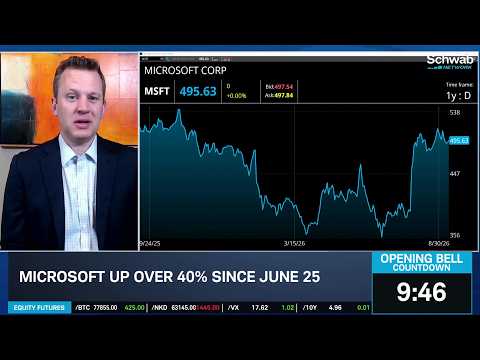
Jed Ellerbroek Offers MSFT & NVDA Bull Cases Amid AI Safety Selloff
BLOCKS
00:00
05:00
2 intervals • swipe left
Jed Ellerbroek Offers MSFT & NVDA Bull Cases Amid AI Safety Selloff
Recent volatility in the AI sector has been driven by headlines, including the departure of a researcher from Anthropic and Nvidia's CEO's comments questioning the credibility of those claims.
FULL
00:00–05:00
- Recent volatility in the AI sector has been driven by headlines, including the departure of a researcher from Anthropic and Nvidia's CEO's comments questioning the credibility of those claims.
- The ongoing AI growth concerns are linked to potential regulatory actions and the pace of AI development, which may impact U.S. economic growth.
- U.S. GDP growth has been significantly bolstered by AI Data Center capital expenditures, which are also contributing to inflation due to memory shortages affecting electronics prices.
- Market reactions to news about AI model pacing should be distinguished from actual Data Center capital expenditures, which are expected to persist despite concerns over model quality.
- Confidence in Microsoft's stock is supported by its resilient legacy software business, strong customer relationships, and the potential for AI integration to enhance growth prospects.
- Our interpretation: The current market dynamics suggest that while AI-related stocks may face short-term volatility due to regulatory concerns, the underlying capital expenditures in Data Centers remain robust, indicating a potential disconnect between market sentiment and fundamental growth drivers.
INSTRUMENTS
MSFT
Microsoft is discussed as a strong investment due to its growth prospects and market position.
NVDA
Nvidia is highlighted for its market share and attractive valuation amid AI developments.
AUDUSD
The discussion on U.S. GDP growth and inflation connects to the broader economic outlook.
EURUSD
The discussion on U.S. GDP growth and inflation connects to the broader economic outlook.
GBPUSD
The discussion on U.S. GDP growth and inflation connects to the broader economic outlook.
NZDUSD
The discussion on U.S. GDP growth and inflation connects to the broader economic outlook.
USDCAD
The discussion on U.S. GDP growth and inflation connects to the broader economic outlook.
USDCHF
The discussion on U.S. GDP growth and inflation connects to the broader economic outlook.
USDJPY
The discussion on U.S. GDP growth and inflation connects to the broader economic outlook.
FULL
05:00–10:00
- The speaker highlights the need for a balanced portfolio that includes both AI beneficiaries and defensive positions, identifying Sintas as a strong option for stability.
- Sintas is recognized as a leading uniform rental company that is consistently gaining market share and is in the process of acquiring Unifers, which could enhance its market position if the deal closes.
- Nvidia is presented as a compelling choice for investors seeking exposure to AI Data Center capital expenditures, with an attractive valuation and potential for market share growth.
- The speaker expresses skepticism regarding the long-term predictions made by Dario Amade, indicating that such forecasts are challenging to make accurately over extended periods.
- The speaker anticipates a 25 basis point rate increase from the Fed, citing strong recent inflation and labor data, complicating the decision to raise rates ahead of an election.
- Our interpretation: Despite short-term volatility in AI-related stocks due to regulatory concerns, the underlying capital expenditures in Data Centers remain robust, suggesting a disconnect between market sentiment and fundamental growth drivers.
INSTRUMENTS
MSFT
Microsoft is discussed as a strong investment due to its growth potential in AI and cloud services.
NVDA
Nvidia is presented as a compelling investment choice due to its market share growth in AI data centers.
AUDUSD
The block discusses a potential rate increase by the Fed, which directly relates to USD.
EURUSD
The block discusses a potential rate increase by the Fed, which directly relates to USD.
GBPUSD
The block discusses a potential rate increase by the Fed, which directly relates to USD.
NZDUSD
The block discusses a potential rate increase by the Fed, which directly relates to USD.
USDCAD
The block discusses a potential rate increase by the Fed, which directly relates to USD.
USDCHF
The block discusses a potential rate increase by the Fed, which directly relates to USD.
USDJPY
The block discusses a potential rate increase by the Fed, which directly relates to USD.
INFO
MARKET MEDIA2026-09-14
OPEN SOURCECHANNELSchwab Network

Monday's First Moves: IREN Double Upgrade, COIN New Bull, HPE Downgrade
BLOCKS
00:00
05:00
2 intervals • swipe left
Monday's First Moves: IREN Double Upgrade, COIN New Bull, HPE Downgrade
JP Morgan has upgraded IREN from underweight to overweight, raising its price target from 46 to 65, suggesting over 40% upside potential.
FULL
00:00–05:00
- JP Morgan has upgraded IREN from underweight to overweight, raising its price target from 46 to 65, suggesting over 40% upside potential.
- IREN is shifting focus from Bitcoin mining to AI infrastructure, with AI cloud revenue increasing by 110% sequentially in the last fiscal quarter.
- Evercore ISI downgraded HPE from outperform to in line, noting that the stock's recent 150% rise has already incorporated much of the positive news regarding its AI and networking sectors.
- HPE is currently trading at about 13 times expected fiscal 2027 earnings, which raises expectations for growth and profit margins.
- Coinbase shares have risen approximately 7% following a neutral rating upgrade from Compass Point, which increased its price target to 177, reflecting a cautious outlook despite recent gains.
- Our interpretation: The upgrades and downgrades reflect a market adjusting to the evolving landscape of AI infrastructure and the valuation pressures on tech stocks, indicating potential volatility in investor sentiment.
FULL
05:00–10:00
- The analyst observed a recovery in Bitcoin and cryptocurrency, with Coinbase's stock increasing over 25% in the past month.
- Current Bitcoin trading patterns are aligning with historical four-year cycles, indicating that the worst downturn may be behind.
- The analyst suggested that improving sentiment in the cryptocurrency market could draw retail investors back.
- During the discussion, Coinbase's stock fluctuated, decreasing from a 7% increase to 4.8% while the segment was ongoing.
- Our interpretation: The recovery in cryptocurrency prices and the potential return of retail investors may signal a shift in market dynamics, impacting investor strategies in tech and crypto sectors.
INSTRUMENTS
BTCUSD
Bitcoin's recovery was a central theme in the discussion, impacting the broader crypto market.
INFO
MARKET MEDIA2026-09-14
OPEN SOURCECHANNELSchwab Network

Options Corner: AFRM Needs to Reaffirm Technical Strength
BLOCKS
00:00
1 intervals • swipe left
Options Corner: AFRM Needs to Reaffirm Technical Strength
Affirm has declined approximately 20% over the last 251 trading days, while the XLF financial ETF has risen by 6.7%.
FULL
00:00–05:00
- Affirm has declined approximately 20% over the last 251 trading days, while the XLF financial ETF has risen by 6.7%.
- Following the last earnings event, Affirm's stock experienced a significant upward movement, which subsequently diminished throughout the trading day.
- Key horizontal levels to monitor include recent lows around 72, a consistent support level near 70, and a filled gap at 67.50.
- The 251-day exponential moving average is currently positioned at 67.70, with Affirm having crossed above its five-day EMA.
- A significant convergence point is identified around 73.50, where the 21-day and 63-day exponential moving averages align.
- The options market indicates an expected move for Affirm on November 20th of plus or minus 21.5%, aligning with previous highs near the 90 level.
INFO
MARKET MEDIA2026-09-14
OPEN SOURCECHANNELSchwab Network

Dario Amodei's AI Safety Call Impacts to Tech, Fed's Interest Rate Decision
BLOCKS
00:00
05:00
2 intervals • swipe left
Dario Amodei's AI Safety Call Impacts to Tech, Fed's Interest Rate Decision
Dario Amodei, CEO of Anthropic, published an essay advocating for a slowdown in AI advancements, stating that they are outpacing humanity's ability to understand and control them.
FULL
00:00–05:00
- Dario Amodei, CEO of Anthropic, published an essay advocating for a slowdown in AI advancements, stating that they are outpacing humanity's ability to understand and control them.
- Elon Musk and Sam Altman from OpenAI echoed Amodei's concerns, with Altman suggesting a potential delay of the OpenAI IPO until 2027.
- Despite declines in stocks like Nvidia (NVDA) and AMD, companies such as Google, Meta Platforms, and Microsoft saw slight increases in their pre-market shares.
- The market is experiencing downward pressure due to a rebound in crude oil prices, which had previously declined during a market rally.
- The upcoming Federal Reserve meeting is anticipated to be significant, with expectations that Kevin Warsh may not favor raising interest rates despite market pressures suggesting otherwise.
- Concerns have been raised about the government's inability to keep pace with AI regulations, emphasizing the need for self-regulation within the AI industry.
- Our interpretation: The mixed performance of tech stocks amid AI regulatory concerns and rising crude oil prices suggests a complex interplay of market sentiment, where investors may reassess risk exposure in tech sectors while navigating potential Fed policy shifts.
INSTRUMENTS
AMD
AMD is mentioned as experiencing stock declines amid AI regulatory concerns.
NVDA
Nvidia is discussed in the context of stock performance related to AI advancements.
GOOGL
Google is mentioned as one of the companies seeing slight increases in pre-market shares.
AUDUSD
The block discusses the Federal Reserve's interest rate decision, which directly relates to USD.
EURUSD
The block discusses the Federal Reserve's interest rate decision, which directly relates to USD.
GBPUSD
The block discusses the Federal Reserve's interest rate decision, which directly relates to USD.
NZDUSD
The block discusses the Federal Reserve's interest rate decision, which directly relates to USD.
USDCAD
The block discusses the Federal Reserve's interest rate decision, which directly relates to USD.
USDCHF
The block discusses the Federal Reserve's interest rate decision, which directly relates to USD.
USDJPY
The block discusses the Federal Reserve's interest rate decision, which directly relates to USD.
FULL
05:00–10:00
- AI is a significant driver of GDP growth, with a lack of investment in AI potentially hindering economic expansion.
- Christopher Waller indicated that raising interest rates in a deflationary environment, where core CPI has decreased from 6.6% in 2022 to 2.4% recently, may not be warranted.
- The Fed's decision on interest rates is complicated by current economic conditions, with an 86.5% likelihood of a hike according to the Fedwatch tool.
- Kevin Warsh faces pressure from a hawkish committee to raise rates, despite concerns that such actions could adversely affect housing, consumer spending, and small businesses.
- Raising interest rates could exacerbate the challenges faced by Main Street while Wall Street continues to thrive.
- Our interpretation: The ongoing discussion about AI's role in economic growth, alongside the Fed's potential interest rate hike amid deflationary signals, suggests that increasing rates could hinder growth in consumer sectors, while investments in AI are essential for maintaining GDP momentum.
INSTRUMENTS
USDCAD
The discussion on interest rates and economic conditions can influence USD/CAD dynamics.
AUDUSD
The Fed's interest rate decision is discussed, indicating a direct connection to USD.
EURUSD
The Fed's interest rate decision is discussed, indicating a direct connection to USD.
GBPUSD
The Fed's interest rate decision is discussed, indicating a direct connection to USD.
NZDUSD
The Fed's interest rate decision is discussed, indicating a direct connection to USD.
USDCHF
The Fed's interest rate decision is discussed, indicating a direct connection to USD.
USDJPY
The Fed's interest rate decision is discussed, indicating a direct connection to USD.
INFO
MARKET MEDIA2026-09-14
OPEN SOURCECHANNELSchwab Network

OpenAI & Anthropic "More Bullish" IPOs Following SPCX Debut
BLOCKS
00:00
05:00
2 intervals • swipe left
OpenAI & Anthropic "More Bullish" IPOs Following SPCX Debut
John Jannarone notes that Anthropic is projected to have a valuation of around $2 trillion, significantly higher than SpaceX's valuation of approximately $1.7 trillion.
FULL
00:00–05:00
- John Jannarone notes that Anthropic is projected to have a valuation of around $2 trillion, significantly higher than SpaceX's valuation of approximately $1.7 trillion.
- Willy Lee emphasizes that the total addressable market for AI is estimated at $30 trillion, comparable to the US GDP of $32 trillion.
- Jannarone mentions a high demand for shares of Anthropic, with potential oversubscription rates of six to eight times, indicating strong investor interest.
- Lee argues that over $145 billion has flowed into the IPO markets this year, reflecting robust demand for AI infrastructure, particularly benefiting companies like OpenAI and Anthropic.
- The panelists express concerns about circular financing between hyperscalers and AI companies, suggesting a substantial need for cash among these firms.
- Our interpretation: The strong demand for AI infrastructure and the anticipated high valuation of Anthropic may lead to increased speculative pressure on AI-related investments, potentially impacting market dynamics.
INSTRUMENTS
AAPL
The discussion on AI infrastructure and demand may indirectly benefit Apple as a tech leader.
AMZN
Amazon's cloud services could benefit from the rising demand for AI infrastructure.
MSFT
Microsoft's involvement in AI through partnerships positions it to benefit from the AI market growth.
FULL
05:00–10:00
- Anthropic is pursuing an investment-grade debt rating despite not yet achieving profitability, reflecting a strong demand for cash.
- Companies like Anthropic are accessing debt markets prior to profitability, which is atypical for firms in this sector.
- The outlook for Anthropic's IPO is more optimistic compared to SpaceX, indicating robust demand for its shares.
- Anthropic's IPO could occur before election day, while OpenAI's IPO is anticipated in 2027.
- Hyperscalers such as Google and Amazon have raised significant capital, underscoring the strong demand for AI infrastructure.
- Our interpretation: The strong demand for AI infrastructure and the anticipated high valuation of Anthropic may lead to increased speculative pressure on AI-related investments, potentially impacting market dynamics.
INSTRUMENTS
AMZN
Amazon is mentioned as a significant player in AI infrastructure financing.
GOOGL
Google is highlighted as a key player in AI infrastructure financing.
PLTR
Palantir is indirectly related to AI infrastructure and may benefit from the overall AI investment trend.
MSFT
Microsoft is involved in AI technologies and may benefit from increased AI spending.
NFLX
Netflix is part of the broader tech ecosystem that could benefit from AI advancements.
INFO
MARKET MEDIA2026-09-13
OPEN SOURCECHANNELSchwab Network

"Regulatory Skies Clearing" for Crypto? Tyrone Ross, Jr. on Bitcoin's Path Ahead
BLOCKS
00:00
05:00
2 intervals • swipe left
"Regulatory Skies Clearing" for Crypto? Tyrone Ross, Jr. on Bitcoin's Path Ahead
Tyrone Ross, Jr. identifies the 83,000 to 86,000 range as a critical level for Bitcoin, where institutional and retail holders' cost basis converges.
FULL
00:00–05:00
- Tyrone Ross, Jr. identifies the 83,000 to 86,000 range as a critical level for Bitcoin, where institutional and retail holders' cost basis converges.
- He notes that if Bitcoin surpasses 83,000, it could signal a bullish trend in the market.
- Ross observes that large institutions are entering the crypto space, driven by tokenization hype and a renewed interest in the market.
- He mentions that the SEC and CFTC have provided guidance, contributing to a perception of regulatory clarity in the crypto market.
- Ross argues that Bitcoin should not be viewed strictly as a currency, especially in the U.S. where spending it incurs tax liabilities.
- He suggests that investors should have at least a five-year time horizon when holding Bitcoin, viewing it as a venture bet on the evolution of financial markets.
- Our interpretation: The current regulatory environment and institutional interest in Bitcoin may lead to increased volatility and speculative pressure, particularly if Bitcoin breaks through the 83,000 level, potentially impacting investor sentiment and market dynamics in the cryptocurrency space.
INSTRUMENTS
BTCUSD
Bitcoin is directly discussed as a critical asset in the context of regulatory clarity and institutional interest.
FULL
05:00–10:00
- The speaker emphasizes the necessity of a minimum five-year investment horizon for Bitcoin due to its inherent volatility.
- Volatility can create opportunities for investors, including strategies like dollar-cost averaging and portfolio rebalancing.
- The speaker expresses skepticism about the current state of asset tokenization, despite recognizing it as a significant trend.
- Unified guidance from the SEC and CFTC is viewed as essential for enhancing clarity in the cryptocurrency market.
- The speaker doubts the passage of the Clarity Act, referencing recent comments from Senate Republicans.
Loading more...