




Polymarket question
Will China invade Taiwan by end of 2026?
YesNo
Evolving Geopolitical Dynamics Suggest Lower Likelihood of Chinese Invasion of Taiwan by 2026
Recent insights indicate a complex relationship between Taiwan and China, with evolving security partnerships potentially deterring military action.
WHAT CHANGED
Recent discussions highlight a significant divide in Taiwanese public sentiment regarding unification with China, emphasizing a preference for dialogue over military confrontation. Additionally, evolving security partnerships in the Indo-Pacific may influence China's strategic calculations.
SITUATION
The political landscape in Taiwan shows a notable reluctance towards peaceful reunification with China, as articulated by KMT Chairwoman Cheng Li-wun. While there is a strong desire for dialogue, this does not equate to support for unification, complicating predictions about potential military actions. Furthermore, the Shangri-La Dialogue underscored the importance of evolving security partnerships in the Indo-Pacific, particularly the Philippines' role in fostering collaboration against Chinese aggression. However, the effectiveness of these alliances in deterring military action remains uncertain due to diverging national priorities and resource constraints.
WATCHLIST
- Monitor changes in US-Taiwan relations and regional security partnerships.
CONCLUSION
The current geopolitical landscape suggests a lower likelihood of a Chinese invasion of Taiwan by the end of 2026, driven by strong public sentiment in Taiwan favoring dialogue and the evolving security dynamics in the Indo-Pacific region.
Art Argentum scoring
#1No
80.00%strong
#2Yes
20.00%minimal
Source-material body
2 indexed items
SOURCE
MATERIAL SUMMARY
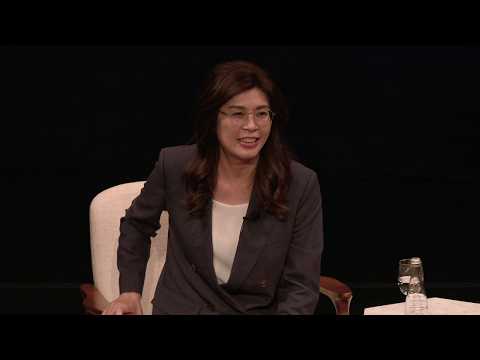
Cheng Li-wun, Chairwoman of the Kuomintang (KMT), discusses her vision for cross-strait relations between Taiwan and China, emphasizing the need for peace and cooperation. She advocates for a pragmatic approach that respects the will of the Taiwanese people while acknowledging the historical context of Taiwan's relationship with China.
Cheng reflects on her political journey from advocating for independence to supporting dialogue with Beijing, highlighting the importance of mutual respect and understanding. She argues that a stable and peaceful relationship can be achieved through institutional solutions and dialogue, while also addressing the military tensions and public sentiment in Taiwan.
GENERAL ANALYSIS
Argument
Taiwan's current political climate reflects a significant divide regarding cross-strait relations, with public sentiment leaning against peaceful reunification with the PRC. This is evidenced by the statement that 'if you are conducting an opinion poll or even a referendum in Taiwan at this moment, it will be very difficult for people of Taiwan to support peaceful reunification.' However, there is a contrasting view that suggests a desire for dialogue, as indicated by the 80% support for cross-strait dialogue among the Taiwanese populace. This duality presents a limitation, as the desire for dialogue does not equate to support for unification, highlighting the complexities in Taiwan's stance towards China.
Quotes
30:00-35:00
if you are conducting an opinion poll or even a referendum in Taiwan at this moment, it will be very difficult for people of Taiwan to support peaceful reunification. Now, it's now, but if you ask Taiwan, if Taiwan is not supporting peace, However, now if you are asking the people of Taiwan whether they support cross-strait dialogue, exchanges or peace, I just came back from the trip and the poll was done just right after I came back, 80% of people of Taiwan supports that.
MECHANISM
Mechanism
Taiwan's political landscape reveals a complex relationship with China, characterized by a significant public reluctance towards peaceful reunification. While a majority of Taiwanese citizens express support for cross-strait dialogue, this does not translate into a willingness to unify with the People's Republic of China, indicating a nuanced stance that complicates predictions about potential military actions.
VIDEO INSIGHTS 1
00:00-05:00Taiwan cross-strait relations
Cheng Li-wun emphasizes the need for a peaceful resolution to cross-strait tensions, advocating for a win-win approach that prioritizes the well-being of the Taiwanese people. She calls for institutional solutions to prevent conflict and promote cooperation.
Cheng Li-wunXi JinpingTaiwan cross-strait relationsTaiwan independence movement
05:00-10:00Taiwan independence sentiment
Cheng critiques the Democratic Progressive Party's (DPP) use of Taiwan independence as a political tool, expressing her belief that true well-being for Taiwan lies in pragmatic engagement rather than independence.
Democratic Progressive Party (DPP)Taiwan independence sentimentTaiwan political dynamics
VIDEO INSIGHTS 2
10:00-15:00US-Taiwan relations
Cheng discusses the importance of US policy towards Taiwan, advocating for a peaceful resolution that respects the self-determination of the Taiwanese people while maintaining stability in the region.
United StatesUS-Taiwan relationsTaiwan self-determination
15:00-20:00KMT's stance on cross-strait relations
Cheng outlines the KMT's position against Taiwan independence, emphasizing the need for dialogue and cooperation based on the 1992 consensus, which recognizes both sides as part of one China.
Kuomintang (KMT)KMT cross-strait policy1992 consensus
VIDEO INSIGHTS 3
20:00-25:00Taiwan's political identity
Cheng argues that Taiwan's political identity should not require sacrifices in freedom and democracy, advocating for a coexistence model that respects both sides' systems.
Taiwan political identitycross-strait coexistence
25:00-30:00Taiwan's historical context
Cheng highlights the historical differences between Taiwan and Hong Kong, asserting that Taiwan's unique history and democratic development set it apart from the one country, two systems model proposed by Beijing.
Hong KongTaiwan historical contextone country two systems
VIDEO INSIGHTS 4
30:00-35:00Taiwan's defense strategy
Cheng emphasizes the need for Taiwan to maintain strong defense capabilities while pursuing dialogue to reduce military tensions across the Taiwan Strait.
Taiwan defense strategycross-strait military tensions
35:00-40:00Cross-strait dialogue mechanisms
Cheng advocates for establishing mechanisms to facilitate dialogue and cooperation between Taiwan and China, drawing parallels to the European Union's integration process.
European Unioncross-strait dialogue mechanismsEU integration model
VIDEO INSIGHTS 5
40:00-45:00Future of cross-strait relations
Cheng envisions a future where cross-strait relations are characterized by goodwill and mutual trust, with a focus on addressing security concerns through dialogue.
future of cross-strait relationsTaiwan security dialogue
45:00-50:00US-China relations
Cheng stresses the importance of the US playing a constructive role in East Asia, advocating for cooperation over confrontation to ensure regional stability.
United StatesChinaUS-China relationsEast Asia stability
VIDEO INSIGHTS 6
50:00-55:00Taiwan's youth engagement
Cheng highlights her efforts to engage Taiwan's youth in discussions about democracy and cross-strait relations, aiming to build a consensus for a peaceful future.
Taiwan youth engagementdemocracy discussions
55:00-01:00:00Public opinion on reunification
Cheng notes that while public support for peaceful reunification is low, there is a significant desire for maintaining the status quo, reflecting a cautious approach among the Taiwanese populace.
public opinion on reunificationTaiwan status quo
VIDEO INSIGHTS 7
01:00:00-01:05:00Taiwan's fishing rights
Cheng criticizes the current administration for failing to protect Taiwan's fishing rights, emphasizing the need for proactive measures to ensure the safety and rights of Taiwanese fishermen.
Taiwan fishing rightsfishing policy
SOURCE

MATERIAL SUMMARY
The 23rd Shangri-La Dialogue focused on evolving security partnerships amid a fragmented international order, emphasizing the need for countries to adapt to shifting geopolitical dynamics and security challenges. Key speakers, including Philippine Defense Secretary Alberto Diodor and NATO's Admiral Giuseppe Cavo, discussed the importance of international law, particularly in maritime disputes, and the necessity for enhanced defense cooperation among nations.
Diodor outlined the Philippines' commitment to safeguarding maritime rights under international law, particularly in the South China Sea, while emphasizing the need for collective action against malign activities. Admiral Cavo highlighted NATO's increased defense spending and the importance of partnerships in addressing global security threats, advocating for a whole-of-society approach to resilience and defense.
GENERAL ANALYSIS
Argument
The evolving security partnerships in the Indo-Pacific region indicate a shift in geopolitical dynamics that could influence China's military decisions regarding Taiwan. As countries seek to strategically diversify their alliances amid a fragmenting international order, the Philippines has positioned itself as a hub for collaboration among nations committed to a rules-based maritime order. However, the effectiveness of these partnerships in deterring potential aggression from China remains uncertain, as diverging priorities and resource constraints may limit collective action.
Quotes
05:00-10:00
In a fragmenting world, the Philippines is thus providential and providentially blessed to convene international actors of every strike in defense of shared principles, particularly freedom of the seas.
MECHANISM
Mechanism
The shifting security partnerships in the Indo-Pacific, particularly the Philippines' role in fostering collaboration among nations committed to maritime order, may influence China's military calculus regarding Taiwan. However, the effectiveness of these alliances in deterring aggression is uncertain due to varying national priorities and resource limitations.
VIDEO INSIGHTS 1
00:00-05:00emerging security partnerships
New security partnerships are forming as countries seek to diversify alliances in response to evolving global challenges. The dialogue emphasizes the need for collaboration based on shared values and interests.
PhilippinesNATOSingaporeIndo-Pacific security partnershipsdefense diplomacy
05:00-10:00maritime law and sovereignty
The Philippines asserts its role as a guardian of maritime rights, emphasizing adherence to the 1982 UNCLOS and the 2016 arbitral award regarding the South China Sea. This commitment is framed as essential for maintaining sovereignty and territorial integrity.
PhilippinesChinaUNCLOS10th anniversary of the arbitral awardSouth China Sea arbitrationmaritime sovereignty
VIDEO INSIGHTS 2
25:00-30:00NATO defense spending
NATO allies are increasing defense spending to 5% of GDP, with a 20% rise in investment from European allies and Canada in the past year. This shift aims to enhance military capabilities in response to global threats.
NATOEuropean alliesCanada5%20% increase$5,074 billionNATO defense investmentmilitary capability development
40:00-45:00global supply chain disruptions
Conflicts in regions like Eastern Europe and the Middle East are causing significant disruptions to global supply chains, highlighting the interconnectedness of modern conflicts beyond geographical boundaries.
global supply chain securityregional conflict impacts
VIDEO INSIGHTS 3
50:00-55:00underwater infrastructure security
Singapore has launched a non-legally binding initiative for critical underwater infrastructure security, involving 17 countries. This initiative aims to establish shared principles and enhance cooperation in protecting vital underwater assets.
SingaporeIndonesiaMalaysiaThailand17 countriesunderwater infrastructure defensemultilateral cooperation
Loading more...