



Understanding the BSW's Internal Conflicts and AfD Strategy
Analysis of internal conflicts within the BSW regarding its strategy towards the AfD, based on "Breaking Point for the BSW: Is a Split in Saxony-Anhalt Imminent?" | ZDFheute Nachrichten.
OPEN SOURCEThe BSW is currently grappling with significant internal conflict regarding its strategy towards the AfD, particularly in light of the upcoming elections in Saxony-Anhalt. The party is divided over whether to engage in dialogue with the AfD or to maintain strict boundaries, reflecting a broader ideological struggle within the party.
Sarah Wagenknecht's call for an expert government in Thuringia has intensified these disputes, as some view it as a tactical move to attract discontented AfD voters. However, this approach raises concerns about the legitimacy of such a government and the implications for democratic processes, especially given the AfD's substantial support in the region.
Critics within the BSW argue that the decision-making process regarding collaboration with the AfD has lacked transparency, which could undermine the party's credibility. The controversy surrounding Minister President Mario Vogt's doctoral thesis, scrutinized by an AfD-commissioned report, is perceived as a strategic maneuver to destabilize the current government.
The internal discord is further complicated by the perception of East Germans as second-class citizens, a narrative that has been perpetuated by some political leaders. This has led to a growing divide between East and West Germany, exacerbated by the rise of the AfD and the socio-economic disparities that persist in these regions.
As the BSW navigates these challenges, there is a palpable concern about the potential for political fragmentation in Saxony-Anhalt. The party's ability to maintain voter support amidst these internal conflicts will be crucial in determining its electoral prospects in both Saxony-Anhalt and Thuringia.
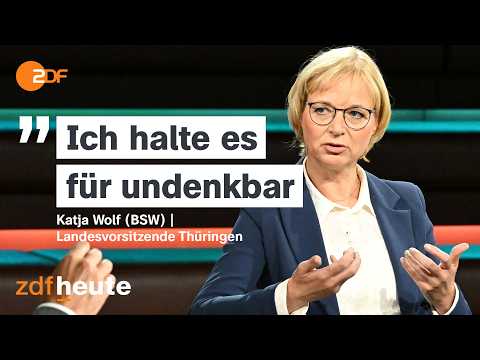
- The BSW is facing internal conflict over the proposal for an expert government in Thuringia, which some believe could undermine their position in the upcoming elections in Saxony-Anhalt
- Critics argue that the decision-making process within the BSWs federal board lacked transparency and proper protocol, raising concerns about the legitimacy of the proposed actions against Minister President Mario Vogt
- The controversy surrounding Vogts doctoral thesis, which was scrutinized by an AfD-commissioned report, is seen as a strategic move to destabilize the current government and gain political leverage ahead of elections
- There is a perception that the BSW is using the situation in Thuringia as a means to draw attention to their campaign in Saxony-Anhalt, where they are struggling to maintain voter support
- A broader ideological divide within the BSW, particularly regarding collaboration with traditional parties like the CDU and SPD, as some members advocate for a distinct political identity separate from these parties
Read full analysis
- Advocate for a minority government that seeks common ground
- Believe that engaging with the AfD is necessary for legislative matters
- Emphasize the need to maintain strict boundaries against the AfD
- The BSW is facing internal conflict over the proposal for an expert government in Thuringia, which some believe could undermine their position in the upcoming elections in Saxony-Anhalt
- The BSWs internal conflict over collaboration with the AfD is intensifying, particularly in the context of upcoming elections in Saxony-Anhalt, where they are struggling to maintain voter support
- Sarah Wagenknechts push for an expert government in Thuringia is seen as a strategic move to appeal to discontented AfD voters, despite the lack of clarity on who would lead such a government
- There is a growing sentiment among voters that it is unjust for the AfD, which has significant support, not to have a governing role, leading to opportunistic political maneuvers by BSW leaders
- The potential for a half-democratic government through abstention in the third voting round adds to doubts about the legitimacy of such a scenario and the implications for the political landscape in Saxony-Anhalt
- The BSW appears to be targeting tactical AfD voters, but recent polling suggests they may struggle to surpass the 4% threshold needed to gain representation
details
details
- The BSW is facing internal conflict over how to engage with the AfD, with some advocating for a minority government that seeks common ground, while others emphasize a strict boundary against collaboration
- There is a growing concern that the AfDs influence could undermine democratic processes, particularly regarding their role in committee leadership and judicial appointments
- The speaker reflects on past commitments against working with the AfD, highlighting a shift in strategy that adds to doubts about the integrity of democratic discourse
- The necessity for dialogue with the AfD is acknowledged, especially in legislative matters where their obstruction has been significant, yet there is a strong resistance to granting them any power that could facilitate their rise
- The potential for a backlash within the BSW is noted, suggesting that any perceived collaboration with the AfD could lead to significant dissent among party members
- The speaker condemns a political poster that employs antisemitic stereotypes, particularly in its portrayal of Ukrainian President Zelensky, linking it to historical Nazi propaganda
- Concerns are raised about the implications of such imagery, suggesting it reflects a broader strategy of the PSW to exploit regional differences and grievances between East and West Germany
- A historical context where East Germans have been perceived as second-class citizens, referencing past comments from politicians that have perpetuated this narrative
- The current political climate, particularly with the rise of the AfD, is exacerbating divisions and could lead to a more entrenched split between East and West Germany
- There is a call for accountability regarding the use of provocative imagery in political campaigns, emphasizing the need for responsible communication in the electoral process
details
- The ongoing political discourse highlights a growing divide between East and West Germany, exacerbated by the rise of the AfD and the perception of East Germans as second-class citizens
- Björn Höckes controversial statements reflect a narrative that reinforces regional divisions, suggesting that true Germans are found only in the East, which contributes to the ongoing polarization
- The discussion emphasizes the socio-economic disparities between East and West, including lower incomes and underrepresentation in national elites, which have persisted despite hopes that these differences would diminish over time
- Political leaders are criticized for failing to address these disparities adequately, with calls for collaboration among states facing similar challenges to advocate for their populations needs at the federal level
- The recent commentary on these issues has sparked significant reactions, revealing both support and criticism from various regions, indicating a complex landscape of opinions on the East-West divide
details
- The internal conflict within the BSW is highlighted, particularly regarding the partys approach to the AfD and the ongoing East-West divide, which some members view as divisive
- Criticism is directed at the federal government for its failure to adequately address the needs of regions reliant on statutory pensions, especially during an election campaign
- The discussion emphasizes the necessity for cooperation among state leaders to navigate significant reforms, particularly in light of the challenges faced by the SPD and CDU in maintaining political credibility
- Concerns are raised about the potential for political fragmentation in Saxony-Anhalt, with implications for the upcoming elections and the broader political landscape in Germany
details
The internal conflict within the BSW regarding its strategy towards the AfD highlights a significant ideological divide that could impact their electoral prospects in Saxony-Anhalt. While some members advocate for dialogue and collaboration, others emphasize the need to maintain strict boundaries against the AfD, reflecting a broader struggle within the party to define its identity and approach to opposition.
This analysis is an original interpretation prepared by Art Argentum based on the transcript of the source video. The original video content remains the property of the respective YouTube channel. Art Argentum is not responsible for the accuracy or intent of the original material.