



The Rise of the Far-Right in Germany: Insights from Renate Aris
Analysis of the rise of the far-right in Germany, based on "Far-right in Power? Holocaust Survivor Renate Aris in a High-Level Discussion" | DER SPIEGEL.
OPEN SOURCERenate Aris expresses her deep concern regarding the rise of the far-right AfD party in Germany, particularly its potential governance in Saxony-Anhalt. She emphasizes the importance of remembering the Holocaust and warns against the resurgence of anti-Semitism and extremist ideologies, linking these issues to Germany's historical context.
Reflecting on her traumatic experiences as a Holocaust survivor, Aris underscores the need for education and remembrance to prevent the resurgence of extremist ideologies. She argues that while political changes may be necessary, supporting a party that undermines democratic values is unacceptable, especially in light of the atrocities committed during the Nazi regime.
Aris highlights the alarming rise in antisemitic incidents in Germany, with documented cases increasing significantly in recent years. She expresses concern over public sentiment, noting that a substantial portion of Germans believe it is time to move on from the Nazi past, which she views as a dangerous perspective that undermines the need for ongoing remembrance and education.
The discussion also touches on the psychological impact of survival as a Holocaust survivor, with Aris noting the silence surrounding traumatic experiences among victims. She reflects on her family's determination to integrate into post-war society despite the challenges they faced, emphasizing the importance of mutual respect and understanding among individuals from diverse backgrounds.
Aris advocates for the younger generation to remain engaged in democratic processes and to be vigilant against the resurgence of anti-Semitism and divisive politics. She calls for a collective memory that includes all victims of the Nazi regime, stressing the importance of recognizing the broader implications of the Holocaust.
In conclusion, Aris expresses hope for a future Germany where reason and goodwill prevail, indicating her optimism about the potential for positive change in society. Her reflections serve as a reminder of the importance of education and the need for vigilance in the face of rising extremism.
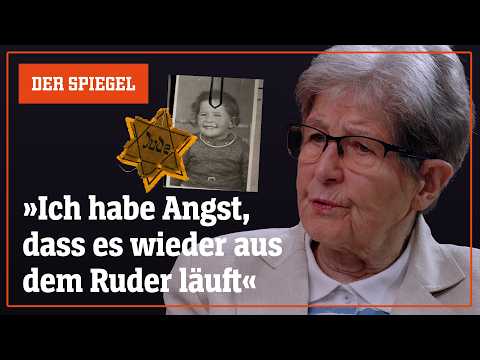
- Renate Aris expresses deep concern over the rise of the far-right AfD party in Germany, particularly in the context of its potential governance in Saxony-Anhalt, where it is polling close to an absolute majority
- She reflects on her traumatic experiences as a Holocaust survivor, emphasizing the importance of remembering the past and the dangers of allowing extremist ideologies to gain power
- Aris warns that the resurgence of anti-Semitism and the need for heightened security around Jewish institutions indicate a troubling trend in society, which could lead to further societal regression
- She highlights the disconnect between her experiences and the current political climate, questioning how individuals who support the AfD can reconcile their choices with Germanys historical responsibilities
- Aris advocates for the younger generation to remain vigilant and engaged in democratic processes, stressing that differing opinions should not undermine the values of peace and mutual respect
Read full analysis
- Some believe the AfD represents necessary political change
- Support spans across various demographics, including educated individuals
- Renate Aris expresses deep concern over the rise of the far-right AfD party in Germany, particularly in the context of its potential governance in Saxony-Anhalt, where it is polling close to an absolute majority
- Renate Aris expresses deep concern over the rise of political parties like the AfD in Germany, emphasizing that such movements are troubling given the countrys history with the Holocaust
- She argues that while there are legitimate political changes needed, supporting a party that undermines democratic values is unacceptable, especially in a nation that experienced the atrocities of the Nazi regime
- Aris highlights the importance of listening to historical witnesses and sharing their stories to prevent history from being reduced to mere statistics, stressing that education about the Holocaust is crucial
- Reflecting on her own experiences, she notes that the end of World War II on May 8, 1945, marked a significant moment of hope, contrasting it with the current political climate
- Aris calls for the younger generation to remain engaged in democratic processes and to be vigilant against the resurgence of anti-Semitism and divisive politics
details
details
details
- Renate Aris reflects on her childhood in a large Jewish family in Dresden, highlighting the joy of family visits despite the growing restrictions imposed by the Nazis
- She recounts the gradual realization of her exclusion as a Jew, noting that the most significant turning point was the mandatory wearing of the Star of David starting in 1941
- Aris shares her memories of the Night of Broken Glass, emphasizing the emotional impact on her parents and the lasting impressions such events left on her as a child
- She describes the limitations placed on her and her brother, including being barred from school and public spaces, which were explained to them in a way that highlighted their isolation from other children
- Despite the oppressive environment, her family made efforts to maintain a semblance of childhood, with her grandmother playing a crucial role in providing support and normalcy
details
details
- Renate Aris recounts the traumatic experiences of her childhood during the Nazi regime, including the emotional impact of being forced to wear a Star of David and the fear of being recognized by others
- She describes the heartbreaking moment when authorities took away her familys pet rabbits, symbolizing the loss of innocence and the harsh realities faced by Jewish families
- Aris reflects on her mothers bravery in staying with her Jewish father despite societal pressures to abandon him, highlighting her mothers commitment to family and heritage
- The narrative reveals the gradual realization of the familys dire situation as relatives were deported and murdered, with Ariss grandmother being among the first victims
- Aris emphasizes the struggle of her parents to shield their children from the full extent of the horrors occurring around them, illustrating the psychological toll of living under constant threat
details
- Renate Aris recounts her harrowing experiences during the bombing of Dresden in February 1945, highlighting the chaos and destruction that surrounded her family as they attempted to flee
- Her mother displayed remarkable courage by deciding to escape with her children rather than allow them to be deported, demonstrating a fierce commitment to their survival
- Aris vividly remembers the horrific sights of bodies floating in the Elbe River and the overwhelming presence of death in the streets, which left a lasting impact on her psyche
- The destruction of the Leipzig train station, which served as a deportation hub for Jews, ultimately prevented Aris and her family from being sent to a concentration camp, illustrating the unpredictable nature of survival during the Holocaust
details
- Renate Aris recounts a harrowing experience during the Holocaust where her family narrowly escaped deportation, highlighting the role of a friend who provided temporary refuge despite initial refusal
- She reflects on the psychological burden of survival, noting that many lives were lost for her family to survive, which has left a lasting impact on her and others in similar situations
- After the war, Aris describes the overwhelming feeling of freedom upon reuniting with her father and grandmother, emphasizing the emotional complexity of returning to normal life after such trauma
- Despite the trauma, her father chose not to burden the family with the horrors they experienced, focusing instead on their education and future, which illustrates a common coping mechanism among survivors
details
- Renate Aris reflects on the psychological impact of survival, noting that many Holocaust survivors, including her family, rarely spoke about their traumatic experiences, which contributed to a broader silence among victims
- She recounts her return to school after the war, emphasizing her and her brothers determination to fit in despite their unique backgrounds, which included a late start to formal education
- Aris discusses her fathers refusal to leave Germany post-war, believing in his identity as a German Jew and the historical resilience of the Jewish community, despite the horrors they faced
- She expresses the complexity of growing up in a society where many perpetrators of the Holocaust were still present, highlighting the difficulty of reconciling with those who claimed ignorance of the atrocities
- Renate Aris reflects on her familys decision to remain in Germany after the Holocaust, highlighting her fathers belief in their identity as German Jews despite the societal challenges they faced
- She discusses the limitations imposed by the political climate in East Germany, particularly the lack of opportunities to emigrate to Israel, which she had considered during her youth
- Aris shares her passion for theater and costume design, which developed during her school years, and recounts her professional journey in the costume department of East German television
- She expresses a nuanced view of the DDRs self-proclaimed antifascism, suggesting that underlying fascist and antisemitic sentiments persisted despite official narratives
- Throughout her life, Aris has not personally experienced antisemitism, indicating a complex relationship with her Jewish identity in a post-war German context
details
details
- Renate Aris reflects on the persistence of antisemitism and xenophobia in former East Germany, attributing it partly to the historical absence of a significant Jewish population in the region
- She highlights the dwindling numbers of the Jewish community in Chemnitz, where only twelve members remained by the end of the DDR, emphasizing the lack of youth and families to sustain community engagement
- Aris discusses her lifelong commitment to community service, influenced by her familys active roles in the Jewish community, and her ongoing efforts to educate young people about the Holocaust
- Despite her age, Aris remains energetic and engaged, conducting numerous educational events, indicating a strong desire to share her experiences and combat ignorance about Jewish history
- She notes a concerning lack of comprehensive education on the Holocaust in schools and universities, stressing that the topic cannot be adequately covered in just a few hours of instruction
details
details
details
- Renate Aris emphasizes the importance of comprehensive education on the Holocaust and National Socialism, arguing that these topics should be taught in a broader context to understand their impact on all German families
- She highlights the alarming rise in antisemitic incidents in Germany, with documented cases increasing from 2,600 in 2022 to 8,700 in 2025, which she views as a dangerous trend linked to insufficient educational efforts
- Aris expresses concern over public sentiment, noting that a significant portion of Germans believe it is time to move on from the Nazi past, which she argues is a dangerous perspective that undermines the need for ongoing remembrance and education
- She calls for a collective memory that includes all victims of the Nazi regime, not just Jews, stressing the importance of recognizing the broader implications of the Holocaust and the need for unity in remembrance
details
details
details
- Renate Aris emphasizes the importance of educating youth about the Holocaust and the persecution of Jews, highlighting her work with young people who are actively engaged in this mission
- She expresses confusion over the willingness of many Germans to support the AfD, suggesting a disconnect between the current generations comfortable living conditions and the historical context of their nation
- Aris points out that support for the AfD is not limited to uneducated groups; it spans across various demographics, including academics, which she finds particularly troubling
- She hopes for a future Germany that respects all individuals, regardless of their background, and stresses the need for mutual respect and understanding among people from diverse origins
- Renate Aris emphasizes the importance of seeing individuals as people first, regardless of their background, which reflects her belief in mutual respect
- She expresses hope for a future Germany where reason prevails, indicating her optimism about the potential for positive change in society
- Aris appreciates the presence of well-meaning individuals who contribute to this hopeful vision, suggesting a collective effort towards a better future
- The conversation concludes with a sense of gratitude and a shared commitment to fostering understanding and goodwill among diverse communities
Renate Aris's discussion highlights the alarming rise of the far-right AfD party in Germany, which poses a significant threat to democratic values and societal cohesion. Her reflections on the resurgence of anti-Semitism and the need for vigilance among the youth underscore the potential dangers of allowing extremist ideologies to gain power. The disconnect between current political support for the AfD and Germany's historical responsibilities raises critical questions about societal memory and education.
This analysis is an original interpretation prepared by Art Argentum based on the transcript of the source video. The original video content remains the property of the respective YouTube channel. Art Argentum is not responsible for the accuracy or intent of the original material.