




Bank of Canada Interest Rate Decision and Economic Outlook
Analysis of Bank of Canada interest rate decision and economic outlook, based on "Bank of Canada governor takes questions after interest rate decision" | CBCNews.
OPEN SOURCEThe Bank of Canada has maintained the policy interest rate at 2.25%, reflecting a cautious approach amid economic uncertainties. Economic growth has resumed with a GDP increase of 2.5% in the second quarter, supported by strong consumer spending and a recovering housing market.
Current inflation stands at 3.2%, primarily driven by rising gasoline prices due to geopolitical tensions, but is expected to gradually decrease as global oil prices fall. Despite uncertainties from international conflicts and trade discussions with the U.S., businesses are adapting, and government spending is anticipated to enhance economic activity.
The ongoing conflict in the Middle East presents inflation risks, especially if oil prices remain elevated, potentially leading to broader inflationary pressures beyond just gasoline. The Bank of Canada is closely monitoring the impact of rising oil prices on overall inflation, projecting a peak effect of about 0.4% on CPI inflation, somewhat mitigated by excess supply in the economy.
The Bank of Canada projects economic improvement while recognizing risks and mixed signals in business sentiment. Canadian consumer spending remains strong, contributing to economic stability as the housing market stabilizes.
The Bank emphasizes a consensus-based decision-making process among its governing council, which includes diverse perspectives. This approach enhances transparency and improves the quality of interest rate policy decisions.
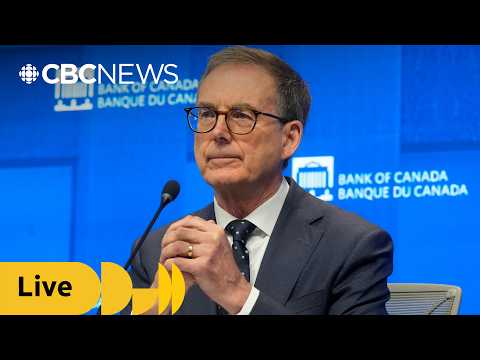
- The Bank of Canada has kept the policy interest rate steady at 2.25%, reflecting a cautious stance amid economic uncertainties
- Canadas economic growth has resumed, with a GDP increase of 2.5% in the second quarter, supported by strong consumer spending and a recovering housing market
- Current inflation stands at 3.2%, primarily driven by rising gasoline prices due to geopolitical tensions, but is expected to gradually decrease as global oil prices fall
- Despite uncertainties from international conflicts and trade discussions with the U.S, businesses are adapting, and government spending is anticipated to enhance economic activity
- Inflation is projected to reach the 2% target by early 2027, although this forecast is sensitive to changes in energy prices and the value of the Canadian dollar
details
Read full analysis
- Maintains interest rate at 2.25% to support economic recovery
- Projects GDP growth of 2.5% for the second quarter, driven by consumer spending
- Inflation remains above target at 3.2%, primarily due to high gasoline prices
- Ongoing geopolitical tensions and trade uncertainties pose risks to economic stability
- Consumer spending shows resilience despite minimal population growth
- Housing market is stabilizing but not expected to significantly boost growth
- The Bank of Canada has kept the policy interest rate steady at 2.25%, reflecting ongoing economic growth despite challenges from U.S. trade policies and geopolitical tensions
- Inflation is anticipated to gradually decrease, influenced by a projected decline in global oil prices, which are expected to stabilize between $70 and $75 per barrel
- Key risks to the economic outlook include the conflict in the Middle East and the trade relationship with the United States, both of which could affect inflation and growth
- Recent economic indicators show strong consumer spending, a stabilizing housing market, and recovering exports, contributing to a projected GDP growth of 2.5% for the second quarter
- The Bank of Canada remains committed to price stability and is ready to adjust monetary policy as economic conditions evolve
details
- The Bank of Canada is witnessing economic growth, with a projected GDP increase of about 2.5% for the second quarter, supported by strong consumer spending and a stabilizing housing market
- Exports are rebounding due to robust U.S. demand and businesses adjusting to past trade uncertainties, which is likely to enhance investment in the oil and gas sector
- Despite the optimistic outlook, there are concerns about the sustainability of growth, particularly if export momentum falters, which could impact investment and hiring
- The governor noted that while the current interest rate is appropriate, inflation remains uncertain, especially if oil prices rise, which could lead to further rate increases
- Since April, the balance of risks has shifted, with inflation above 3% but showing signs of easing, prompting the Bank to remain vigilant and ready to modify monetary policy as necessary
details
- Canadas inflation is currently above the target range, while economic growth has stagnated, presenting a challenge for monetary policy in balancing rate adjustments
- The Bank of Canada expects inflation to decrease and growth to improve if current forecasts are accurate, despite existing economic risks
- The depreciation of the Canadian dollar has had a minimal impact on rate policy, affecting export competitiveness and import costs only slightly
- Recent major project announcements, such as a pipeline in Alberta, are anticipated to enhance medium-term growth and business confidence, though their immediate effects will take time to be realized
- The Bank of Canada is closely monitoring uncertainties that could influence the economy, including the speed at which higher costs are passed through and the adaptability of the Canadian economy
- The ongoing conflict in Iran presents inflation risks, especially if oil prices remain elevated, potentially leading to broader inflationary pressures beyond just gasoline
- Oil prices have seen significant fluctuations, reaching over $120 per barrel, dropping to around $70-75, and recently rising to approximately $85
- Current inflation is largely driven by gasoline prices, with the latest headline CPI inflation at 3.2% and core measures around 2%, indicating limited spillover to other goods and services
- The Bank of Canada is monitoring the impact of rising oil prices on overall inflation, projecting a peak effect of about 0.4% on CPI inflation, somewhat mitigated by excess supply in the economy
- The condo markets in major cities are undergoing a significant correction due to reduced investor activity and changes in population growth, resulting in an oversupply of inventory
- Government plans to purchase unsold condos may help alleviate the market correction, but their influence on monetary policy decisions is expected to be limited
details
details
details
details
details
details
details
- The Bank of Canada projects economic improvement while recognizing risks and mixed signals in business sentiment
- Despite minimal population growth, Canadian consumer spending remains strong, contributing to economic stability as the housing market begins to recover
- Canadian exports are gaining traction as businesses adapt to trade challenges, with the U.S. showing robust demand for Canadian products
- Higher oil prices are expected to drive increased investment in the oil and gas sector, encouraging companies to enhance production
- While overall business sentiment is cautious, certain sub-components suggest a more optimistic outlook for future growth, influencing the Banks forecasts
- Understanding the impact of high oil prices on inflation requires recognizing that sustained high prices can create broader inflationary pressures, not just peak levels
- Current monetary policy has limited effectiveness on the housing market due to affordability challenges and uncertainty, which affect consumer purchasing decisions
- The Bank of Canada continues to use a consensus-based approach for monetary policy, which it believes is effective in managing high uncertainty, unlike some other central banks that use voting systems
- Economic conditions play a significant role in how businesses react to price changes; in a weak economy, companies are less inclined to raise prices for fear of losing customers
details
- The Bank of Canada prioritizes a consensus-based decision-making process among its governing council, incorporating diverse perspectives from both internal and external members
- This collaborative approach promotes thorough discussions and encourages members to consider each others viewpoints, leading to more informed interest rate policy decisions
- To enhance transparency, the bank publishes summaries of its deliberations, which help markets understand its responses to economic conditions
- The consensus system not only improves decision quality but also facilitates clearer communication, providing a unified message for the public and stakeholders
The assumption that inflation will ease relies heavily on the volatile nature of global oil prices, which are influenced by geopolitical tensions. Inference: If oil prices do not decline as expected, the inflation target may not be met, revealing a significant confounder in the economic forecast.
This analysis is an original interpretation prepared by Art Argentum based on the transcript of the source video. The original video content remains the property of the respective YouTube channel. Art Argentum is not responsible for the accuracy or intent of the original material.