




Paul Achleitner: A Financial Legend in European Banking
Analysis of Paul Achleitner's impact on European banking, based on 'He built Goldman Sachs in Germany & saved Deutsche Bank' | OMR Podcast.
OPEN SOURCEPaul Achleitner's career reflects significant transformations in the European banking sector, particularly through his leadership roles at Goldman Sachs and Deutsche Bank. His restructuring efforts at Deutsche Bank included removing one trillion euros from the balance sheet, showcasing his impact on corporate finance.
Achleitner emphasizes the importance of intellectual curiosity and networking in business, noting that interesting individuals attract one another. He highlights the competitive edge of quality of life in Germany and Europe, urging the need to actively protect and enhance it.
His experiences at Goldman Sachs and Deutsche Bank illustrate the challenges and opportunities within the European financial landscape. Achleitner discusses the necessity of adapting to local markets and gaining credibility through smaller deals before engaging in larger transactions.
Achleitner's reflections on the changing investment landscape highlight concerns about maintaining competitive advantages in a rapidly evolving market. He critiques recent regulatory and accounting changes in Europe that have reduced the appeal of equity investments for insurers.
He shares insights on the pressures and expectations he faced upon joining Allianz, noting that despite initial successes, public perception remains volatile. Achleitner emphasizes the need for cultural transformation at Deutsche Bank to address internal hubris and missed opportunities.
As he approaches 70, Achleitner remains actively engaged in investment and technology, demonstrating his commitment to fostering European sovereignty and innovation. His reflections on aging and personal fitness illustrate a proactive approach to health and engagement.
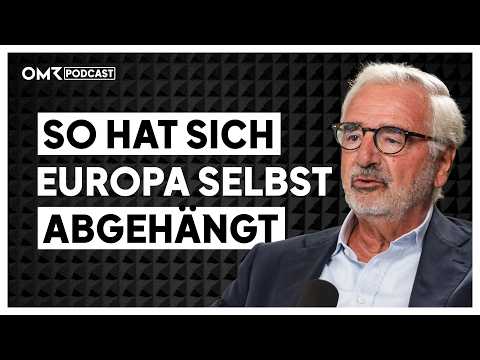
- Paul Achleitner highlights the significance of intellectual curiosity and networking, noting that interesting individuals attract one another
- He emphasizes the competitive edge of quality of life in Germany and Europe, urging the need to actively protect and enhance it
- Achleitner discusses his extensive network, which includes prominent figures like Eric Schmidt and Reid Hoffman, developed through his time in Silicon Valley and finance
- He reflects on his journey from a humble background in Austria to prestigious educational institutions, leading to influential positions at Goldman Sachs and Allianz
- The conversation addresses the importance of diverse perspectives in global business and investment strategies
Read full analysis
- Highlights the importance of intellectual curiosity and networking in achieving success
- Emphasizes the need for cultural transformation within Deutsche Bank to address internal challenges
- Overlooks the broader economic and regulatory factors influencing banking operations
- Assumes personal connections alone drive success, ignoring systemic issues
- Discusses the challenges faced by traditional financial institutions in adapting to disruptive innovations
- Reflects on the importance of maintaining a proactive approach to health and engagement as one ages
- Paul Achleitners rise from a working-class background in Austria to key roles in major financial institutions underscores the importance of seizing opportunities and building networks
- His academic journey, particularly a transformative year in the U.S, deepened his understanding of the interplay between political, social, and economic strategies, which he later applied in his career
- Achleitner stresses the critical role of corporate culture and warns against complacency, suggesting that organizations often settle for satisfactory performance instead of pursuing their full potential
- His tenure at Bain & Company and Goldman Sachs involved significant deals that helped establish their reputations in Europe, illustrating the impact of strategic decisions in finance
- Achleitners perspectives on the changing investment landscape highlight concerns about maintaining competitive advantages in a rapidly evolving market
- Achleitner highlights the significance of personal intensity and self-imposed pressure in realizing ones potential, advocating for a corporate culture that nurtures these qualities in team members
- He identifies three essential attributes for talent selection: intelligence, integrity, and intensity, emphasizing that intensity is crucial for maintaining high performance over time
- At Goldman Sachs, the strategy of initially pursuing smaller deals helped establish credibility in the German market, contrasting with the firms usual focus on larger transactions
- Engaging with the Treuhand during Germanys reunification was pivotal for Achleitner, as it provided vital access to influential decision-makers in both the economy and politics
- Achleitner discusses the challenge of building relationships beyond the CFO level, which is essential for influencing CEOs and facilitating complex transactions
- Establishing trust with decision-makers is essential for successful business relationships, resembling a sales strategy
- Goldman Sachs role in major transactions, like the Deutsche Telekom IPO, significantly impacted the German banking sector, demonstrating their capability in complex financial dealings
- Achleitners ascent to partner at Goldman Sachs was significant, as he became one of the first German-speaking partners in a predominantly English-speaking environment, indicating a cultural shift within the firm
- The partnership model at Goldman Sachs during Achleitners time required financial investment from partners, which cultivated a strong sense of entrepreneurship and accountability
- Achleitners journey underscores the necessity of adapting to local markets and gaining credibility through smaller deals before engaging in larger transactions
- Partners at Goldman Sachs can expect significant financial rewards, with annual earnings often exceeding 10 million euros, highlighting the competitive nature of the investment banking sector
- Achleitner stresses the importance of cultivating relationships and generating ideas to secure deals, noting that proactive engagement with CEOs is crucial for successful transactions
- He has managed hundreds of transactions throughout his career, showcasing his extensive expertise in the financial industry
- The discussion includes tombstones, which are markers for completed deals, representing the tangible results of Achleitners work and his lasting impact on the industry
details
- Paul Achleitners early career at Goldman Sachs involved managing complex transactions in Germany, including a pivotal deal with a defense contractor that generated long-term value
- His move from investment banking to a leadership position at Allianz was driven by a desire for greater responsibility and a more significant impact beyond advisory roles
- Achleitners experiences underscore the challenges of cross-cultural negotiations, particularly between American and German corporate practices in the 1980s
- He highlights the increasing importance of industry-specific expertise in investment banking, noting that the field has become more specialized since his early days
- Achleitners story reflects the transformation of the European financial landscape, especially after reunification, and the strategic adjustments necessary to navigate new market dynamics
- Paul Achleitner emphasizes Allianzs historical role as Europes largest single investor, comparable to todays BlackRock, with significant stakes in major companies across the continent
- He accepted an 80% salary reduction upon joining Allianz, motivated by a desire for greater responsibility and impact rather than purely financial gain
- Achleitner discusses the challenges during his tenure, particularly the Greek debt crisis, where Allianz played a crucial role in providing financial support to various entities
- He critiques recent regulatory and accounting changes in Europe that have reduced the appeal of equity investments for insurers, arguing these shifts have eroded the long-term investment advantages traditionally held by insurance companies
- The regulatory landscape in Europe restricts insurance companies long-term investment capabilities, hindering their capital market engagement
- Despite a consensus on the necessity for a stronger European capital market, political obstacles have slowed progress towards a unified structure
- The absence of pension funds in Europe has limited opportunities for involving future retirees in capital markets, unlike the significant role they play in the U.S
- Achleitner notes a significant drop in equity allocations among major insurance firms, decreasing from 30% to 3% over twelve years, reflecting a shift away from stock investments
- He conveys cautious optimism regarding the future of Europes capital markets, indicating that initiatives like the Investment and Savings Union may foster positive developments
details
details
- The speaker highlights the need for a proactive mindset focused on action rather than complaints to drive progress
- A notable shift in the labor market is occurring, with jobs relocating to areas where people prefer to live, enhancing Europes competitive edge through quality of life
- Two key priorities for Europe are identified: ensuring both internal and external security and promoting economic growth within a unified market of over 500 million relatively affluent individuals
- Despite existing challenges, Europe possesses a solid foundation in social security and education systems that can be leveraged for further improvement and growth
- The speaker emphasizes the importance of concentrating on actionable solutions instead of fixating on problems to achieve better outcomes
- The speaker discusses the decline of U.S. soft power, viewing political decisions like Brexit as significant missteps with far-reaching consequences
- He highlights the transformative potential of artificial intelligence (AI), likening its societal impact to that of the industrial revolution and cautioning against underestimating the challenges it presents to current political and economic frameworks
- Personal experiences from his career illustrate the rapid shifts in the financial sector during the dot-com bubble, emphasizing the necessity for adaptability in response to technological advancements
- The speaker underscores the importance of self-reflection, warning that outdated thinking can hinder progress, and advocates for a proactive approach to embracing new ideas and innovations
- Paul Achleitner reflects on the missed merger between Deutsche Bank and Dresdner Bank, suggesting it could have transformed the German banking landscape if it had occurred in 2000
- He stresses the need to be prepared for new opportunities, particularly in the evolving AI landscape, drawing parallels to the rapid changes seen during the Dotcom Bubble
- Achleitner discusses the entertainment and telecommunications industries as potential models for the future of AI, emphasizing the importance of continuous engagement and experimentation
- He shares insights on the pressures and expectations he faced upon joining Allianz, noting that despite initial successes, public perception remains volatile
- Achleitner acknowledges that personal dynamics and egos often hindered strategic opportunities throughout his career
- Paul Achleitner discusses his transition to Deutsche Bank, highlighting challenges in succession planning and the need for management restructuring
- He voluntarily forfeited 80% of his salary twice, demonstrating his dedication to the organizations he served despite personal sacrifices
- During his time at Deutsche Bank, Achleitner led a significant restructuring that removed one trillion euros from the balance sheet and replaced two management layers to improve flexibility and address cultural issues
- Achleitner emphasizes the critical role of corporate culture, noting that Deutsche Bank was one of the few major global banks to navigate the financial crisis without state assistance
- He reflects on the importance of knowing when to step down, sharing advice from Eric Schmidt about balancing effective contribution with the timing of leadership transitions
- Achleitner emphasizes the need for cultural transformation at Deutsche Bank to address internal hubris, contrasting it with missed opportunities at other institutions
- He faced significant operational challenges, including numerous lawsuits and the necessity of a major restructuring that involved removing one trillion euros from the balance sheet and replacing two management layers
- The difficulties traditional financial institutions encounter in adapting to disruptive innovations, especially when compared to agile startups that can quickly leverage new technologies
- Achleitner reflects on strategic decisions like transitioning to cloud technology, which was initially met with skepticism but proved essential for modernizing the banks operations
- He expresses skepticism towards cryptocurrencies, viewing them as speculative assets rather than practical currencies, and likens them to gold in terms of investment potential
- Paul Achleitner emphasizes the significance of curiosity and active listening in building professional networks, which he believes are essential for becoming an interesting person
- He recounts a personal story about his son winning a Bitcoin at an entrepreneurship camp, illustrating the generational gap in understanding technology and investment
- Achleitner discusses the fascination and myth surrounding the Bilderberg Group, noting its history of attracting influential figures and the medias interest in its activities
- He reveals his previous role as treasurer of the Bilderberg Group, highlighting his participation in high-level discussions and the selection of attendees
- The conversation addresses the challenges of establishing new financial systems within a heavily regulated environment, suggesting that private money creation may not be sustainable in the long run
- Paul Achleitner emphasizes his close relationship with Henry Kissinger, highlighting Kissingers remarkable ability to engage with contemporary issues like AI at the age of 96, which reflects his intellectual curiosity and influence
- Achleitner shares insights from his interactions with influential figures, including Sam Altman, underscoring the importance of networking and the role of active listening in becoming an engaging person
- He discusses innovations in the medical technology sector, particularly a new bioabsorbable polymer anchor designed to enhance surgical outcomes by minimizing the need for repeat operations
- The conversation explores the changing landscape of investment and technology, with Achleitner expressing caution towards emerging trends such as AI and cryptocurrency, while recognizing the potential of startups in these areas
- Paul Achleitner details his transition from Goldman Sachs to Deutsche Bank, where he led a significant restructuring during a financial crisis, removing one trillion euros from the balance sheet and changing two management levels
- He highlights the challenges posed by EU regulations on the European capital market, which he believes stifle adaptability and growth
- Achleitner discusses the hurdles faced by startups in the medical technology sector, particularly in adopting innovative surgical solutions, while expressing optimism about his current ventures
- He emphasizes the value of personal experience in leadership, arguing that while knowledge can be shared, subjective experiences must be utilized to enhance the learning of others
- At nearly 70 years old, Achleitner remains actively engaged in investment and technology, demonstrating his commitment to fostering European sovereignty and innovation
- Paul Achleitner emphasizes the importance of adapting to aging while maintaining an active lifestyle, including daily fitness boxing
- He reflects on a poem by Mario de Andrade that resonates with him, conveying the idea that everyone has two lives, with the second beginning upon realizing the singularity of life
- Achleitner shares his approach to aging, focusing on aspects he can control rather than the inevitability of getting older
- His commitment to fitness and personal training illustrates a proactive approach to health and engagement as he approaches 70 years old
The assertion that interesting people attract one another assumes a homogeneity in interests that may overlook diverse perspectives. Inference: This could lead to a narrow network that fails to innovate or adapt. The discussion lacks consideration of how external economic factors and regulatory environments impact these networks and their effectiveness. Without addressing these variables, the argument remains incomplete.
This analysis is an original interpretation prepared by Art Argentum based on the transcript of the source video. The original video content remains the property of the respective YouTube channel. Art Argentum is not responsible for the accuracy or intent of the original material.