




The British Old Man, the Power Symbiosis of Football, and the Get Out of Jail Free Card
FIFA's corruption scandal erupted in 2015 when U.S. authorities arrested several high-ranking officials during a raid in Switzerland. This event marked a significant turning point, revealing a long-standing culture of corruption within FIFA, characterized by bribery and money laundering.
OPEN SOURCEFIFA's corruption scandal erupted in 2015 when U.S. authorities arrested several high-ranking officials during a raid in Switzerland. This event marked a significant turning point, revealing a long-standing culture of corruption within FIFA, characterized by bribery and money laundering.
Investigative journalist Andrew Jennings played a crucial role in uncovering FIFA's corrupt practices, challenging the organization's leadership directly and prompting internal whistleblowers to come forward with evidence.
The scandal led to widespread media coverage and public outrage, resulting in major sponsors threatening to withdraw their support unless FIFA implemented significant reforms.
In response to the mounting pressure, FIFA initiated internal reforms and faced legal scrutiny, particularly from U.S. authorities, which further exposed the depth of the corruption.
The fallout from the scandal included the resignation of FIFA President Sepp Blatter and the indictment of numerous officials, highlighting the need for greater transparency and accountability in sports governance.
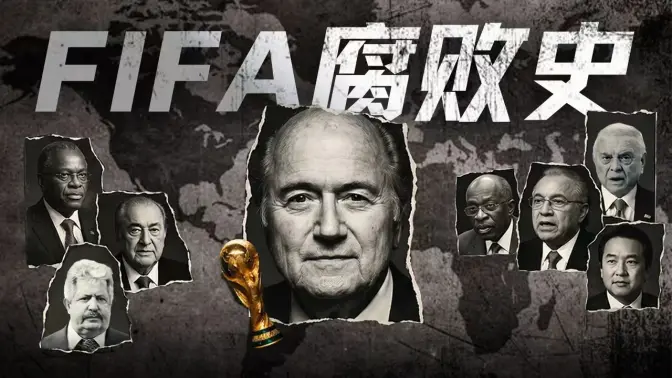
- In July 2015, FIFA announced a special presidential election following Sepp Blatters resignation amid ongoing corruption scandals, underscoring the organizations deep-rooted issues
- The arrest of seven high-ranking FIFA officials in May 2015 was a pivotal moment, as they faced a broad investigation with 47 charges related to bribery, racketeering, and money laundering
- U.S. authorities disclosed that these officials had received over $150 million in kickbacks from their control of broadcasting and marketing rights, highlighting systemic corruption within FIFA
- Blatters political strategy relied on a mutually beneficial relationship with influential figures in American and Central American football, who supported his re-election in return for financial gains from local deals
- Major sponsors, including Coca-Cola and Visa, threatened to withdraw their support unless FIFA enacted significant reforms, reflecting increasing pressure on the organization to tackle corruption
Read full analysis
- Reveal long-standing corruption within FIFA
- Highlight systemic bribery and money laundering practices
- Argue that FIFAs issues stem from external political pressures
- Claim that the organization is being unfairly targeted by U.S. authorities
- Acknowledge the role of sponsors in demanding reforms
- Recognize the impact of media coverage on public perception
- Sepp Blatter was pressured to resign as FIFA president on June 2, 2015, ahead of the February 2016 election, largely due to mounting pressure from major sponsors like Coca-Cola and Visa
- British investigative journalist Andrew Jennings played a crucial role in exposing FIFAs corruption over a two-decade investigation, significantly influencing public perception and scrutiny of the organization
- A notable moment in Jennings investigation occurred during a 2002 press conference when he questioned Blatter, which contributed to the eventual uncovering of FIFAs extensive corruption network
- Despite facing legal challenges from FIFA, Jennings persisted in his investigation, gaining the trust of insiders who provided confidential documents revealing the depth of corruption within the organization
- The corruption scandal involved a complex web of financial misconduct among high-ranking officials, with the ISL company at the center of bribery schemes that spanned multiple countries
details
details
- FIFAs presidential election operates on a one-country-one-vote system, granting equal voting power to smaller nations alongside traditional football powerhouses
- João Havelange, as FIFA president, strategically visited 86 countries, particularly in Africa, Asia, and Latin America, promising development funds in exchange for votes
- Under Havelanges leadership, corporate sponsorship, notably with Coca-Cola, significantly boosted FIFAs financial resources and expanded World Cup participation
- The funding model shift included direct cash incentives to smaller football associations, effectively allowing votes to be bought and ensuring Havelanges re-election
- ISL emerged as a key player in sports marketing, transforming FIFAs financial landscape but ultimately leading to a scandal involving illicit payments to officials
- Investigative journalist Andrew Jennings was instrumental in exposing FIFAs corruption, revealing substantial kickbacks to officials documented in secret payment lists from ISL
details
details
details
details
- A notable corruption incident involved a payment of 1.5 million Swiss francs meant for former FIFA president João Havelange, which was mistakenly deposited into FIFAs account before being returned by Sepp Blatter
- Blatters leadership transitioned FIFA from sporadic corruption to a systematic Development Program that, while claiming to support poorer nations, was often linked to his election cycles, fostering a corrupt electoral
- Investigations uncovered that FIFA officials, including Jack Warner, profited from World Cup ticket sales by reselling them at inflated prices, directly impacting fans
- The bidding process for World Cup hosting rights became increasingly tainted, with allegations that Germanys successful bid for the 2006 World Cup involved a secret payment of 10.3 million Swiss francs to secure votes
- As corruption within FIFA escalated, it extended beyond financial mismanagement to include the sale of World Cup hosting rights, reflecting a significant erosion of democratic principles in the sport
details
- The connections between FIFA officials and political leaders, especially in Russia and Qatar, have led to serious allegations of vote-buying in World Cup host selections
- Prominent figures like Jack Warner and Michel Platini have been accused of trading votes for financial incentives, involving substantial payments to football officials globally
- During the 2010 World Cup bidding, Frances then-President reportedly influenced Platini to change his vote from the U.S. to Qatar, resulting in lucrative contracts for France with Qatar
- Qatars bid for the 2022 World Cup raised concerns due to its inadequate football infrastructure, prompting investigations into the financial aspects of the voting process
- Despite thorough investigations uncovering misconduct, FIFAs leadership has frequently downplayed or dismissed the findings, preserving an appearance of legitimacy amid ongoing corruption allegations
details
details
- FIFA, as a non-profit under Swiss law, avoids stringent financial audits, resulting in a lack of accountability compared to for-profit organizations
- The organizations legal framework shields it from government oversight, enabling corruption to persist without repercussions
- Decision-making is centralized among 24 executive committee members, allowing significant financial choices to be made without external scrutiny, fostering a corrupt culture
- The U.S. Department of Justices investigation into FIFA was surprising, given the limited connections of FIFA officials to the U.S, illustrating the challenges of international law enforcement
- A pivotal moment in the investigation arose when an FBI agent found that a notable FIFA official had not filed taxes for nearly two decades, raising serious legal issues and prompting deeper examination of FIFAs practic
- FBI agent Steve Berryman utilized his passion for football to expose financial misconduct within FIFA, leading to extensive corruption investigations
- U.S. law permits jurisdiction over international financial transactions that pass through American banks, allowing the FBI to target FIFA officials regardless of the transactions origin
- The RICO Act was identified as a potential legal tool to prosecute FIFA officials involved in systemic corruption, even if they were not directly linked to specific crimes
- Berrymans collaboration with federal prosecutors facilitated a thorough investigation into illicit financial activities, gathering evidence against prominent FIFA figures
- The use of informants, such as a key insider, enabled the U.S. government to penetrate FIFAs leadership, aiming to dismantle the organizations corrupt practices
- The FBIs covert recordings revealed the involvement of influential figures in international football in corrupt activities, often without their awareness
- The U.S. Department of Justice indicted 14 individuals, including nine football officials and five sports marketing executives, leading to over 40 arrests as the investigation progressed
- Prominent figures such as the former Brazilian football president and the former CONMEBOL president received substantial prison sentences for their involvement in the corruption scandal
- Chuck Blazer, a key informant, pleaded guilty to multiple federal crimes but avoided sentencing due to his cooperation with ongoing investigations
- The scandals repercussions varied, with some individuals evading prosecution through legal loopholes while others faced significant penalties, illustrating the challenges of international law enforcement in sports corru
details
details
details
- The 2015 FIFA corruption scandal led to significant legal reforms in Switzerland, including new laws that criminalized private sector bribery, previously protected by the Swiss legal system
- Despite these reforms, prosecuting corrupt officials remains challenging for Swiss authorities, particularly as many reside outside the country
- The U.S. played a pivotal role in tackling FIFA corruption, leveraging its jurisdiction to arrest and indict international officials involved in corrupt practices
- FIFA implemented internal reforms, transitioning from secret to public voting among member associations and establishing an independent ethics committee
- Michel Platini, previously under investigation, is now suing FIFA and its president for alleged malicious prosecution over a controversial payment, reflecting ongoing power struggles within the organization
- The scandal underscores the enduring temptation of corruption in sports, as high financial stakes and concentrated power continue to foster corrupt practices
details
This analysis is an original interpretation prepared by Art Argentum based on the transcript of the source video. The original video content remains the property of the respective YouTube channel. Art Argentum is not responsible for the accuracy or intent of the original material.