



Victory Day Commemoration at Anıtkabir
Analysis of Victory Day commemoration, based on "State Officials Paid Their Respects at Anıtkabir | Erdoğan: No Tolerance for Those Targeting Our Geography" | Cnnturk.
OPEN SOURCEThe commemoration of Victory Day at Anıtkabir on August 30 serves as a significant reminder of the Battle of Sakarya, a pivotal moment in the Turkish War of Independence that marked the end of Greek occupation in Anatolia. This historical event is framed within a narrative of national pride and resilience, emphasizing the sacrifices made by past leaders and soldiers in the face of foreign threats.
President Erdoğan's remarks during the ceremony highlight the importance of national unity and the ongoing commitment to protect Turkey's sovereignty. He draws parallels between the historical struggles faced during the War of Independence and contemporary geopolitical challenges, suggesting a continuous need for vigilance against external threats.
The event also reflects on the strategic military leadership of figures like Mustafa Kemal Pasha, who orchestrated the resistance against foreign powers. His approach involved meticulous planning and coordination among Turkish forces, which ultimately led to significant victories against the Greek army, showcasing the effectiveness of strategic patience and preparation.
Erdoğan's emphasis on a strong stance against any plans targeting Turkey's territory raises questions about the balance between national security and diplomatic engagement. While he reinforces the narrative of resilience, it also invites scrutiny regarding the implications of such a hardline approach in the context of international relations.
The commemoration serves not only as a historical reflection but also as a rallying point for national identity, asserting that Turkey's presence in Anatolia is deeply rooted and must be defended. This sentiment resonates with the audience, reinforcing the idea that the spirit of resistance is vital for the nation's future.
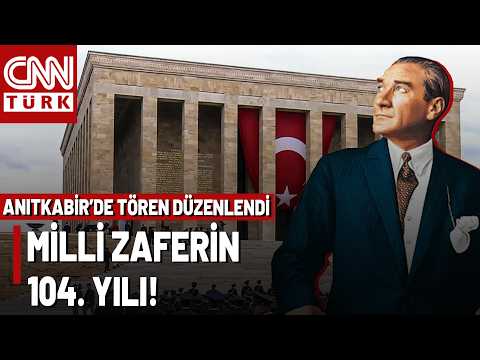
- The Battle of Sakarya, fought on August 30, 1922, marked a significant turning point in the Turkish War of Independence, leading to the end of Greek occupation in Anatolia
- The aftermath of World War I saw Allied powers, including England, France, Italy, and Greece, plotting territorial claims in Anatolia, which sparked the national resistance movement in Turkey
- Key Turkish military leaders, including Mustafa Kemal Pasha, Kazım Karabekir, and İsmet İnönü, played crucial roles in organizing the resistance against foreign occupation and mobilizing the Turkish populace
- The Turkish forces faced significant challenges, including logistical issues and heavy losses, but managed to regroup and prepare for a counter-offensive after the initial victories
- Mustafa Kemal Pasha emphasized the need for careful preparation before launching a full-scale offensive, recognizing that the struggle was against multiple foreign powers rather than a single enemy
Read full analysis
- Emphasize the importance of national unity and resilience against external threats
- Support the narrative of continuous resistance rooted in historical struggles
- Question the balance between national security and diplomatic engagement
- Raise concerns about the implications of a hardline stance on international relations
- The Battle of Sakarya, fought on August 30, 1922, marked a significant turning point in the Turkish War of Independence, leading to the end of Greek occupation in Anatolia
- Mustafa Kemal Pasha played a pivotal role in the management of the war, demonstrating strategic patience and meticulous planning to prepare the Turkish forces for a counter-offensive against the Greek army
- He recognized the strengths of the Greek forces, including their advanced weaponry and air support, and devised strategies to exploit their weaknesses, leading to significant Turkish victories
- Pashas approach involved coordinating multiple units to effectively encircle and pressure the Greek army, resulting in their rapid disintegration during the battles
- The successful execution of these strategies culminated in the Turkish forces encircling a significant portion of the Greek army at Dumlupınar in August 1922, marking a decisive moment in the conflict
- President Recep Tayyip Erdoğan commemorated the 30th of August Victory Day at Anıtkabir, emphasizing the importance of national unity and resilience against threats to Turkeys sovereignty
- He acknowledged the sacrifices of past heroes and reiterated the commitment to protect the nations future, drawing parallels between historical struggles and contemporary challenges
- Erdoğan highlighted the ongoing geopolitical tensions in the region, asserting that Turkey will not allow any plans targeting its territory, reflecting a strong stance on national security
- The discussion included reflections on Turkeys historical presence in Anatolia, asserting that the Turkish identity and heritage are deeply rooted in the region, which has been defended through various historical epochs
- The event served as a reminder of the continuous fight for independence and freedom, with Erdoğans remarks reinforcing the idea that the spirit of resistance remains vital for the nation
The commemoration of Victory Day at Anıtkabir serves as a platform for Erdoğan to reinforce national unity and resilience against perceived threats to Turkey's sovereignty. His remarks draw parallels between historical struggles and contemporary geopolitical tensions, suggesting a narrative of continuous resistance. However, the emphasis on a strong stance against external threats raises questions about the balance between national security and diplomatic engagement.
This analysis is an original interpretation prepared by Art Argentum based on the transcript of the source video. The original video content remains the property of the respective YouTube channel. Art Argentum is not responsible for the accuracy or intent of the original material.