



Understanding the Truth Behind the mRNA Dengue Vaccine
Analysis of claims regarding the mRNA-based dengue vaccine, based on "Is it true that the mRNA-based dengue vaccine contains a chip and can change DNA? | Fact Check" | TempoVideoChannel.
OPEN SOURCERecent claims suggesting that the mRNA-based dengue vaccine contains chips or has the ability to alter human DNA have been thoroughly debunked. The vaccine operates by using mRNA to instruct the body to produce antigens, a process that does not involve any electronic devices or modifications to genetic material.
These allegations reflect a wider trend of misinformation that often arises in public health discussions. The unfounded fears surrounding the vaccine highlight the critical need for health authorities to communicate transparently and effectively to counteract conspiracy theories.
The vaccine, developed through a collaboration between Indonesian universities and Sihua University, specifically targets four serotypes of the dengue virus. While artificial intelligence plays a role in analyzing virus data and aiding in vaccine formulation, it is important to clarify that AI is not part of the vaccine itself.
Furthermore, the mRNA used in the vaccine does not change human DNA; it is designed to instruct the immune system and naturally degrades after its function is complete. The protective components of the mRNA are lipid nanoparticles, which dispel concerns regarding the presence of microchips or nanobots.
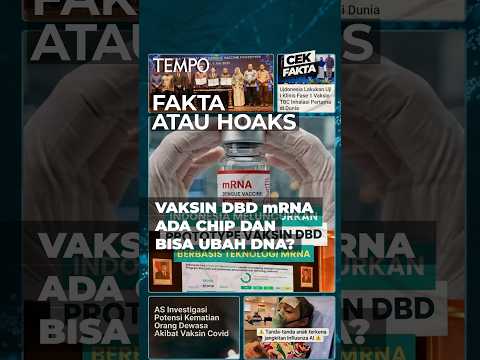
- Claims that the mRNA-based dengue vaccine contains chips, nanobots, or technologies like 5G/6G and can alter human DNA are unfounded
- The vaccine, developed through collaboration between Indonesian universities and Sihua University, targets four serotypes of the dengue virus
- AI is utilized in the research process to analyze virus data and assist in vaccine formulation, but it is not injected into the body
- The mRNA in the vaccine does not change human DNA; it instructs the body to produce antigens and naturally degrades after fulfilling its role
- The components protecting the mRNA are lipid nanoparticles, not electronic devices, dispelling fears about the presence of microchips or nanobots
Read full analysis
- Claims that the mRNA-based dengue vaccine contains chips, nanobots, or technologies like 5G/6G and can alter human DNA are unfounded
- The vaccine, developed through collaboration between Indonesian universities and Sihua University, targets four serotypes of the dengue virus
- Claims that the vaccine contains electronic devices persist despite being debunked
- AI is used in the research process but is not part of the vaccine
The claims surrounding the mRNA-based dengue vaccine reflect a broader trend of misinformation that often emerges in the context of public health initiatives. While effectively debunks the notion that the vaccine contains chips or can alter DNA, it also highlights the need for transparency and clear communication from health authorities to counteract such conspiracy theories. The reliance on AI in vaccine development, while beneficial, may further fuel skepticism if not properly explained to the public.
This analysis is an original interpretation prepared by Art Argentum based on the transcript of the source video. The original video content remains the property of the respective YouTube channel. Art Argentum is not responsible for the accuracy or intent of the original material.