



Marine Organisms and Climate Regulation
Analysis of marine organisms' impact on climate regulation, based on "These marine organisms participate in climate regulation" | Lemondefr.
OPEN SOURCEThe expedition in Greenland is centered on the study of marine organisms and their critical role in climate modeling, particularly within the Arctic ecosystem. Researchers are investigating the dynamics of food webs and how the ongoing melting of glaciers is influencing species distribution and carbon storage capabilities.
As glaciers recede, there is a notable shift in species composition, with an influx of Atlantic species into Arctic waters. This change underscores the necessity for predictive modeling to understand future ecological impacts and to inform conservation strategies.
Data collection in these ice-covered regions is essential, especially given the current gaps in species identification. The findings from this research are intended to guide international policies on fishing and ecosystem management, which are increasingly vital as climate change progresses.
The expedition also highlights the intersection of marine biology and international policy, particularly in relation to climate change. The effectiveness of agreements, such as the 2017 prohibition on fishing in the central Arctic Ocean, relies heavily on global cooperation and adherence to established regulations.
This fishing prohibition, effective until at least 2037, is designed to allow scientists the necessary time to gather data that will aid in the protection of marine ecosystems. The ongoing research aims to provide a clearer understanding of how these ecosystems function and how they can be preserved amidst changing climatic conditions.
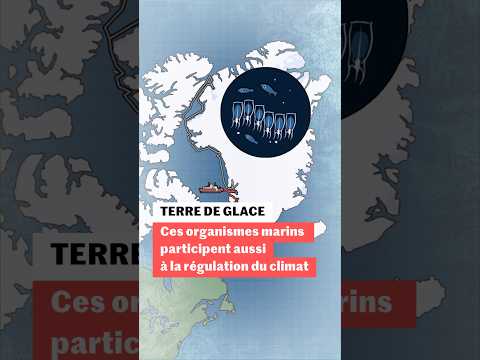
- The expedition in Greenland involves scientists studying marine organisms to understand their role in climate modeling, particularly in the Arctic region
- Researchers are examining the food web dynamics of marine species, which are crucial for carbon storage as they transport carbon from the ocean surface to the depths through their life cycles
- The melting glaciers are causing shifts in species distribution, with more Atlantic species moving into Arctic waters, necessitating predictive modeling to anticipate future ecological changes
- Data collection is critical, especially in ice-covered areas where species identification is lacking, to inform international policies on fishing and ecosystem management
- An agreement from 2017 prohibits fishing in the central Arctic Ocean until at least 2037, allowing scientists to gather necessary data to protect marine ecosystems
details
details
Read full analysis
- International agreements like the 2017 fishing prohibition are crucial for data collection
- Data collection is critical in ice-covered areas for species identification
The expedition highlights the intersection of marine biology and international policy, particularly regarding climate change and its global implications. While the research aims to inform policies on fishing and ecosystem management, the effectiveness of such agreements, like the 2017 fishing prohibition, hinges on international cooperation and compliance.
This analysis is an original interpretation prepared by Art Argentum based on the transcript of the source video. The original video content remains the property of the respective YouTube channel. Art Argentum is not responsible for the accuracy or intent of the original material.