



NASA and SpaceX Launch the Nancy Grace Roman Space Telescope
Analysis of NASA and SpaceX's launch of the Nancy Grace Roman space telescope, based on "NASA and SpaceX launch the Nancy Grace Roman space telescope; watch the " | Uol.
OPEN SOURCENASA's launch of the Nancy Grace Roman space telescope aboard a Falcon Heavy rocket from the Kennedy Space Center in Florida marks a significant advancement in astronomical observation. This new observatory is designed to map large areas of the sky, enhancing our understanding of dark energy and dark matter.
Equipped with a 300-megapixel camera, the Roman telescope boasts a field of view at least 100 times larger than that of the Hubble Space Telescope. This capability will allow for the rapid detection of galaxies, supernovae, and exoplanets, which can later be studied in detail with the James Webb telescope.
The mission's trajectory will take the telescope to Lagrange Point 2, approximately 1.5 million kilometers from Earth. From this vantage point, it will conduct observations that aim to deepen our understanding of the universe's evolution.
The successful launch is not only a technological achievement but also a testament to international scientific collaboration, particularly between NASA and SpaceX. Such missions highlight the importance of global cooperation in addressing fundamental questions about the cosmos.
Celebrations among the NASA team reflect the extensive collaboration and effort that went into the successful launch. The Roman Space Telescope is expected to provide a new perspective on cosmic phenomena, contributing significantly to the study of dark energy and dark matter.
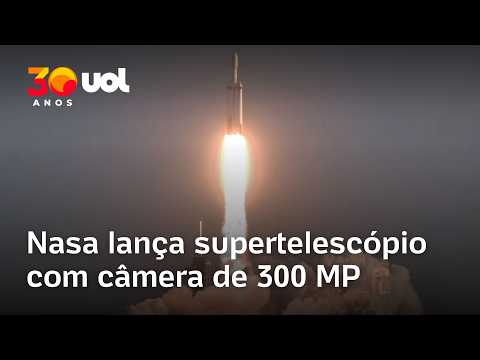
- NASA successfully launched the Roman Space Telescope aboard a SpaceX Falcon Heavy rocket, marking a significant advancement in astronomical observation
- The telescope is equipped with a 300-megapixel camera and has a field of view 100 times larger than the Hubble Space Telescope, enabling rapid detection of galaxies, supernovas, and exoplanets
- The mission aims to enhance our understanding of dark energy, dark matter, and the evolution of the universe by mapping extensive regions of the sky
- The launch took place from the Kennedy Space Center in Florida, with the rocket achieving key milestones such as booster separation and successful landings of the side boosters
- The Roman Space Telescope will travel to Lagrange Point 2, approximately 1.5 million kilometers from Earth, where it will conduct its observations
Read full analysis
- NASA successfully launched the Roman Space Telescope aboard a SpaceX Falcon Heavy rocket, marking a significant advancement in astronomical observation
- The telescope is equipped with a 300-megapixel camera and has a field of view 100 times larger than the Hubble Space Telescope, enabling rapid detection of galaxies, supernovas, and exoplanets
- NASA successfully launched the Roman Space Telescope aboard a SpaceX Falcon Heavy rocket, marking a significant advancement in astronomical observation
- The Nancy Grace Roman Space Telescope is now en route to Lagrange Point 2, marking a significant milestone in its mission to enhance our understanding of the universe
- Celebrations among the NASA team highlight the extensive collaboration and effort that went into the successful launch of the telescope
- The mission aims to provide a new perspective on cosmic phenomena, contributing to the study of dark energy and dark matter
The launch of the Nancy Grace Roman space telescope represents a significant achievement in international scientific collaboration, particularly between NASA and SpaceX. While the technological advancements are noteworthy, the implications of such missions extend beyond mere exploration; they touch on global cooperation in addressing fundamental questions about the universe.
This analysis is an original interpretation prepared by Art Argentum based on the transcript of the source video. The original video content remains the property of the respective YouTube channel. Art Argentum is not responsible for the accuracy or intent of the original material.