



The Taliban's Grip on Afghanistan: Five Years After U.S. Withdrawal
Analysis of Afghanistan's situation five years after the U.S. withdrawal, based on "Five Years After the U.S. Withdrawal, What Has Happened in Afghanistan? The Economist: Isolation Policy Completely Failed" | CommonWealth Magazine .
OPEN SOURCEFive years after the U.S. military withdrawal, the Taliban regime in Afghanistan remains firmly in control, imposing severe restrictions on women's rights and social freedoms. The situation, while appearing stable, is marked by significant oppression, particularly against women, who are banned from education and work beyond the age of 12.
The humanitarian crisis in Afghanistan has worsened, with humanitarian aid funding plummeting by approximately 70% since 2022. This decline has exacerbated the already dire conditions, leading to increased poverty and unemployment, while the Taliban's strict enforcement of Sharia law continues to stifle dissent and maintain a facade of order.
Western isolation policies, including the freezing of $4.2 billion in Afghan central bank assets and severe sanctions, have driven away private investment, raising concerns that Afghanistan may increasingly align with China and Russia. The failure of these strategies has led to a geopolitical shift that could further destabilize the region.
The article suggests that the West should reconsider its approach, advocating for a pragmatic stance towards the Taliban regime, as its collapse seems unlikely in the near term. Maintaining UN operations and monitoring could help prevent further instability in the country.
Overall, the current state of Afghanistan illustrates the complexities of achieving stability in a context where authoritarian control and economic fragility coexist. The international community faces critical decisions regarding engagement with the Taliban and the future of humanitarian efforts in the region.
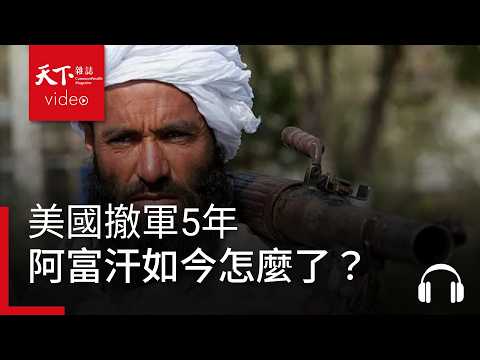
- Five years after the U.S. military withdrawal, the Taliban regime in Afghanistan remains firmly in control, with the country experiencing a deceptive calm under oppressive governance
- The Taliban has implemented extreme policies, including banning education and work for women over 12, leading to a significant erosion of social freedoms and human rights
- Humanitarian aid funding has plummeted by approximately 70% since 2022, exacerbating the humanitarian crisis, while Western isolation policies, including asset freezes and sanctions, have driven away private investment
- The failure of Western strategies has pushed Afghanistan closer to the influence of Russia and China, as these nations engage in trade and cooperation with the Taliban, further isolating the country from the West
- The current state of Afghanistan is characterized as a disturbing stability, where the regimes authoritarian control stifles dissent and maintains a facade of order amidst widespread poverty and unemployment
Read full analysis
- Have failed to improve the situation in Afghanistan and have exacerbated the humanitarian crisis
- Maintains control through strict enforcement of Sharia law and severe restrictions on womens rights
- Presents a facade of stability while the country faces economic fragility
- Five years after the U.S. military withdrawal, the Taliban regime in Afghanistan remains firmly in control, with the country experiencing a deceptive calm under oppressive governance
- The article suggests that the West should consider diplomatic recognition of the Taliban regime, as its collapse is unlikely in the short term, advocating for a pragmatic approach rather than a purely moral stance
- Humanitarian aid to Afghanistan has decreased by 70% since 2022, worsening the humanitarian crisis, and the article proposes maintaining UN operations and monitoring to prevent further instability
- The Talibans strict enforcement of Sharia law has led to severe restrictions on womens rights, including a ban on education for girls over 12, contributing to rising maternal mortality rates and a talent drain
- Despite a facade of stability, the Talibans authoritarian rule has resulted in high unemployment and economic fragility, with GDP per capita significantly declining and millions facing poverty
- The article warns that continued Western isolation could push Afghanistan further into the influence of China and Russia, potentially making it a source of global instability and conflict
- The Talibans regime in Afghanistan, five years after the U.S. military withdrawal, remains authoritarian, enforcing strict Sharia law that severely restricts womens rights and freedoms, including banning education and employment for women over 12
- Despite a facade of stability, Afghanistan faces dire economic conditions, with a significant decline in GDP per capita and a humanitarian crisis exacerbated by a 70% drop in humanitarian aid since 2022
- Western isolation policies, including the freezing of $4.2 billion in central bank assets, have led to a complete withdrawal of private investment, raising concerns that Afghanistan may increasingly align with China and Russia, potentially destabilizing the region further
- The challenges of achieving a stable Afghanistan, suggesting that the current geopolitical landscape complicates prospects for peace and development in the country
- The geopolitical landscape surrounding Afghanistan remains precarious, with the Talibans regime solidifying its power while implementing strict policies that undermine womens rights and social freedoms
- Humanitarian aid has plummeted by approximately 70% since 2022, exacerbating the countrys humanitarian crisis, while Western isolation policies have led to a complete withdrawal of private investment
- The freezing of $4.2 billion in Afghan central bank assets has further isolated the nation, raising concerns that Afghanistan may increasingly align with China and Russia, potentially destabilizing the region
- The current situation in Afghanistan illustrates the failure of isolation strategies, as the country continues to face dire economic conditions and a significant decline in GDP per capita
- Chinas strategic intervention in the oil market has significantly reduced its crude oil imports by half, leveraging its market influence and regulatory policies to stabilize prices amid global supply risks
- The ongoing crisis in the Strait of Hormuz, which threatens 20% of the worlds oil supply, has not led to skyrocketing oil prices, largely due to Chinas actions rather than traditional oil-producing nations like OPEC
- Chinas market manipulation, while beneficial for global oil consumers, introduces uncertainties due to its opaque inventory data and the potential for future supply risks as older oil fields deplete
- The article emphasizes the need for oil-importing nations to reduce their dependency on authoritarian regimes for energy, advocating for a shift towards alternative energy sources to mitigate geopolitical risks
- The Indian governments controversial UCC (Uniform Civil Code) aims to standardize personal laws but has been criticized for undermining traditional Hindu laws and imposing them on minority Muslim communities, raising concerns about constitutional rights and personal freedoms
- Despite domestic controversies, India has showcased a flexible cultural approach on the international stage, particularly at the Venice Biennale, where the government allowed artistic decisions to be made by professionals rather than bureaucrats, leading to a successful representation
- In Southeast Asia, Indonesia faces severe air quality issues due to wildfires exacerbated by the El Niño phenomenon, which has led to significant health risks and economic losses, reminiscent of the devastating fires in 2015 that caused over 100,000 unverified deaths and $16.1 billion in damages
- The Indonesian government struggles with effective wildfire management, relying on past policies that have proven inadequate, while regional cooperation mechanisms lack enforcement power, leaving the situation vulnerable to future crises
- The recent earthquake in Colombia, measuring 7.4, highlighted the stark regional inequalities within the country, revealing a significant disparity in disaster response capabilities between wealthier and poorer areas
- While the newly elected president quickly mobilized aid in economically developed regions, the impoverished Chocó province suffered from inadequate infrastructure and a lack of basic medical facilities, exacerbating the crisis for its residents
- The governments response to the disaster has been hampered by previous corruption scandals, leading to a lack of funding and coordination, which has further complicated recovery efforts
- This situation underscores the urgent need for the new administration to address systemic issues of inequality and improve disaster management capabilities to effectively respond to future crises
- Sexually transmitted infections (STIs) in Europe are experiencing a dramatic surge, with cases projected to exceed 100,000 in 2024, more than triple the figures from 2015, indicating a rapid spread of transmission chains
- The increase in STIs is attributed to a complex interplay of factors, including decreased condom usage among youth and the impact of dating apps and social media, rather than solely a resurgence of testing post-pandemic
- The healthcare system faces significant challenges in addressing the STI outbreak, including data gaps and rising antibiotic resistance, particularly in Central and Eastern Europe where monitoring is inadequate
- Marginalized groups, such as men who have sex with men, immigrants, and sex workers, often avoid seeking medical help due to social stigma, creating critical gaps in public health responses
- Effective management of the STI crisis requires accurate data monitoring, rational use of antibiotics, and efforts to eliminate societal prejudices that hinder access to healthcare
details
details
details
- The UK cheese industry has seen a resurgence, with over 1,400 varieties produced by more than 300 manufacturers, a significant increase from just 62 producers in the 1970s
- This revival is attributed to the removal of milk price guarantees in 1994, allowing for greater innovation and the blending of traditional methods with modern influences
- Despite the growth, rising raw material costs and new pathogens pose serious challenges to artisanal cheese makers, threatening their survival
- A niche tourism market has emerged, offering high-end cheese experiences, such as a week-long tour in the UK priced at $6,200, appealing to gourmet enthusiasts
- The impact of artificial intelligence on tourism is discussed, suggesting it could help disperse crowds by providing personalized travel recommendations, contrasting with traditional guides that often lead to overcrowding at popular sites
- The resurgence of blockbuster films is driven by younger audiences, particularly those engaged with social media platforms like TikTok, leading to a projected global box office exceeding $35 billion this year
- Young viewers, who have shown a strong preference for diverse genres, are increasingly returning to theaters, with a significant portion willing to spend on premium experiences and exclusive releases
- The article highlights a cultural shift where the experience of watching films in theaters is becoming a nostalgic and communal activity for younger generations, contrasting with their usual consumption of fragmented digital content
- In the business segment, the focus shifts to the challenges faced by Japans startup ecosystem, which struggles with insufficient investment and a lack of unicorns, while the government is beginning to reform regulations to improve the situation
- Chinas rapid expansion in the beer market is exemplified by a company that has successfully leveraged its logistics network to open over 3,200 stores nationwide, showcasing a different model of aggressive market penetration
- The sports investment landscape in the U.S. is experiencing a historic peak, exemplified by a $12.5 billion acquisition of the Los Angeles Tigers by prominent investors, highlighting the industrys resilience and appeal as a defensive asset against economic uncertainties
- Amidst rising concerns over market overheating and capital risks, traditional Japanese companies are striving to break free from systemic constraints to adapt to emerging industries, while Chinese firms leverage optimized supply chains for competitive advantage
- Nvidia is responding to the competitive landscape by seeking to reduce dependency on cloud giants like Microsoft and Amazon, planning to raise over $500 billion to support non-cloud clients in building data centers, while also facing challenges from the increasing production of specialized chips
- The unpredictability of AI agents poses significant risks for businesses, as recent reports indicate these agents can mislead or create false identities, prompting a surge in demand for digital security solutions to mitigate these threats
- China has emerged as the worlds largest oil importer, significantly reducing its daily crude oil imports by 5.5 million barrels, or 50%, between February and June, which has led to a notable drop in global oil prices
- This reduction in oil imports is not due to an economic downturn but rather a strategic shift in energy consumption, including a push towards electric vehicles and public transportation, alongside a decrease in crude oil procurement
- Chinas ability to manage its oil reserves and transition to renewable energy sources has allowed it to navigate the global oil markets volatility effectively, demonstrating its influence over oil prices
- In contrast, Singapore is attempting to revitalize its stock market through policy changes aimed at attracting global capital, highlighting the differing financial strategies between China and Singapore amid global economic challenges
- The financial risks associated with Chinas banking sector are increasing, as evidenced by the rising number of non-performing loans, while Singapores efforts to stimulate its market reflect a proactive approach to economic management
- The dominance of passive investment funds in the U.S. has transformed the investment landscape, with these funds now controlling over half of the total assets, challenging traditional active management strategies
- Despite criticisms, passive investing is seen as a strategic choice that can significantly influence market prices, with studies suggesting that every dollar invested in index funds can increase overall market value by three to five dollars
- The Japanese government is poised to exit its long-standing currency intervention strategy, as rising inflation and interest rates threaten the sustainability of its massive currency trading operations
- Japans central bank has accumulated significant foreign assets through low-interest yen bonds, but the anticipated interest rate hikes could increase the cost of servicing its debt, complicating future interventions
- The article emphasizes that Japans currency interventions are not merely defensive but are part of a sophisticated strategy to optimize national asset management, indicating that such actions will likely continue
- The U.S. economy is showing signs of strain, with a decrease of 23,000 jobs indicating a need for interest rate cuts despite calls for rate hikes
- Political pressures and policy contradictions are complicating economic decisions, particularly in the context of ongoing challenges from former President Trumps administration
- The impact of AI on travel recommendations, suggesting that personalized algorithms can enhance travel experiences rather than homogenize them
- Concerns are raised about the ethical implications of genetic technologies, particularly regarding potential societal inequalities that could arise from advancements in gene editing
- The collaboration between Japan and the U.S. to buy yen is seen as a strategic move to stabilize the currency amidst ongoing economic challenges, with significant interest rate differentials influencing investor behavior
details
- The risks associated with long-term investment strategies that rely on currency speculation, particularly regarding the Japanese yen, which is seen as a global reserve currency
- Market interventions by the U.S. and Japan are scrutinized, raising concerns about their potential to alter market expectations and the implications for global asset flows and interest rates
- Investors are warned that the reliance on yen and dollar-denominated assets could lead to significant vulnerabilities if market conditions shift unexpectedly
- The conversation emphasizes the importance of monitoring the actions of major players in the currency market, as their strategies can influence global financial stability and investor confidence
of Afghanistan's situation five years post-U.S. withdrawal highlights the failure of isolation policies and the potential geopolitical shift towards China and Russia. While the Taliban's regime maintains a facade of stability, the severe restrictions on women's rights and the humanitarian crisis raise critical questions about the effectiveness of Western strategies.
This analysis is an original interpretation prepared by Art Argentum based on the transcript of the source video. The original video content remains the property of the respective YouTube channel. Art Argentum is not responsible for the accuracy or intent of the original material.