



China's Coast Guard Operations and Their Impact on Taiwan
Analysis of China's Coast Guard operations and their implications for regional security, based on "Broken Chain: 1.8B Data Points Track China's Coast Guard in 1st Island Chain" | CommonWealth Magazine .
OPEN SOURCEThe recent increase in patrols by China's Coast Guard east of Taiwan marks a significant shift in operational patterns, suggesting a long-term strategy to assert control over disputed waters in the first island chain. This development is underscored by an analysis of 1.8 billion vessel data points, which reveals a concerning trend of normalization in aggressive maritime tactics that could undermine regional security.
Retired US Air Force Colonel Ray Powell has characterized these actions as indicative of a quarantine of Taiwan, highlighting the potential implications for the region. Local fishermen have reported that encounters with the Chinese Coast Guard have become a daily reality, reflecting a desensitization to these aggressive tactics that have evolved over nearly a decade.
The strategic importance of Suao port is emphasized, as it serves as a critical entry point for U.S. support in the event of conflict. The normalization of Chinese patrols raises alarms about the long-term stability of the region, with experts warning that such tactics may be replicated in other contested areas, further complicating Taiwan's security landscape.
Taiwan's Coast Guard officers have noted that encounters with Chinese vessels are now considered the new normal, adhering to strict standard operating procedures while asserting Taiwan's law enforcement rights. This shift in behavior among Chinese vessels has significant implications for both regional security and the livelihoods of local fishing communities.
Joseph Wu, Secretary-General of Taiwan's National Security Council, has stressed the importance of a comprehensive approach to maritime security, advocating for cooperation with allies like the U.S. and Japan to address these challenges. The limitations of open-source intelligence in tracking Chinese Coast Guard activities complicate Taiwan's ability to respond effectively to these evolving threats.
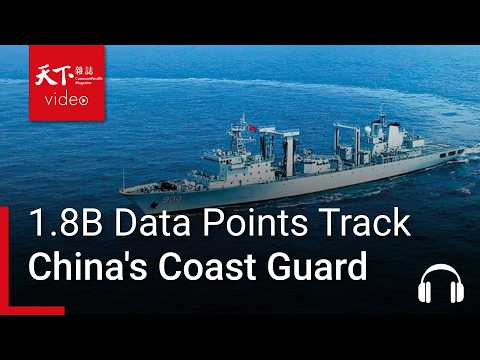
- Retired US Air Force Colonel Ray Powell warns that Chinas actions indicate a quarantine of Taiwan is already in progress, marking a shift in the operational patterns of the Chinese Coast Guard
- Chinas Coast Guard has begun routine patrols east of Taiwan, an area previously unmonitored by them, signaling a long-term strategy to assert control over disputed waters in the first island chain
- CommonWealth Magazines analysis, based on 1.8 billion vessel data points, reveals that what appeared to be isolated incidents of Chinese harassment are part of a broader, coordinated campaign across the region
- Local fishermen report that encounters with the Chinese Coast Guard have become a daily reality, highlighting the normalization of these aggressive tactics over nearly a decade
- The strategic importance of Suao port is underscored by its multifaceted operations, including military, commercial, and fishing activities, making it a focal point in Taiwans defense against increasing Chinese pressure
details
Read full analysis
- Emphasize the need for enhanced cooperation with allies to counter Chinese assertiveness
- Highlight the normalization of Chinese Coast Guard activities as a significant threat to regional stability
- Question the effectiveness of current maritime security measures in addressing the evolving threats
- Local fishermens experiences reflect broader trends in regional maritime interactions
- Suao port is strategically vital for Taiwan, serving as a potential entry point for U.S. support in the event of conflict, particularly due to its location on the east coast
- Local fishermen report that encounters with the Chinese Coast Guard have become normalized, with many now indifferent to the presence of Chinese military drills and patrols in the area
- The Diao Yutai Islands, also known as Senkaku Islands, are a contentious fishing ground where Taiwanese, Japanese, and Chinese Coast Guards frequently interact, heightening tensions
- The analysis is based on 1.8 billion vessel data points, utilizing automatic identification systems and public information from various coast guards to track maritime activities
- The normalization of aggressive tactics by the Chinese Coast Guard poses significant implications for regional security and the livelihoods of local fishermen
details
- The analysis combines a vast AIS database with open-source government information to identify Chinese Coast Guard vessels, utilizing AI tools for efficiency in data collection
- Data cleaning is crucial, as inaccuracies can arise from ships turning off transponders or erroneous data entries, necessitating verification against news reports and official announcements
- Taiwans Coast Guard officers describe encounters with Chinese vessels as a new normal, adhering to strict standard operating procedures while asserting Taiwans law enforcement rights
- The Ocean Affairs Council is establishing an information center to keep commercial ships informed about changes in the Taiwan Strait, aiming to prevent unnecessary panic among maritime operators
- There is a noted evolution in the behavior of Chinese vessels, with increasing encroachment over the years, which has significant implications for regional security and local fishing communities
- Experts indicate that Chinas Coast Guard is employing a consistent playbook across the first island chain, mirroring tactics used in the South China Sea and the East China Sea, which poses a significant threat to Taiwans maritime security
- An interview with Philippine Coast Guard spokesperson Dre Terriala highlighted the need for Taiwan to enhance its focus on maritime security to avoid scenarios similar to those in the Philippine Sea
- The normalization of Chinese patrols has led to a desensitization among local fishermen in Taiwan, raising concerns about the long-term implications for regional stability
- Joseph Wu, Secretary-General of Taiwans National Security Council, emphasized the importance of a whole-of-government approach and cooperation with allies like the U.S. and Japan to address security challenges in the region
- The limitations of open-source intelligence were discussed, particularly regarding the availability of data on Chinese Coast Guard activities, which complicates Taiwans ability to respond effectively
- Joseph Wu warns that the normalization of Chinese Coast Guard activities poses a significant risk, as public desensitization could lead to complacency regarding Chinas actions
- Ray Powell highlights that Chinas maritime maneuvers are part of a broader challenge to the rules-based order in the Indo-Pacific, with implications extending beyond Taiwan
- The Chinese Coast Guards activities are viewed as experimental, with tactics in one area likely to be replicated in others, indicating a strategic approach to regional dominance
- The U.S. is responding to increased Chinese assertiveness by enhancing military cooperation with allies, including the Philippines, through agreements like the Enhanced Defense Cooperation Agreement (EDCA)
- Collaboration with the CSIS Futures Lab aims to leverage historical data on Chinese Coast Guard movements, enhancing understanding of maritime patterns and strategic implications for Taiwan
- The challenges of tracking Malaysian vessels in maritime operations, particularly in the context of Chinas military exercises, which complicate identification due to their resemblance to ordinary fishing boats
- Transparency in data collection and analysis is emphasized as crucial for understanding Chinas maritime activities, with open-source information being a key tool for experts and officials to shed light on these operations
- The normalization of Chinese Coast Guard patrols poses a significant threat, as their routine presence may lead to complacency among Taiwanese and the international community, making such activities appear less unusual over time
- The collaboration between data engineers and reporters is underscored as essential for uncovering insights from vast datasets, with a focus on the importance of human effort alongside technological tools in this investigative work
of China's Coast Guard activities through 1.8 billion vessel data points reveals a concerning trend of normalization in aggressive maritime tactics, which may undermine regional security. The implications of these developments extend beyond immediate territorial disputes, suggesting a strategic playbook that could be replicated in other contested areas.
This analysis is an original interpretation prepared by Art Argentum based on the transcript of the source video. The original video content remains the property of the respective YouTube channel. Art Argentum is not responsible for the accuracy or intent of the original material.