




Russia-China Military Cooperation Analysis
Analysis of Russia-China military cooperation, based on "Russia, China and the Next Phase of the Global Security Challenge" | The Cipher Brief.
OPEN SOURCEMilitary collaboration between Russia and China poses a significant threat to U.S. national security interests. Reports indicate a covert training partnership focused on nuclear, biological, and radiological defense, reflecting both nations' concerns about potential threats.
Despite their partnership, a significant mistrust remains, with China perceiving itself as the dominant partner rather than an equal ally to Russia. Recent defensive training efforts, particularly in nuclear and chemical contexts, reflect a heightened paranoia about potential Western threats.
European nations face criticism for overlooking warnings about the risks of engaging with China, especially regarding critical infrastructure, which raises concerns about their strategic awareness. The evolving dynamics of the Russia-China relationship could lead to greater Chinese influence over Russian resources, particularly if the Russian government experiences instability.
Vladimir Putin's acknowledgment of no agreement reached in Anchorage reflects a shift in the Kremlin's narrative, recognizing U.S. skepticism towards their claims. New U.S. sanctions could significantly threaten the already strained Russian regime, which is grappling with severe economic and military challenges.
There are growing concerns that Russia might provoke neighboring countries like Moldova or Romania if the situation in Ukraine worsens, although NATO's unity could act as a deterrent. The rapidly changing geopolitical landscape requires the U.S. to be ready for sudden shifts in Russia's internal dynamics, which could have significant implications for global security.
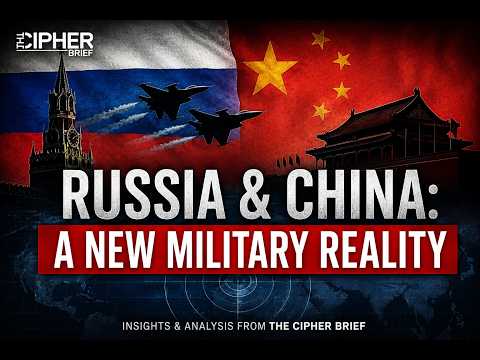
- Glenn Corn highlights the military collaboration between Russia and China as a significant threat to U.S. national security interests
- Reports indicate a covert training partnership focused on nuclear, biological, and radiological defense, reflecting both nations concerns about potential threats
- This training may enable Russia and China to operate in contaminated environments, suggesting possible offensive capabilities in future conflicts
- Despite joint military exercises, a fundamental mistrust exists, with China not considering Russia as an equal partner
- The collaboration is leveraged by Russian leadership to reinforce defense agreements while concealing deeper insecurities
Read full analysis
- Highlights the significance of military training between Russia and China as a response to perceived threats
- Notes the potential for increased cooperation due to Russias economic dependency on China
- Argues that the partnership is fragile and rooted in mistrust rather than genuine alliance
- Acknowledges the ongoing military exercises between Russia and China
- Recognizes the potential for provocations from Russia if the situation in Ukraine deteriorates
- The military collaboration between Russia and China is increasingly characterized by Russias dependency on China, driven by economic sanctions and military pressures
- Despite their partnership, a significant mistrust remains, with China perceiving itself as the dominant partner rather than an equal ally to Russia
- Recent defensive training efforts, particularly in nuclear and chemical contexts, reflect a heightened paranoia about potential Western threats, even though the offensive use of such weapons is deemed unlikely
- European nations face criticism for overlooking warnings about the risks of engaging with China, especially regarding critical infrastructure, which raises concerns about their strategic awareness
- The evolving dynamics of the Russia-China relationship could lead to greater Chinese influence over Russian resources, particularly if the Russian government experiences instability
- Vladimir Putins acknowledgment of no agreement reached in Anchorage reflects a shift in the Kremlins narrative, recognizing U.S. skepticism towards their claims
- New U.S. sanctions could significantly threaten the already strained Russian regime, which is grappling with severe economic and military challenges
- There are growing concerns that Russia might provoke neighboring countries like Moldova or Romania if the situation in Ukraine worsens, although NATOs unity could act as a deterrent
- The Russia-China relationship is evolving, with Russia becoming increasingly reliant on China for economic support, while China perceives Russia as a subordinate partner, raising questions about the alliances stability
- The rapidly changing geopolitical landscape requires the U.S. to be ready for sudden shifts in Russias internal dynamics, which could have significant implications for global security
- The expanding military cooperation between Russia and China signals a significant shift in the global balance of power, despite underlying mistrust between the two nations
- Chinas increasing influence over Russia may alter the dynamics of their partnership, raising concerns for Western policymakers regarding the implications of this collaboration
- The current battlefield momentum in Ukraine, alongside the economic and military pressures facing Russia
- NATOs deterrence posture is emphasized as a critical factor in the evolving security landscape, particularly as Europe enters a potentially pivotal phase of the conflict
- Intelligence professionals are closely monitoring various scenarios that could arise from the shifting strategic landscape
The assumption that Russia and China are forming a military alliance overlooks the fundamental mistrust between them. Inference: The collaboration may be more about leveraging perceived threats than genuine partnership, suggesting that any military exercises could be a facade for deeper insecurities rather than a cohesive strategy.
This analysis is an original interpretation prepared by Art Argentum based on the transcript of the source video. The original video content remains the property of the respective YouTube channel. Art Argentum is not responsible for the accuracy or intent of the original material.