



Trump's Claims of Election Interference and Voter Suppression
Analysis of Trump's claims regarding Chinese interference in the 2020 election, based on 'Trump's Big Speech Was 'Gibberish,' 'Drivel,' 'Horseshit'' | Zeteo.
OPEN SOURCEDonald Trump recently claimed that the 2020 election was rigged against him due to alleged Chinese interference, but he did not provide any evidence to support these assertions. The U.S. intelligence community, during Trump's presidency, found no evidence of foreign interference in the 2020 election, which contradicts his claims. Critics have described the speech as incoherent and filled with baseless allegations, raising concerns about the normalization of political violence and the potential for voter suppression.
Congressman Jamie Raskin emphasized the importance of accountability and the protection of voting rights in the U.S. He highlighted the need for Democrats to adopt a stronger agenda focused on prosecuting Republican actions and addressing voter suppression tactics. Raskin also discussed a significant shift in the Democratic Party's stance on foreign aid to Israel, advocating for a change in U.S. foreign policy amid human rights concerns.
The discussion pointed out that Trump's rhetoric could lead to intimidation at polling places, particularly among marginalized communities. Historical instances of voter suppression demonstrate that tactics to undermine free elections are not new and predate Trump's presidency. Activists have noted a decline in engagement from immigrant families, suggesting that fear and propaganda can deter community participation.
Concerns were raised about the potential culture of fear at polling stations, which could suppress voter turnout. The panel stressed the importance of grassroots mobilization to combat these issues and ensure election integrity. There is skepticism about whether Democratic leaders will act on their threats of accountability, while Republicans appear genuinely concerned about the repercussions of losing power.
The conversation concluded with a call to support independent journalism as a means to hold political figures accountable and combat misinformation. The need for a new approach to Israeli-Palestinian relations was also emphasized, focusing on national security, peace, and human rights for all involved.
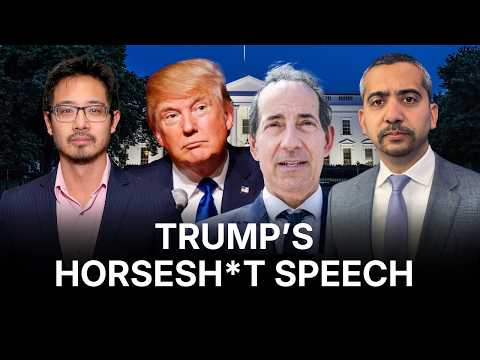
- Donald Trump claimed in a recent speech that the 2020 election was rigged against him due to alleged Chinese interference, but he did not provide any evidence to support these assertions
- The U.S. intelligence community, during Trumps presidency, found no evidence of foreign interference in the 2020 election, which contradicts his claims
- The speech is viewed as a tactic to justify ongoing Republican efforts to challenge election integrity and to prepare for the upcoming 2026 midterms
- Trumps statements are perceived as a distraction aimed at energizing his supporters, as even his own team has been unable to substantiate claims of vote manipulation
- This address reflects a broader strategy to maintain political relevance and rationalize actions against perceived electoral threats, despite the absence of credible evidence
Read full analysis
- Claim that the 2020 election was rigged due to Chinese interference without providing evidence
- Allege that foreign actors manipulated the election outcome to favor Joe Biden
- Highlight the lack of evidence for Trumps claims, supported by U.S. intelligence assessments
- Emphasize the need for accountability and protection of voting rights against suppression tactics
- Discuss the historical context of voter suppression tactics in the U.S
- Acknowledge the importance of grassroots mobilization to combat voter suppression
- Donald Trump claimed that China interfered in the 2020 election to benefit Joe Biden, but he failed to provide evidence, contradicting prior intelligence assessments
- Critics noted the speechs incoherence and its reliance on insinuations without linking claims of election fraud to any solid proof
- Trumps mention of raw intelligence from the FBI raised concerns, as such information is often unverified and may include unsubstantiated allegations
- The discussion pointed out the irony in Trumps acceptance of unverified intelligence while dismissing similar claims made against him, indicating a potential double standard
- It was noted that accusations from Trump and his allies often mirror their own actions, as illustrated by unfounded allegations of vote-buying in Michigan
details
- Donald Trumps recent speech was criticized for being nonsensical and filled with baseless claims about Chinese interference in the 2020 election, lacking credible evidence
- Congressman Jamie Raskin described the speech as a distraction from critical issues like the economy and ongoing conflicts, suggesting it aimed to manipulate public perception ahead of the midterms
- Raskin emphasized the importance of countering authoritarianism and corruption, advocating for the protection of voting rights and the expansion of democracy in the U.S
- He highlighted the need for a transition to a popular vote system for presidential elections, noting that this change aligns with majority public support
- Raskin also called for accountability regarding the misuse of government resources for personal gain, outlining a broader strategy for Democrats if they regain power
details
- The national intelligence assessment after the 2020 election dismissed Trumps claims of foreign interference, confirming no technical manipulation of voter registration or ballot casting occurred
- The intelligence community concluded that while there was foreign interference, particularly from Russia, it did not affect the vote outcome, affirming the elections security
- Trumps allegations regarding non-citizen voting have not been substantiated, with conservative sources also failing to provide evidence over many years
- Concerns were raised that Trumps rhetoric could lead to future actions undermining electoral integrity, including potential intimidation at polling places
- Congressman Raskin stressed the importance of Democrats addressing authoritarianism and corruption, advocating for the safeguarding of voting rights and the expansion of democracy
details
details
details
- Republicans are employing voter suppression tactics nationwide, such as closing polling places and purging voter rolls based on previous voting patterns
- The Democratic Party is deploying hundreds of lawyers to counteract these suppression efforts, stressing the necessity of a decisive electoral win to safeguard election integrity
- Congressman Raskin emphasizes the need for election transparency, countering widespread fraud claims by citing affirmations from Trumps own election officials regarding the 2020 elections security
- Trumps Save America Act, which seeks to enforce stricter voting regulations, raises concerns about its potential impact on future elections
- Raskin warns that the Republican Partys emphasis on voter suppression and gerrymandering threatens democratic processes, particularly as they fail to address critical issues like healthcare and economic stability
details
- Congressman Jamie Raskin stresses the need for grassroots mobilization, encouraging citizens to vote and participate in local campaigns to combat voter suppression
- He warns that a significant electoral victory is crucial to prevent Republicans from manipulating election outcomes, citing Hillary Clintons narrow popular vote win in 2016 as a potential vulnerability
- Raskin discusses the recent vote on the Massey Kana amendment, which proposed cutting $3 billion in aid to Israel, reflecting a shift in the Democratic Partys stance on foreign aid amid human rights concerns
- He notes the division within the Democratic Party regarding the amendment, with some members supporting it as a necessary stance against violence, while others oppose it due to its bluntness and ties to a controversial figure
- Raskin advocates for a change in U.S. foreign policy towards Israel, calling for a focus on peace and a move away from supporting actions that perpetuate violence in the region
details
details
- The discussion calls for a new approach to Israeli-Palestinian relations, emphasizing national security, peace, and human rights for all involved
- Concerns about election interference and the impact of large financial contributions in politics are raised, advocating for legislation to limit corporate and foreign funding in elections
- The Congressman criticizes the influence of organizations in Democratic races, promoting public financing of elections and opposing the Supreme Courts Citizens United ruling
- The conversation reflects on the lasting effects of events like January 6th, indicating they have influenced conservative policymaking and continue to threaten free and fair elections
- There is an acknowledgment that winning elections by significant margins is essential to mitigate potential election manipulation, particularly from the Republican Party
details
- The normalization of political violence is concerning, as it suggests that Republicans will question the legitimacy of Democratic victories regardless of the margin
- Under Trumps influence, there is a fear that the Republican Party will not recognize any Democratic win as legitimate, framing their actions as justified while labeling opposing actions as illegal
- Trumps recent speech has been criticized for lacking inspiration and being filled with accusations, particularly regarding the alleged weaponization of government against him, despite his own calls for investigations into political opponents
- The panel stresses the importance for Democrats to adopt a stronger agenda focused on accountability and prosecuting Republican actions, especially in light of potential investigations into influential figures
- There is skepticism about whether Democratic leaders will act on their threats of accountability, while Republicans appear genuinely concerned about the repercussions of losing power
details
- Concerns have been raised about a potential culture of fear at polling stations, which could disproportionately suppress voter turnout among marginalized communities
- Historical instances, such as the suppression of Black and Brown voters in Florida during the 2000 election, demonstrate that tactics to undermine free elections are not new and predate Trumps presidency
- Activists have noted a significant decline in engagement from immigrant families seeking assistance, suggesting that fear and propaganda can deter community participation even before any policies are implemented
- There is a pressing need for Democrats to adopt a more robust agenda focused on accountability and the prosecution of Republican actions, particularly in light of fears among GOP members regarding potential investigations after losing power
- The discussion concludes with a call to support independent journalism as a means to hold political figures accountable and combat misinformation
The lack of evidence for Trump's claims raises questions about the mechanisms behind his assertions and the assumptions that his audience will accept them without scrutiny. Inference: This reliance on unsubstantiated claims suggests a strategy to manipulate public perception, potentially undermining trust in electoral processes.
This analysis is an original interpretation prepared by Art Argentum based on the transcript of the source video. The original video content remains the property of the respective YouTube channel. Art Argentum is not responsible for the accuracy or intent of the original material.