



China's Export Controls and Their Impact on Military Production
Analysis of China's export controls on rare earths and drone components, based on "Rare Earths and Drones: China Is Squeezing the West" | The Duran.
OPEN SOURCEChina is tightening its export controls on rare earths and drone components, significantly impacting the military production capabilities of Western nations. These restrictions are part of a broader strategy to counteract Western military actions against Russia and potential future conflicts over Taiwan.
Western companies face a complicated licensing system to acquire rare earths from China, which includes strict commitments against military applications. This has led to panic among buyers and disruptions in military supply chains, particularly affecting advanced radar systems for F-35 aircraft.
In response to these challenges, the U.S. is also limiting tungsten exports, a critical material largely sourced from China, to enhance its own industrial recycling initiatives. The interplay of sanctions and counter-sanctions between the U.S. and China is escalating, affecting both military and civilian production.
China's counter-sanctions on drone components are likely to disrupt Ukraine's drone offensive, which heavily relies on Chinese-made parts that are assembled in Europe. Analysts predict a significant decline in Ukraine's drone capabilities, potentially reducing supply from thousands to hundreds per night.
European manufacturers are particularly vulnerable, as they cannot produce drones competitively without Chinese components. This situation reflects broader issues in military supply chains, similar to past difficulties encountered in artillery shell production, exacerbated by geopolitical tensions.
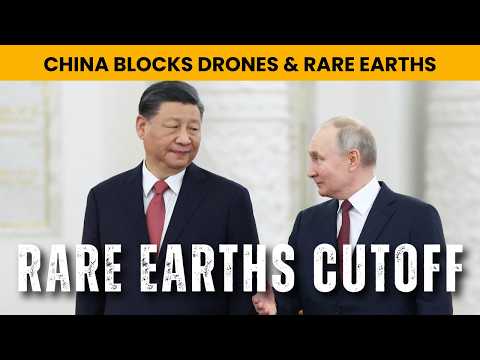
- China is tightening its export controls on rare earths and drone components, which is affecting the military production capabilities of Western nations
- Western companies face a complicated licensing system to acquire rare earths from China, which includes strict commitments against military applications
- These export restrictions are leading to significant disruptions in military supply chains, with shortages reported in advanced radar systems for F-35 aircraft
- In response to these challenges, the U.S. is also limiting tungsten exports, a critical material largely sourced from China, to enhance its own industrial recycling initiatives
- Analysts caution that these developments may have strategic consequences, especially regarding potential future conflicts involving Taiwan
details
Read full analysis
- Imposes strict licensing systems for rare earths and drone components, impacting Western military production
- Counter-sanctions against the U.S. are expected to disrupt Ukraines drone offensive
- Imposes restrictions on tungsten exports to bolster domestic supply
- Faces panic and disruptions in military supply chains due to reliance on Chinese components
- Both sides are engaged in escalating sanctions and counter-sanctions
- Military production capabilities are at risk due to complex dependencies on specific materials
- China is tightening its licensing system for rare earth and drone component exports, which is adversely affecting military production capabilities in the West, especially the U.S
- The U.S. is experiencing shortages of critical materials like tungsten, essential for missile production, prompting restrictions on exports to bolster domestic supply
- Chinas counter-sanctions on drone components are likely to disrupt Ukraines drone offensive, which heavily relies on Chinese-made parts that are assembled in Europe
- The expected decline in Ukraines drone capabilities could significantly impact the conflict, with potential reductions in drone supply from thousands to possibly hundreds per night
- These developments illustrate a broader trend of escalating sanctions and counter-sanctions between the U.S. and China, affecting both military and civilian production
- Chinas new licensing system for exports is tightening access to drone components, which are crucial for Ukraines ongoing drone offensive
- The reduction in availability of Chinese parts is expected to significantly hinder drone production in Europe and the U.S, potentially collapsing current offensive capabilities
- European manufacturers face challenges in producing drones competitively without Chinese components, risking a drastic drop in output from thousands to possibly hundreds per night
- This situation reflects broader issues in military supply chains, similar to past difficulties encountered in artillery shell production, exacerbated by geopolitical tensions
The assumption that Western nations can easily adapt to these restrictions overlooks the complexity of military supply chains and the reliance on specific materials. Inference: The potential for a military conflict over Taiwan could exacerbate these shortages, leading to unforeseen consequences for defense readiness. Without a clear strategy to diversify sources or develop alternatives, the West may find itself at a strategic disadvantage.
This analysis is an original interpretation prepared by Art Argentum based on the transcript of the source video. The original video content remains the property of the respective YouTube channel. Art Argentum is not responsible for the accuracy or intent of the original material.