



Indonesian Stock Market Resilience Amid Geopolitical Tensions
Analysis of Indonesian stock market resilience amid geopolitical tensions, based on "Hijaunya IHSG di Tengah Eskalasi Timur Tengah" | Detikcom.
OPEN SOURCEThe Indonesian Composite Index (IHSG) closed positively despite rising conflicts in the Middle East, indicating investor confidence in domestic economic fundamentals. This resilience is attributed to substantial inflows into large-cap stocks and the belief that geopolitical tensions will have a minimal impact on Indonesia's economy.
Oil prices are projected to stabilize between $60 and $80 per barrel, influenced by production levels and demand changes. Increased oil production may drive prices higher, but if demand does not keep pace, reductions could be necessary.
Despite ongoing geopolitical tensions, the Indonesian stock market demonstrated resilience, with the IHSG closing in positive territory. Investor optimism is bolstered by strong domestic economic fundamentals and significant inflows into large-cap stocks.
Fluctuating commodity prices, including those for carbon emissions and ammonia, are affecting major companies in the current economic landscape. The outlook for the Indonesian economy remains positive, with expectations of stable inflation and GDP growth.
A careful balance between financial aid and market stability is necessary, as excessive liquidity could trigger inflationary pressures. The Financial Services Authority (OJK) is vital for maintaining economic stability, though concerns regarding its effectiveness persist.
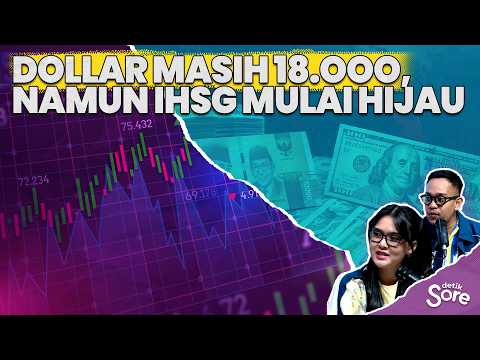
- The Indonesian Composite Index (IHSG) closed positively despite rising conflicts in the Middle East, indicating investor confidence in domestic economic fundamentals
- This market resilience is driven by substantial inflows into large-cap stocks and the perception that geopolitical tensions will minimally impact Indonesias economy
- While concerns about inflation and high oil prices remain, the overall market sentiment is optimistic as investors look for potential opportunities
- The strength of the U.S. dollar index may affect local market dynamics, influencing currency values and investment strategies
- The ongoing geopolitical situation, particularly involving key players in the region, could shape future market conditions and affect investor confidence
details
details
Read full analysis
- Highlights resilience of IHSG despite geopolitical tensions
- Notes substantial inflows into large-cap stocks indicating market stability
- Identifies potential supply chain disruptions as a risk factor
- Acknowledges fluctuations in oil prices and their impact on the market
- Recognizes the role of the OJK in maintaining economic stability
- Oil prices are projected to stabilize between $60 and $80 per barrel, influenced by production levels and demand changes
- Increased oil production may drive prices higher, but if demand does not keep pace, reductions could be necessary
- Current market conditions indicate a resistance level for oil prices around $90 per barrel, with adjustments likely needed due to production cuts
- Investor confidence and market independence are crucial, especially concerning oil supply and pricing dynamics
- There are significant concerns about high oil prices potentially leading to a 70-80% increase in subsidies in the near future
details
details
- Despite ongoing geopolitical tensions in the Middle East, the Indonesian stock market demonstrated resilience, with the IHSG closing in positive territory
- Investor optimism is bolstered by strong domestic economic fundamentals and significant inflows into large-cap stocks, reflecting confidence in Indonesias economic stability
- Historical trends show that the IHSG has rebounded from lower levels in the past, indicating potential for recovery even amid negative market sentiment
- The analysis outlines three market scenarios: Bear Case, Base Case, and Best Case, with the Base Case projected around 1700, suggesting a cautious outlook for retail investors
- Dividends and currency stability are highlighted as key factors influencing market expectations for the second half of the year, impacting investment decisions
details
- Fluctuating commodity prices, including those for carbon emissions and ammonia, are affecting major companies in the current economic landscape
- Despite existing challenges, the outlook for the Indonesian economy remains positive, with expectations of stable inflation and GDP growth, particularly influenced by the Rupiahs performance
- The Financial Services Authority (OJK) is vital for maintaining economic stability, though there are concerns regarding its effectiveness and the necessity for timely interventions
- Inflation is anticipated to stay around 3%, which is crucial for economic planning and consumer confidence, especially in the housing sector
- A careful balance between financial aid and market stability is necessary, as excessive liquidity could trigger inflationary pressures, highlighting the need for prudent monetary policy management
- The market is facing challenges due to significant fluctuations in stock prices and credit availability, which are affecting investor confidence
- A potential 34% increase in liquidity in the floating market is anticipated, but selling conditions remain uncertain, with full market stabilization projected to take 30-40 months
- Strategic financial decisions are crucial, particularly regarding the SQP, which is being employed to navigate the current market landscape
- Despite these difficulties, there is optimism about the markets adaptability, highlighting the importance of proactive measures
The assumption that geopolitical tensions will minimally impact Indonesia's economy overlooks potential indirect effects, such as shifts in global investor sentiment and supply chain disruptions. Inference: If the U.S. dollar strengthens significantly, it could lead to capital outflows from emerging markets like Indonesia, challenging the current optimism.
This analysis is an original interpretation prepared by Art Argentum based on the transcript of the source video. The original video content remains the property of the respective YouTube channel. Art Argentum is not responsible for the accuracy or intent of the original material.