



Mumbai's Infrastructure Crisis
Analysis of Mumbai's infrastructure crisis, based on 'India's Richest SCAM: With 81,000 crores, why does Mumbai still look like a poor African country?' | Think School.
OPEN SOURCEMumbai, despite having significant financial reserves exceeding ₹81,000 crores, struggles with severe infrastructure issues. The Brihanmumbai Municipal Corporation (BMC) has been criticized for its mismanagement of funds, leading to inadequate roads and basic amenities.
An audit by India's national auditor, the CAG, revealed alarming financial irregularities within the BMC, including a lack of competitive tenders, absence of formal contracts, and no independent audits for numerous projects. These issues highlight systemic problems in governance and accountability.
The governance structure in Mumbai is fragmented, with multiple agencies managing different aspects of city planning and infrastructure. This fragmentation complicates accountability and hinders effective resource allocation, resulting in ongoing infrastructure decay.
Comparisons to Singapore illustrate the potential benefits of consolidating various agencies into a single authority, which could streamline governance and enhance infrastructure management. Singapore's success in reducing flood-prone areas serves as a model for Mumbai's needed reforms.
Addressing Mumbai's infrastructure challenges requires a fundamental reform of its governance structure. Simply suspending officials or reacting to scandals will not resolve the deeper systemic failures that persist.
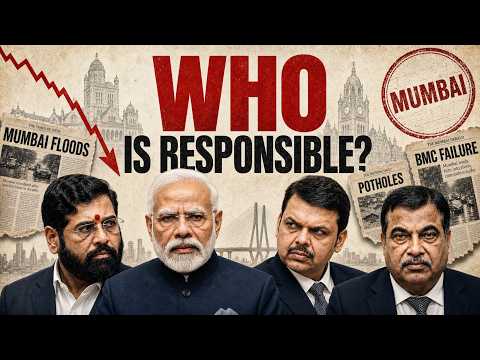
- Mumbai has a budget exceeding ₹80,000 crores, yet it struggles with inadequate infrastructure and basic amenities, revealing a stark contrast between its wealth and living conditions
- The Brihanmumbai Municipal Corporation (BMC) possesses significant financial reserves and generates substantial interest income, but the citys infrastructure remains poor, raising concerns about how these funds are managed
- The leaky bucket analogy highlights the mismanagement of resources, where a wealthy individual neglects proper contracts and oversight, resulting in wasted funds and ongoing issues
- The speaker, frustrated as a resident, questions the effectiveness of the BMC and the Maharashtra government in utilizing the citys financial resources for meaningful improvements
- There is a pressing need for enhanced governance and accountability in managing public funds to effectively tackle Mumbais infrastructural challenges
Read full analysis
- Highlights lack of competitive tenders and absence of formal contracts in BMC projects
- Reveals systemic issues leading to financial irregularities and poor infrastructure
- Questions the effectiveness of the Maharashtra government in overseeing BMC operations
- Critiques the fragmented governance structure that complicates accountability
- Notes the significant financial reserves of ₹81,000 crores held by BMC
- Identifies the need for structural reform in Mumbais governance
- The CAGs audit of the Brihanmumbai Municipal Corporation (BMC) uncovered significant financial mismanagement, highlighting three critical issues: lack of competitive tenders, absence of formal contracts, and no independent audits for projects worth thousands of crores
- BMC awarded contracts totaling 214 crores without inviting tenders, violating its own procurement rules, and repeatedly issued work orders worth 159 crores to a single vendor without competitive bidding
- A total of 4,755 crores were disbursed without formal contracts, preventing the BMC from taking legal action against contractors for inadequate performance or fraud
- The audit revealed that 3,355 crores worth of projects lacked independent verification, raising serious concerns about the quality and legitimacy of the completed work
- Mumbais governance structure complicates accountability, as the city is managed by multiple authorities, resulting in inefficiencies and unclear responsibility for infrastructure issues
- Since the term of elected corporators ended in March 2022, the BMC has been overseen by an unelected bureaucrat, worsening governance challenges and hindering necessary reforms
details
details
details
- Mumbais governance is hindered by fragmentation, with six agencies managing land use planning, which creates inefficiencies and obscures accountability for infrastructure issues like potholes
- The municipal commissioner, an appointed bureaucrat, wields significant authority but is disincentivized from initiating long-term projects due to short tenures, leading to a preference for quick, attention-grabbing initiatives over essential infrastructure improvements
- Despite holding substantial financial reserves of 81,000 crores, Mumbais funds are underutilized due to bureaucratic inefficiencies and a lack of cohesive leadership, stifling the citys development potential
- The situation in Mumbai draws a comparison to Singapore, suggesting that consolidating various agencies into a single authority could streamline governance and enhance infrastructure management, similar to Singapores National Water Agency
- Mumbais governance is hampered by a fragmented organizational structure, with multiple agencies overseeing city management, resulting in inefficiencies and a lack of accountability
- Despite having substantial financial reserves of ₹81,000 crores, Mumbais funds remain underutilized due to systemic issues rather than a shortage of resources, indicating a pressing need for structural reform
- The successful consolidation of water management agencies in Singapore serves as a potential model for Mumbai, illustrating how a unified approach can significantly enhance infrastructure and reduce flooding
- Short tenures for officials in Mumbai discourage long-term planning and accountability, contributing to ongoing infrastructure challenges such as potholes and inadequate drainage systems
- Addressing Mumbais issues requires reforming the governance structure; simply suspending officials or reacting to scandals will not fix the deeper systemic failures that persist
The BMC's financial mismanagement suggests a lack of accountability and oversight, which are critical for effective governance. Inference: The assumption that increased funding will automatically improve infrastructure is flawed; without proper management and transparency, funds may continue to be wasted. The absence of competitive bidding and independent audits creates a boundary condition where inefficiency thrives, undermining public trust.
This analysis is an original interpretation prepared by Art Argentum based on the transcript of the source video. The original video content remains the property of the respective YouTube channel. Art Argentum is not responsible for the accuracy or intent of the original material.