



China's Electric Vehicle Market: A New Era of Dominance
Analysis of China's electric vehicle market dominance, based on 'Detroit's Dunne, China's won? How it happened & is it 'unstoppable'? | Everything Electric Show.
OPEN SOURCEChina's electric vehicle (EV) market has rapidly evolved, showcasing significant growth in production and exports. Michael Dunne, an expert in the automotive sector, discusses the strategic advantages that have propelled China's dominance, including government support and advancements in battery technology.
Dunne's insights reveal a transformation in consumer attitudes towards Chinese brands, particularly as companies like BYD and Chery gain recognition in international markets. The discussion highlights the shift from skepticism to acceptance of Chinese vehicles, driven by improved designs and performance.
The conversation also addresses the challenges faced by Western automakers, who are struggling to compete against the low-margin strategies of Chinese manufacturers. The reliance on state support for Chinese companies raises questions about the sustainability of this competitive advantage in the long term.
Dunne emphasizes the importance of innovation in the automotive industry, suggesting that Western companies must focus on software and autonomous technologies to remain competitive. The need for a shift in strategy is critical as the landscape continues to evolve.
The discussion touches on the broader implications of China's automotive rise, including potential job losses in the West and the impact on local manufacturing capabilities. The need for a balanced approach to trade and competition is highlighted as a key concern for policymakers.
Overall, the dialogue underscores the dynamic nature of the global automotive market, where China's rapid advancements in EV technology and manufacturing capabilities present both opportunities and challenges for the future.
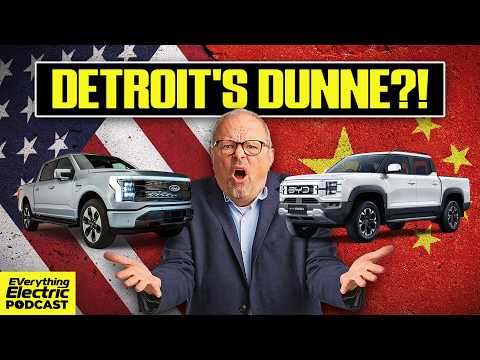
- Michael Dunne, a specialist in Chinas automotive sector, discusses the countrys swift ascent in electric vehicle (EV) production and its growing market dominance
- Dunnes background includes a deep connection to Detroits car culture and his first visit to China in 1986, where he witnessed the early stages of its automotive industry, highlighted by the Shanghai 760 model
- The dialogue explores the transformation of Chinas car manufacturing from limited production for officials to a thriving export market, now reaching countries like the UK
- Dunne points out Chinas strategic advantages in the EV market, such as government support and a strong emphasis on battery technology, which enhance its competitive edge over Western manufacturers
- The upcoming Everything Electric expos in the UK and Sydney will feature new Chinese vehicles, underscoring the increasing impact of Chinese automotive brands on the global stage
Read full analysis
- Highlights rapid growth and technological advancements in Chinas EV sector
- Emphasizes government support as a key factor in market dominance
- Raises concerns about the sustainability of state-supported companies
- Questions the long-term viability of Chinese dominance in the global market
- Acknowledges the shift in consumer attitudes towards Chinese automotive brands
- Notes the challenges faced by Western automakers in adapting to the changing landscape
- Michael Dunne highlights the rapid evolution of Chinas electric vehicle (EV) market, showcasing its ambitions to dominate globally
- His experiences in China since 1986 provide insight into the transformation of brands like BYD, which have shifted from struggling to thriving in the automotive sector
- The discussion contrasts the modern infrastructure of cities like Shanghai with outdated perceptions of Chinese cars, reflecting significant changes in consumer attitudes
- Dunne emphasizes that todays Chinese automotive landscape features advanced electric vehicles gaining popularity both domestically and internationally
- The conversation explores the implications of Chinas automotive rise for global markets, particularly regarding competition with Western brands
- Chinas electric vehicle (EV) market has experienced a dramatic shift, with EV sales rising from 6% to 50% of total sales in just five years, reflecting a significant change in consumer preferences
- Foreign automakers are witnessing a sharp decline in demand within China, leading to a surge in exports from 1 million to an anticipated 12 million units during the same period
- Chinese brands such as BYD and Chery are gaining recognition in the UK market, with an increasing presence of both electric and gasoline-powered vehicles, signaling a shift in global automotive dynamics
- In the UK, electric car sales have recently surpassed those of traditional petrol cars, indicating a broader trend towards electrification, although hybrids remain the most commonly sold vehicle type
- The UKs electric vehicle infrastructure is improving, with a growing number of charging stations, which is essential for supporting the increasing adoption of EVs
details
- Urban areas in London are transforming as former petrol stations are repurposed into electric vehicle charging stations, improving local environments
- Chinese automotive brands, including MG, have gained significant acceptance in the UK market, overcoming initial skepticism and establishing a strong presence
- There is a trend of experienced professionals from the British automotive sector relocating to China, enhancing the innovation in design and production techniques within Chinese car manufacturing
- Chinese companies have progressed from copying foreign designs to innovating on them, showcasing a notable improvement in their research and development capabilities
- The rise of Chinese electric vehicles is influencing consumer preferences in the UK, with electric car sales now exceeding those of traditional petrol vehicles
- BYD, a leading Chinese electric vehicle manufacturer, employs one million people, with 100,000 dedicated to research and development, showcasing its scale compared to traditional automakers like Toyota
- Chinas Made in China 2025 initiative focuses on establishing the country as a leader in next-generation technologies, particularly in electric vehicles and batteries, bolstered by substantial government investments and subsidies
- The entry of Tesla into the Chinese market in 2020 shifted consumer perceptions of electric vehicles, emphasizing the importance of in-car experience and software over traditional performance metrics
- Initial hesitance among Chinese consumers regarding electric vehicles stemmed from concerns about design and performance, but Teslas success led to a renewed interest in domestic brands such as BYD, Nio, and Xpeng
- The rapid rise of Chinese electric vehicle manufacturers has disrupted the complacency of global automakers, who had relied on gasoline-powered vehicles until 2020, indicating a significant shift in the automotive industry
- The automotive landscape is shifting dramatically, with traditional Western automakers like Toyota and Volkswagen facing challenges from rapidly advancing Chinese companies such as BYD
- The 2023 Shanghai Motor Show highlighted the dominance of Chinese brands, surprising foreign executives with their advancements in battery technology and software
- Chinese electric vehicle sales have surged, driven by improved consumer perceptions following Teslas market entry, which emphasized a new focus on software and design over traditional performance metrics
- The rise of Chinese automakers presents significant challenges for established manufacturers in Europe and the U.S, raising concerns about potential job losses and the overall stability of the industry
- Chinese companies are strategically expanding their manufacturing footprint in Europe, with new factories being established in countries like Spain and Hungary to capture a larger share of the market
details
- Chinese automakers, including MG, are increasing their market share in the UK by introducing premium brands that compete with established foreign manufacturers
- Decades ago, major Western automakers like GM and Ford made strategic choices that inadvertently bolstered Chinas position in the electric vehicle market, particularly through the transfer of critical technologies
- Chinas acquisition of Magniquench, a key player in rare earth magnets, illustrates how foreign investments have enabled China to dominate essential materials for electric vehicle production
- The strategic foresight of Chinese policymakers in the 1990s to secure vital technologies has given them a significant edge in the global electric vehicle landscape
- Western automakers ongoing dependence on Chinese battery materials raises concerns about the sustainability of their electric vehicle strategies in the face of rising competition
- Chinas automotive industry has transformed dramatically, producing over 50 million vehicles annually and capturing more than half of the global market, a significant rise from just 2% two decades ago
- The push for electric vehicles (EVs) in China is largely motivated by the need to reduce reliance on imported fossil fuels, as evidenced by concerns over a $100 billion oil import bill
- Chinas strategy involves consolidating smaller automakers, resulting in a dynamic industry landscape with around 250 companies, many of which are relatively unknown internationally
- Decisions made in the 1990s, including the transfer of key technologies to China, have played a crucial role in establishing its current dominance in the EV and battery sectors
- Despite its production capabilities, Chinas domestic market struggles with low consumer confidence, prompting manufacturers to increasingly target international markets
details
details
- Chinas automotive industry continues to grow, with local governments incentivizing the establishment of new companies, leading to an increase in the number of automakers despite consolidation efforts
- The presence of many loss-making automotive companies in China, sustained by state support, challenges Western assumptions about market sustainability and efficiency
- Chinese automakers are ramping up exports, supported by government backing, which complicates perceptions of their competitiveness in the global market
- State banks play a significant role in providing favorable loans to automotive companies, effectively subsidizing them and raising concerns about fair competition internationally
- There is a notable perception gap among consumers regarding the origins of electric vehicles compared to solar panels, with greater awareness of the Chinese origin of cars potentially influencing market dynamics
- Chinas electric vehicle (EV) market strategy is heavily supported by government initiatives, including low-interest loans and resource discounts, giving it a competitive edge over Western manufacturers
- The West faces challenges in responding to Chinas manufacturing dominance, as opening markets to Chinese products could threaten local industries that cannot compete with state-subsidized companies
- Despite initial perceptions of Chinese cars as inferior, their increasing recognition for quality and affordability raises concerns about their expanding market presence in Western countries
- The offshoring of manufacturing jobs to China has resulted in a significant decline in domestic production capabilities in the West, leading to a reliance on imports for essential goods
- The transition from traditional manufacturing to battery production and EVs underscores the environmental and social trade-offs, as Western economies deal with the repercussions of outsourcing polluting industries
- Chinese electric vehicle (EV) manufacturers are willing to operate at low margins to achieve long-term market dominance, contrasting with Western companies that may find the Chinese market unsustainable
- Innovative designs, such as a new pickup truck in the U.S, reflect a shift towards simpler and more efficient electric vehicles that appeal to younger consumers, moving away from the complexity of traditional models
- Chinas unmatched manufacturing scale in the automotive sector has prompted companies like Lexus to produce electric vehicles locally, highlighting a significant shift in global manufacturing dynamics
- The increasing presence of electric buses and trucks in urban areas indicates that the next phase of EV adoption will encompass larger vehicles beyond just passenger cars
- Western companies are urged to focus on software and autonomous technologies rather than solely on manufacturing electric vehicles, as competition in the automotive sector intensifies
- The emergence of Chinese electric vehicle (EV) manufacturers marks the start of their global automotive expansion, posing challenges for the Western auto industry
- While Western markets grapple with congestion, Chinas automotive sector benefits from government support, robust supply chains, and large-scale manufacturing, positioning it for market dominance
- Western companies are encouraged to innovate beyond traditional manufacturing, emphasizing software and autonomous technologies to stay competitive in the evolving automotive landscape
- Luxury brands like Rolls-Royce and Bentley continue to perform well, yet the broader automotive industry faces significant risks if it fails to adapt to changing market dynamics
- The need to consider not only the technology behind electric vehicles but also the political and economic ramifications of declining automotive manufacturing capabilities in the West
The discussion assumes that China's current dominance in the EV market is sustainable without considering potential shifts in global trade policies or technological advancements from competitors. Inference: The reliance on state support may not be a long-term solution, as market dynamics could change. Missing variables include the impact of Western innovation and consumer preferences, which could disrupt China's trajectory.
This analysis is an original interpretation prepared by Art Argentum based on the transcript of the source video. The original video content remains the property of the respective YouTube channel. Art Argentum is not responsible for the accuracy or intent of the original material.