



Political Polarization and Violence in America
Analysis of political polarization and violence, based on "Tim Pool vs Progressives | Surrounded Follow-Up" | Jubilee.
OPEN SOURCEThe discussion centers on the increasing polarization in American politics, particularly regarding immigration issues. Tim Pool reflects on his early political influences and expresses concern over the inability of opposing sides to find common ground, especially in light of recent events that have heightened tensions.
The Biden administration's immigration policies have sparked significant debate, with accusations from conservatives that these policies facilitate illegal entry into the U.S. This has led to confrontations between state and federal authorities, illustrating the deepening divide in responses to immigration enforcement.
Pool addresses the misinterpretation of his views on civil strife, clarifying that his statements are based on mainstream media rather than personal beliefs. He highlights the role of social media in shaping perceptions and contributing to political polarization, noting that sensationalized content often distorts actual statements.
The conversation critiques the progressive movement's potential for extreme measures in response to perceived authoritarianism, suggesting that such actions could lead to civil conflict. Pool argues that political violence is often more associated with leftist ideologies, while acknowledging the acute forms of violence that can arise from the right.
The discussion also contrasts the violence during the May 29, 2020 protests with the January 6 Capitol riot, highlighting perceived disparities in political accountability. Pool advocates for a reevaluation of prison sentences for those involved in both events, suggesting that political leaders should be held accountable for their rhetoric.
Ultimately, the dialogue emphasizes the need for consistent condemnation of violence from both political sides and the importance of understanding the complexities of political rhetoric. Pool calls for more constructive political dialogue rather than performative exchanges driven by social media.
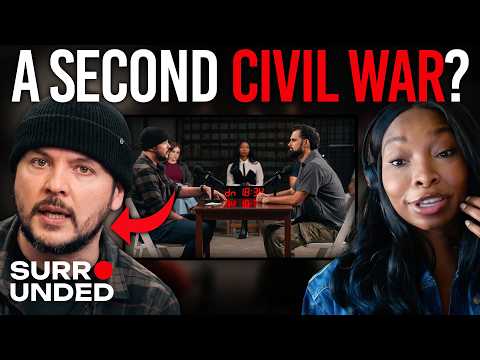
- Tim Pool discusses his background in politics, which began in childhood through early internet access and exposure to political punk music, leading to his involvement in movements like Occupy Wall Street
- He expresses concern over the increasing polarization in American politics, suggesting that the divide between Republicans and progressives is becoming irreconcilable, particularly in light of recent events like ICE shootings and confrontations at the southern border
- Pool argues that both sides are entrenched in their worldviews, making it unlikely for them to find common ground, as evidenced by the ongoing tensions surrounding immigration policy and political rhetoric
- He emphasizes the importance of understanding differing perspectives, warning against the dangers of escalating political violence and the potential for societal conflict
Read full analysis
- Accused of fostering a culture that permits political violence through radical rhetoric
- Criticized for misinterpreting conservative views and contributing to polarization
- Accused of inciting violence through rhetoric, particularly regarding immigration
- Claimed to have a culture that condones violence against perceived threats
- Both sides are seen as entrenched in their worldviews, making consensus difficult
- Political violence is a complex issue that requires accountability from leaders on both sides
- The Biden administrations actions regarding non-citizens at the border are framed as potentially facilitating criminal activity, as entering outside of designated ports of entry violates U.S. law
- Recent tensions have seen state and federal authorities in standoffs, highlighting the polarization in responses to immigration enforcement, particularly following events like January 6th
- A specific case involving a woman arrested for overstaying her visa illustrates the contrasting narratives between progressives and conservatives, with each side framing the situation to fit their political agendas
- The U.S. is experiencing a fundamental clash between two opposing worldviews: a multicultural democracy and a constitutional republic, making consensus nearly impossible
- Political commentators, including the speaker, acknowledge their role in contributing to the polarized atmosphere but express skepticism about the possibility of bridging the divide, given entrenched biases and media mischaracterizations
- Progressives misinterpret his views on civil strife and potential civil war, often influenced by sensationalized social media content that distorts his actual statements
- He emphasizes that his discussions about civil war are based on mainstream media articles and not fabricated narratives, asserting that he has never claimed a civil war is guaranteed to happen
- The speaker highlights the role of social media algorithms in shaping perceptions, leading audiences to only consume content that reinforces their existing beliefs, which contributes to political polarization
- He points out that despite being labeled as a proponent of civil war, he has produced a vast amount of content (around 30,000 clips) on various topics, with only a small fraction discussing civil war specifically
- The speaker challenges progressives to consider the implications of political actions, such as the deployment of military forces under Trump, and questions their willingness to address these issues
details
details
details
- The political left, particularly progressives, may resort to extreme measures to counter perceived authoritarianism from conservatives, such as military deployment against migrants, which could lead to violent escalation
- He suggests that the current political climate presents a dichotomy: either a fascist dictatorship under conservative rule or a socialist revolution if left unchecked, highlighting the potential for civil conflict
- The speaker critiques the progressive movements calls for radical changes, such as abolishing the Senate, and questions the implications of such actions on the stability of the political system
- He claims that political violence is more frequently associated with leftist ideologies, citing riots and vandalism as examples, while acknowledging that right-wing violence tends to manifest in more acute forms, like mass shootings
- The response of Democratic leaders to violence attributed to the left, arguing that while they condemn such acts, they also support movements that may indirectly encourage them, such as fundraising for individuals involved in riots
details
- The speaker distinguishes between acute violence associated with the right, exemplified by mass shootings, and more sustained violence from the left, such as riots and vandalism, arguing that both forms of violence should not be equated in political discourse
- He emphasizes that while high-profile right-wing attacks are rare, leftist violence is more frequent but often goes unreported, leading to a skewed perception of political violence
- The speaker critiques the use of isolated incidents of violence to label entire political ideologies, arguing that mainstream conservative figures actively reject white supremacy, making it misleading to associate them with fringe violent acts
- He asserts that the January 6 Capitol riot, while significant, does not compare in scale or impact to many leftist riots over the past decade, suggesting that the latter have caused more widespread violence and damage
- The January 6 event obstructed constitutional processes, which he views as a critical distinction that elevates its severity compared to other riots
details
details
details
- The speaker highlights the violence during the May 29, 2020, protests in Washington, D.C, where far-left activists injured over 100 federal officers and set fire to St. Johns Church, contrasting this with the January 6 Capitol riot
- Despite the severity of the May 29 events, the speaker notes a lack of hearings or accountability from both Republicans and Democrats, suggesting a double standard in how political violence is addressed
- Individuals involved in the Capitol riot who attacked police deserve prison time, but questions the fairness of the sentences given to those charged with lesser offenses, advocating for pardons to reduce societal tensions
- The discussion raises the issue of political responsibility, asserting that politicians like Elizabeth Warren should not be held accountable for the violent actions of individuals who share their views, as long as they denounce violence
- The speaker criticizes Donald Trumps rhetoric regarding violence, suggesting that mainstream political figures are not inciting violence despite the heated political climate
details
- The complexities surrounding violence and political rhetoric, particularly in the context of the January 6th Capitol riot and the subsequent actions of various political figures
- While individuals involved in the Capitol riot should face consequences, there is a disparity in accountability for political figures who may indirectly support violence through their rhetoric or actions
- Examples are drawn from both sides of the political spectrum, with references to the George Floyd protests and the perceived leniency shown by Democratic leaders towards those who engaged in violence during those events
- The conversation also touches on the notion of diversity of tactics within leftist movements, suggesting that some organizers may tacitly endorse violence as a means to achieve their goals, contrasting this with the lack of similar behavior among conservatives
- The speaker raises concerns about the Republican Partys response to violence, suggesting that there is a culture of condoning or even celebrating violent actions, particularly in relation to immigration enforcement
details
details
details
details
- The discussion centers on the argument that both Republicans and Democrats create structures that enable political violence, with Republicans accused of fostering a culture that permits such actions through their policies
- The speaker highlights the presence of white supremacists within the Republican Party and suggests that their violent rhetoric is often overlooked, contrasting it with the Democratic response to violence
- There is a distinction made between individuals who express violent sentiments online and those who take action, emphasizing the risks associated with armed confrontations with federal law enforcement
- Political leaders, including Trump, have a responsibility to condemn violence stemming from their rhetoric, particularly regarding illegal immigration, as it can lead to harassment and violence against perceived immigrants
- The conversation touches on the implications of democracy, suggesting that when voters support strict immigration enforcement, it reflects a legitimate democratic outcome that should not be dismissed post-factum
details
- There are few documented instances of right-wing individuals using lethal force against those perceived as illegal immigrants, contrasting this with the prevalence of left-wing riots and violence
- Political leaders, including Trump, are urged to condemn violence associated with their ideologies, with the speaker noting that while Trump has denounced white supremacy, the effectiveness and sincerity of these denouncements are questioned
- The historical context of Trumps rhetoric, drawing parallels between his statements about immigrants and those made by fascist leaders, suggesting that such language resonates with extremist groups
- The speaker emphasizes the need for a consistent condemnation of violence from both political sides, arguing that both Democrats and Republicans have used state power to justify violent actions
- The definition of fascism is debated, with distinctions made between authoritarianism and traditionalist nationalism, which some argue Trump embodies
- Critics often label Trump as a fascist, but the speaker contends that such labels are overly simplistic and lack a clear definition
- Trumps rhetoric about immigrants, particularly regarding crime, has been misrepresented by media, which has led to misconceptions about his views
- Trumps policies, including his approach to immigration and support for certain corporate practices, are compared to those of past Democratic leaders, suggesting a continuity rather than a radical shift
- The speaker emphasizes that labeling Trump as a fascist would also implicate previous Democratic presidents, challenging the consistency of such accusations
- Trumps rhetoric on immigration emphasizes the need for legal entry while condemning criminal elements, yet media misrepresentation has led to misconceptions about his views
- The very fine people controversy illustrates how media can distort Trumps statements, leading to a lack of understanding among progressives about his actual positions
- The speaker, who has shifted political allegiances, argues that many progressives do not accurately grasp Trumps policies or his supporters motivations, often relying on biased news sources
- Debates often focus on intent rather than the real-world impacts of political messages, with participants sometimes prioritizing social media notoriety over constructive dialogue
- The speaker expresses frustration with the prevalence of anger-driven content in political discussions, advocating for more genuine conversations rather than performative exchanges
details
- The speaker emphasizes the challenge of finding unbiased news sources, noting that personal interests shape the content produced in media
- They recommend using AllSides.com to view news articles from various political perspectives, highlighting the importance of understanding different interpretations of the same story
- The speaker acknowledges the difficulty for the average person to verify news claims, suggesting that even reputable news services may not always provide accurate information
- They advocate for consuming news from multiple viewpoints—left, center, and right—to gain a more comprehensive understanding of current events
The discussion highlights the deepening polarization surrounding immigration policy in the U.S., with both sides entrenched in their perspectives, making consensus increasingly elusive. Tim Pool's framing of immigration issues reflects a broader societal conflict, where narratives are shaped by political agendas, often leading to misinterpretations and heightened tensions.
This analysis is an original interpretation prepared by Art Argentum based on the transcript of the source video. The original video content remains the property of the respective YouTube channel. Art Argentum is not responsible for the accuracy or intent of the original material.