




Polymarket question
Which companies will have a #1 AI model by June 30?
xAIOpenAIMetaMistral
OpenAI's Strategic Shift Positions It as a Leading Contender for AI Model Supremacy by June 30
OpenAI's recent strategic decisions and government involvement signal a pivotal moment in the AI race, impacting competitors like Anthropic and SpaceX.
WHAT CHANGED
Recent developments highlight OpenAI's restricted launch of GPT 5.6, influenced by government requests, which may reshape the competitive landscape for AI models. This shift raises questions about transparency and the future of AI model launches.
SITUATION
OpenAI's launch of GPT 5.6, limited to a select group of partners due to government intervention, indicates a significant change in how advanced AI models are perceived and managed. This strategic pivot could hinder US competitiveness and slow down product launches, affecting the overall race for AI supremacy. Meanwhile, Anthropic faces regulatory challenges that may inadvertently benefit its competitors, allowing them to advance their technologies without similar scrutiny. SpaceX's recent acquisition of Cursor positions it to enhance its AI capabilities, although its focus on aerospace may overshadow its AI ambitions. The competitive landscape remains dynamic, with major players like Meta and Mistral also vying for dominance, making the outcome uncertain as the June 30 deadline approaches.
WATCHLIST
- Monitor OpenAI's ability to scale GPT 5.6 amidst government restrictions.
CONCLUSION
The race for the top AI model by June 30 is intensifying, with OpenAI emerging as a strong contender due to its strategic decisions, while competitors like Anthropic and SpaceX navigate their own challenges. The outcome remains uncertain as the competitive landscape evolves.
Art Argentum scoring
#1OpenAI
80.00%strong support
#2Meta
20.00%weak support
#3Mistral
15.00%weak support
#4xAI
10.00%minimal support
Source-material body
8 indexed items

MATERIAL SUMMARY
OpenAI's launch of GPT 5.6 is unprecedented, with access restricted to a select group of around 20 companies at the request of the US government, indicating a shift in how advanced AI models are treated as strategic technologies. The lineup includes three models: Seoul, Terra, and Luna, with Seoul being the flagship model that excels in coding, biology workflows, and cybersecurity, while also introducing new capabilities for complex problem-solving.
The government's involvement raises concerns about a potential de facto licensing regime for AI models, which could hinder US competitiveness and slow product launches. OpenAI is also introducing its first custom AI chip, Halapeno, designed for inference, which could reduce operational costs by approximately 50%, further positioning the company against competitors like Nvidia and Google in the rapidly evolving AI hardware market.
GENERAL ANALYSIS
Argument
OpenAI's limited launch of GPT 5.6, restricted to a small group of trusted partners, indicates a shift in how advanced AI models are treated as strategic technology subject to government review. This limitation on access, prompted by the US government's request, raises concerns about the potential for future model launches to become negotiations behind closed doors, impacting transparency and competitiveness in the AI market.
Quotes
00:00-05:00
This time, the model is here, but only for a small group of trusted partners. According to OpenAI, that was not just because of server capacity. The US government directly asked the company to limit access to the new model family, and OpenAI agreed. That makes this bigger than a regular model upgrade.
MECHANISM
Mechanism
OpenAI's recent decision to limit access to its GPT 5.6 model to a select group of partners reflects a broader trend of advanced AI technologies being treated as strategic assets subject to regulatory scrutiny. This shift, influenced by government requests, raises questions about the future of AI model launches and their implications for market transparency and competition.
VIDEO INSIGHTS 1
00:00-05:00US government AI model access restrictions
OpenAI's GPT 5.6 launch is limited to 20 companies due to US government requests, indicating a shift towards treating advanced AI as strategic technology. This could set a precedent for future model launches being subject to government review.
OpenAIUS governmentAnthropic2030 daysUS government AI model access restrictionsAI strategic technology oversight
05:00-10:00AI model safety and classification
GPT 5.6 models are classified as high capability in cybersecurity and biological risk, with built-in safety features to prevent misuse. OpenAI's approach aims to balance defensive capabilities while constraining offensive use.
OpenAIGPT 5.6Saul700,0005301.2AI model safety classificationcybersecurity risk management
VIDEO INSIGHTS 2
10:00-15:00OpenAI custom chip development
OpenAI's Halapeno chip, developed with Broadcom, aims to reduce inference costs by 50% compared to standard GPUs, addressing the rising expenses of running AI models. This positions OpenAI competitively against Nvidia and other tech giants.
OpenAIBroadcomNvidia50%40%custom AI chip developmentAI inference cost reduction
15:00-20:00Future of AI chip production
OpenAI plans to expand its custom chip capabilities into training models, potentially challenging Nvidia's core business. The long-term goal includes deploying a multi-generation compute platform at Gigawatt scale by 2029.
OpenAINvidia10 Gigawatts2029AI chip production strategyAI training model independence
SOURCE

MATERIAL SUMMARY
Anthropic Labs, led by Mike Krieger, is focused on developing advanced AI products, including Claude code and co-work, which have gained significant traction recently. The lab aims to bridge the gap between AI model capabilities and practical applications, emphasizing the importance of product development in tandem with evolving AI technologies.
Krieger discusses the challenges faced by Anthropic, including regulatory scrutiny and the need for rapid adaptation in a fast-paced AI landscape. He highlights the importance of transparency and collaboration with external partners while navigating the dual role of being both a product developer and a platform provider.
GENERAL ANALYSIS
Argument
Anthropic's approach to product development emphasizes the need for rapid adaptation in a fast-evolving AI landscape. The company is focused on bridging the gap between current model capabilities and user expectations, which is crucial for maintaining competitive advantage. However, the challenge lies in the unpredictable nature of AI advancements and user feedback, making it difficult to gauge the immediate success of new models.
Quotes
15:00-20:00
One is visualize the gap between what the models can do today and how most people use it. It can be close that gap. So that's one. And the other one is imagine what the models are bad at now that they're actually going to be really good at in six months.
MECHANISM
Mechanism
Anthropic's strategy focuses on quickly adapting to the evolving AI landscape, aiming to align model capabilities with user expectations. This approach highlights the inherent unpredictability of AI advancements, which complicates the assessment of immediate model success. The challenge remains in effectively bridging the gap between current capabilities and future user needs.
VIDEO INSIGHTS 1
00:00-05:00AI product development and regulatory scrutiny
Anthropic Labs is developing AI products like Claude code, which have seen rapid adoption. The lab's focus is on aligning product capabilities with AI advancements while managing regulatory challenges, particularly in relation to government scrutiny following model releases.
AnthropicClaude codeSK Telecom5 months463AI product adoptiongovernment regulatory response
05:00-10:00AI model safety and public perception
Krieger notes that initial public reactions to AI models can be misleading, emphasizing the need for thorough testing before drawing conclusions. The backlash from the Trump administration regarding Fable's release highlights the sensitivity around AI capabilities and safety.
Trump administrationFableAI model safetypublic perception of AI
VIDEO INSIGHTS 2
15:00-20:00AI product strategy and market positioning
Krieger explains the evolution of Anthropic Labs, which was initially created to ensure product development kept pace with AI model advancements. The lab now focuses on creating innovative products that leverage AI capabilities while addressing market needs.
Anthropic LabsCloud Code2024AI product strategymarket positioning
20:00-25:00AI ethics and corporate culture
Anthropic positions itself as an ethical AI company, aiming to influence the culture of Silicon Valley positively. Krieger discusses the company's commitment to responsible AI development and its impact on the broader tech landscape.
AnthropicSilicon Valley$965 billionAI ethicscorporate culture in tech
VIDEO INSIGHTS 3
25:00-30:00Future AI capabilities and product development
Krieger outlines future projects aimed at enhancing AI models' self-knowledge and interoperability, which could significantly improve user experience and efficiency. He emphasizes the importance of closing the gap between AI capabilities and user understanding.
CloudAI modelsfuture AI capabilitiesproduct development

MATERIAL SUMMARY
Anthropic has launched Cloud Tag, an evolution of Cloud Code designed for team collaboration rather than individual developers. The tool integrates with Slack, enabling teams to manage code submissions, data analysis, and project management in real-time, with 65% of Anthropic's product code now generated using Cloud Tag.
In a separate development, concerns have arisen regarding the transparency of Cloud Code's reasoning process, as users discovered a significant reduction in the depth of thinking output. Additionally, a new agent marketplace called Kapafi allows creators to monetize their AI skills while maintaining control over their intellectual property.
GENERAL ANALYSIS
Argument
Anthropic's recent launch of Cloud Tag signifies a major shift in AI collaboration tools, allowing teams to work together in real-time within public channels, which could enhance productivity and innovation in AI model development. However, the competition is fierce, with major players like Microsoft and Snowflake also vying for dominance in the enterprise AI space, potentially limiting Anthropic's ability to secure a leading position by the deadline.
Quotes
00:00-05:00
The competition here is intense, Microsoft is chasing the same space with co-pilot and graph. Snowflake and Databricks want to own the Enterprise Knowledge Layer, and Glean has been building intelligent bridges between models and organizational data.
MECHANISM
Mechanism
Anthropic's launch of Cloud Tag introduces a collaborative tool aimed at enhancing productivity in AI model development. However, the competitive landscape includes significant players like Microsoft and Snowflake, which may hinder Anthropic's ability to achieve a leading position in the market by the June 30 deadline.
VIDEO INSIGHTS 1
00:00-05:00AI team collaboration tools
Anthropic's Cloud Tag, now in beta for Cloud Enterprise and Team users, enhances team collaboration by integrating with Slack and automating code management tasks, with 65% of Anthropic's product code being generated through this tool.
AnthropicSlackGitHubJIRA65%AI collaboration technology
05:00-10:00AI reasoning transparency
Users of Cloud Code have reported a 67% decrease in the depth of reasoning output due to changes in default settings, raising concerns about the transparency and reliability of AI-generated outputs.
Anthropic67%AI transparency issues
VIDEO INSIGHTS 2
05:00-10:00AI skill monetization
Kapafi introduces a marketplace for AI skill agents, allowing creators to sell their expertise while keeping their intellectual property secure, thus enabling new revenue streams for developers.
KapafiAI skill monetization
10:00-15:00AI encryption vulnerabilities
Research indicates potential vulnerabilities in the encryption of reasoning blocks from AI models, suggesting that both OpenAI and Anthropic may be using a single global encryption key, which could expose reasoning states to security risks.
OpenAIAnthropicJohns Hopkins UniversityAI security vulnerabilities
VIDEO INSIGHTS 3
15:00-20:00AI alignment research
OpenAI's recent paper explores the use of reinforcement learning to promote beneficial behaviors in AI models, demonstrating that models trained on beneficial examples can outperform standard models in various evaluations, indicating a potential pathway for improving AI alignment.
OpenAI95%5%83%9.1AI alignment research

MATERIAL SUMMARY
Hon Hai Precision Industry is integrating AI agents, specifically the CDGPT, to enhance operational efficiency and public service delivery. The AI agents are designed to assist management by streamlining processes and improving data handling, thereby reducing the complexity of tasks traditionally performed by human labor.
The initiative aims to leverage AI technology to improve public safety and service efficiency, with a focus on real-time data collection and analysis. The CDGPT will facilitate better communication between government departments and citizens, ultimately aiming to create a more responsive and transparent governance model.
GENERAL ANALYSIS
Argument
The integration of AI agents into public service is being actively pursued, with companies like Honghai developing models aimed at enhancing efficiency in government operations. This approach leverages AI to streamline processes and improve decision-making for public officials, suggesting a competitive landscape for AI model development. However, the complexity of regulatory frameworks and the need for public acceptance may hinder the widespread adoption and effectiveness of these AI solutions.
Quotes
00:00-05:00
Then we also found that through AI agents Can let them From this labor force on the work force To help out. CDGPT is Honghai's city In order to create a design of AI His purpose is not to replace the director And make the director see more clearly The director is faster.
MECHANISM
Mechanism
The development of AI models is increasingly competitive, with companies like Honghai actively pursuing integration into public services. Their efforts to enhance government efficiency through AI suggest a dynamic landscape for model creation. However, regulatory complexities and public acceptance challenges may impede the effectiveness and adoption of these technologies.
VIDEO INSIGHTS 1
00:00-05:00AI in Public Service Enhancement
Hon Hai's CDGPT AI agent is designed to assist public sector management by improving data accessibility and operational efficiency, thereby enhancing decision-making processes.
Hon Hai Precision IndustryCDGPTAI-driven public service efficiencygovernment data integration
05:00-10:00Data-Driven Decision Making
The integration of AI technology allows for faster data processing and decision-making in public safety, with the potential to reduce case resolution times to 5-7 days.
government departments5-7 dayspublic safety data processingAI in governance
VIDEO INSIGHTS 2
10:00-15:00Public Engagement through AI
The CDGPT aims to enhance public engagement by utilizing AI to gather and analyze citizen feedback, thereby improving service delivery and responsiveness.
CDGPTcitizen feedback integrationAI in public engagement
15:00-20:00AI-Ready Infrastructure
Hon Hai emphasizes the importance of AI-ready data infrastructure to support the effective deployment of AI agents, ensuring that data is accessible and actionable.
Hon Hai Precision IndustryAI infrastructure readinessdata accessibility in governance
SOURCE

MATERIAL SUMMARY
Anthropic has been forced by the US government to pull its latest AI models, Fable 5 and Mythos 5, due to unspecified national security concerns. This decision has sparked debate about the implications for Anthropic's business and its competitors, as the company has previously faced a tumultuous relationship with the Trump administration, which may influence regulatory actions against it.
In parallel, the UK has announced a ban on social media for teenagers, reflecting growing concerns over the mental health impacts of these platforms. The podcast also discusses significant developments in the tech sector, including SpaceX's acquisition of Cursor for $60 billion in stock, and Jeff Bezos raising $12 billion for his startup Prometheus, which aims to automate complex engineering tasks.
GENERAL ANALYSIS
Argument
Anthropic's recent challenges with the US government could create a competitive advantage for other AI companies. The government has forced Anthropic to pull its latest models due to unspecified national security concerns, which may allow competitors to advance their own models without similar scrutiny. However, this regulatory landscape is precarious, as it relies on the government not targeting these competitors, creating uncertainty about the future of AI model development.
Quotes
00:00-05:00
Anthropic has not had the best relationship with the Trump administration in a way that stands it stands apart from like the other leading AI labs. I think there's an element at least of that playing here. So do you think that this is going to have implications for those other companies? Do you think that the Trump administration would be less inclined to sort of turn off the tap on one of those competitors?
MECHANISM
Mechanism
Anthropic's regulatory challenges with the US government may inadvertently benefit its competitors in the AI space. The forced withdrawal of its latest models due to national security concerns could allow other companies to advance their technologies without facing similar scrutiny. However, this situation introduces uncertainty, as the government's future actions toward these competitors remain unpredictable.
VIDEO INSIGHTS 1
00:00-05:00US government Anthropic ban impact
The US government's ban on Anthropic's AI models, citing national security concerns, has led to the withdrawal of Fable 5 and Mythos 5, potentially benefiting the company's public perception and market position as competitors may face less scrutiny.
AnthropicUS governmentAmazonUS government AI regulationAnthropic market dynamics
05:00-10:00Anthropic's market share growth
Despite the ban, Anthropic's share of enterprise customers rose to 41% in May, surpassing OpenAI's 39.5%, indicating a potential shift in market dynamics favoring Anthropic amidst regulatory challenges.
AnthropicOpenAI4139.5AI market competitionenterprise customer dynamics
VIDEO INSIGHTS 2
20:00-25:00SpaceX acquisition of Cursor
SpaceX is set to acquire Cursor for $60 billion in stock, a strategic move to bolster its AI capabilities as it integrates Cursor's technology into its operations, with the deal expected to close in Q3 2023.
SpaceXCursor$60 billionQ3 2023SpaceX corporate strategyAI technology integration
25:00-30:00Jeff Bezos' Prometheus funding
Jeff Bezos has raised $12 billion for Prometheus, a startup focused on automating complex engineering tasks, achieving a valuation of $41 billion despite limited public information about its operations.
Jeff BezosPrometheus$12 billion$41 billionstartup funding trendsAI in engineering

MATERIAL SUMMARY
SpaceX has swiftly moved to acquire Cursor for $60 billion just days after its successful IPO, signaling its intent to strengthen its position in the AI sector. The acquisition is seen as a strategic move to leverage the company's stock valuation and capitalize on the momentum generated by the IPO.
The deal is expected to enhance SpaceX's capabilities in AI infrastructure and support its long-term goal of becoming a leader in the space economy. Analysts note that the acquisition aligns with SpaceX's broader ambitions, including its plans for Mars exploration and revenue generation through initiatives like Starlink.
GENERAL ANALYSIS
Argument
SpaceX's acquisition of Cursor positions the company to compete in the AI space, leveraging the expertise of the Cursor team to enhance its capabilities. This strategic move follows a successful IPO, allowing SpaceX to capitalize on its stock valuation to fund AI initiatives. However, the long-term success of this acquisition in establishing a leading AI model remains uncertain, as it depends on the effectiveness of integration and market competition.
Quotes
00:00-05:00
So we knew that this could happen because they had the right to acquire cursor as stated in April. But they've moved very quickly, you know, since the IPO on Thursday Friday. What is it that you think SpaceX gets with cursor? What do you think they intend to do? Yeah, you know, the company has been very clear that they want to have a role in the AI space and that they want to be one of the competitors within that space.
MECHANISM
Mechanism
SpaceX's acquisition of Cursor could enhance its competitive position in the AI sector, leveraging the expertise of the Cursor team. However, the success of this strategy hinges on effective integration and the ability to navigate a crowded market, leaving uncertainty about whether it will lead to a top AI model.
VIDEO INSIGHTS 1
00:00-05:00SpaceX Cursor Acquisition
SpaceX's $60 billion acquisition of Cursor is strategically timed post-IPO, leveraging its stock valuation to enhance its AI capabilities and competitive positioning.
SpaceXCursorFranklin TempletonGROCElon Musk60 billionAI infrastructure investmentIPO market dynamicsspace economy expansion
05:00-10:00SpaceX Long-term Goals
The acquisition supports SpaceX's long-term vision of becoming multi-planetary, with AI and revenue from Starlink playing crucial roles in funding these ambitions.
SpaceXStarlinkMarsmulti-planetary exploration strategyAI revenue generation

MATERIAL SUMMARY
SpaceX's IPO marks a historic moment as the company begins trading at an indicated price of $162 per share, significantly above its IPO price of $134. This valuation implies a market capitalization of approximately $2.1 trillion, positioning SpaceX among the most valuable companies globally from its first trade.
The IPO has generated substantial interest from both institutional and retail investors, with many expressing disappointment over allocation limits. Analysts predict that the company's focus on AI infrastructure and data centers could drive future growth, while the success of the Starship program remains critical for unlocking further opportunities in space.
GENERAL ANALYSIS
Argument
SpaceX's XAI could soon dominate its sales, indicating a significant shift towards AI infrastructure. This transition is supported by recent deals that add substantial recurring revenue, positioning SpaceX as a new player in the cloud AI market. However, the focus on space launch capabilities may overshadow this emerging AI potential, creating uncertainty about the company's ability to leverage its infrastructure effectively for AI model development.
Quotes
05:00-10:00
Manip, you're out with new research stating the XAI could soon dominate SpaceX's sales by the end of the year. This is an AI company. Walk us through your thinking. Yeah, I think the two recent deals and tropic and Google, I mean, they add almost $26 billion in recurring revenue. And we know cloud is a very high stable margin business. And so this is no different. You know, they have become a new cloud AI infrastructure player overnight. And no one really saw this coming because the focus was clearly on the space launch business and the startling business.
MECHANISM
Mechanism
SpaceX's XAI is emerging as a significant player in the AI infrastructure market, bolstered by recent deals that could generate $26 billion in recurring revenue. This shift may enhance its competitive position, although the company's primary focus on space launch capabilities introduces uncertainty regarding its ability to fully capitalize on its AI potential.
VIDEO INSIGHTS 1
00:00-05:00SpaceX IPO valuation
SpaceX shares are indicated to open at $162, reflecting a market value of $2.1 trillion, significantly above the IPO price of $134. This valuation positions SpaceX as one of the most valuable companies globally.
SpaceXElon Musk1621342.1 trillionIPO market debutspace economy valuation
05:00-10:00AI infrastructure growth
SpaceX's focus on AI and data centers is expected to drive significant revenue growth, with projections indicating a $26 billion run rate for its terrestrial compute business. The company aims to leverage its existing infrastructure to capitalize on the $28 trillion total addressable market in enterprise applications.
SpaceXStarlinkXAI26 billion28 trillionAI infrastructure investmententerprise application market
VIDEO INSIGHTS 2
10:00-15:00Starship program significance
The success of SpaceX's Starship program is crucial for launching larger satellites and deploying data centers in space. The program's development timeline is critical for the company's future growth and operational capabilities.
SpaceXStarshipspace launch capabilitiesdata center deployment
15:00-20:00Venture capital returns
SpaceX's IPO is set to generate significant returns for its early and late investors, with some firms expected to earn tens of billions. This marks one of the largest windfalls in venture capital history.
Founders FundSequoia Capital50 billionventure capital returnsIPO impact on investors
VIDEO INSIGHTS 3
20:00-25:00Starlink growth potential
Starlink's subscriber base is projected to grow significantly, with expectations of reaching a larger portion of the global internet user market. This growth is anticipated to drive revenue and enhance SpaceX's overall valuation.
Starlink30%6 billionsatellite internet marketsubscriber growth projections
25:00-30:00AI data center satellite plans
SpaceX plans to build AI data center satellites, leveraging its launch capabilities to create a new infrastructure in orbit. This initiative is expected to enhance the company's position in the AI market.
SpaceXAI data centersAI infrastructure developmentsatellite technology
VIDEO INSIGHTS 4
30:00-35:00Market comparison to Amazon
Investors are drawing parallels between SpaceX's IPO and Amazon's public debut, highlighting the challenges of valuing a company with significant future potential but limited current earnings.
SpaceXAmazonIPO market comparisonsvaluation challenges
35:00-40:00Retail investor dynamics
The retail investor response to SpaceX's IPO is uncertain, with many expressing disappointment over allocation limits. The dynamics of retail participation could significantly impact the stock's performance post-trade.
SpaceX20%100 billionretail investor allocationIPO trading dynamics
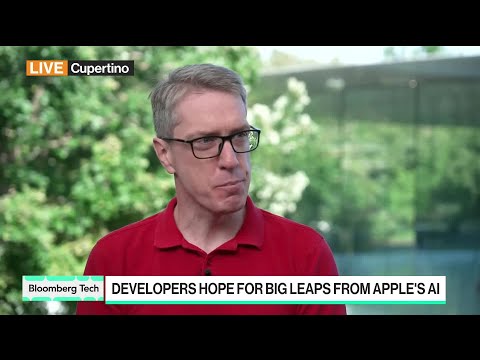
MATERIAL SUMMARY
Developers are optimistic about Apple's advancements in AI, particularly regarding Siri's evolution into a more capable platform. The integration of app data with Siri aims to enhance user experience by enabling multi-step tasks and improving natural language understanding, which has been a challenge for the assistant.
Privacy remains a critical concern, with developers expressing a preference for Apple's approach over competitors like Google. The potential for Siri to operate seamlessly across Apple's ecosystem, including iOS, macOS, and other platforms, is seen as a significant opportunity for developers to create more integrated applications.
GENERAL ANALYSIS
Argument
Apple's ambition to enhance Siri's capabilities suggests a potential pathway for the company to develop a leading AI model. The integration of app data with Siri aims to create a more intelligent assistant that can handle complex tasks, which could position Apple favorably in the AI landscape. However, challenges remain, such as Siri's current limitations in understanding user commands and the competitive pressure from other tech giants like Google.
Quotes
00:00-05:00
The point for Apple's perspective is that Siri becomes genuinely useful. Yes. I'll take that one as well. This year, Siri is even smarter. You know, it goes from a place where it is a feature. Single-voice prompt, bone mum, bone mum, to multi-step tasks. Yes. When you're building applications for iOS, macOS, what are the factors and considerations around how good or not Siri is? Right. So right now, as you'll know, Siri will often say, I didn't understand that, or could you repeat that? Or which bedroom lights do you mean? We kind of want to bypass that and get to the things that users care about.
MECHANISM
Mechanism
Apple's efforts to enhance Siri's capabilities could position the company as a contender in the AI model race. The integration of app data aims to improve Siri's functionality, allowing it to handle more complex tasks. However, existing limitations in understanding user commands and strong competition from established players like Google may hinder Apple's progress.
VIDEO INSIGHTS 1
00:00-05:00Siri platform evolution
Developers anticipate Siri's transformation into a more intelligent platform that can handle multi-step tasks and integrate app data effectively, enhancing user interaction and experience.
AppleSiriGoogleGeminiAI integration in consumer technologyprivacy in AI development
00:00-05:00cross-platform capabilities
The ability for Siri to function across multiple Apple operating systems (iOS, macOS, watchOS, etc.) is expected to drive developer engagement and broaden application development opportunities.
AppleiOSmacOSwatchOSVision OScross-platform software developmentdeveloper engagement in tech ecosystems
Loading more...