




Polymarket question
How high will inflation get in 2026?
Above 4%Above 5%Above 6%Above 10%Above 8%Above 4.5%
Inflation Forecasts for 2026 Show Increased Uncertainty Amid Geopolitical Tensions
Recent analysis highlights rising inflation concerns for 2026, driven by geopolitical tensions and economic pressures, complicating predictions for future rates.
WHAT CHANGED
The latest materials emphasize the growing uncertainty surrounding inflation forecasts for 2026, particularly due to geopolitical tensions affecting oil prices and the Federal Reserve's challenges in managing inflation effectively.
SITUATION
Current inflation rates are significantly above the Federal Reserve's target, with the Consumer Price Index (CPI) reported at 4.2%. This level raises concerns about sustained inflationary pressures, particularly as geopolitical tensions, such as those involving Iran, continue to impact oil prices. Analysts suggest that these factors complicate the ability of central banks to manage inflation effectively, leading to a complex economic landscape. The interplay of external pressures and monetary policy responses is critical in shaping inflation expectations for 2026, with market participants weighing the implications of potential rate hikes against ongoing economic conditions. Overall, the situation reflects a divergence between corporate performance and consumer sentiment, as rising prices disproportionately affect the working class.
WATCHLIST
- Monitor geopolitical developments and their impact on oil prices.
CONCLUSION
The outlook for inflation in 2026 remains uncertain, heavily influenced by geopolitical tensions and economic conditions. While current inflation is above 4%, the potential for stabilization or further increases will depend on various external factors.
Art Argentum scoring
#1Above 4%
80.00%strong support
#2Above 4.5%
70.00%strong support
#3Above 5%
40.00%minimal support
#4Above 6%
20.00%minimal support
#5Above 8%
15.00%minimal support
#6Above 10%
10.00%minimal support
Source-material body
8 indexed items
SOURCE

MATERIAL SUMMARY
Gold prices recently fell to around $4,000 before rebounding to approximately $4,200, following significant selling pressure. The market is currently influenced by various factors, including a potential U.S.-Iran agreement affecting crude oil prices and a major IPO from SpaceX drawing institutional capital.
Technical analysis indicates that $4,000 is a critical psychological support level for gold, with a 60% to 70% probability of it holding as a floor. The upcoming FOMC meeting and inflation rates, currently at 4.2%, are also pivotal in shaping market sentiment and potential future price movements.
GENERAL ANALYSIS
Argument
Inflation pressures are influencing market expectations, as indicated by a 56% probability of a rate hike by the Fed. This suggests that while inflation is currently elevated at 4.2%, which exceeds the Federal Reserve's 2% target, the market is questioning whether this inflation is temporary. The uncertainty surrounding the permanence of inflation and the timing of potential rate hikes complicates the outlook for inflation in 2026.
Quotes
10:00-15:00
one of the reasons we're seeing pressure is that inflation is up and that has raised the expectations, I believe according to the CMEs Fedwatch tool, it's at around a 56% probability kind of in the middle of one rate hike this year by the Fed. And it seems as though inflation has always been a dynamic that could have really bullish tailwinds for gold. In this case, we saw bearish tailwinds because they're looking at yes, there's higher inflation, but is that temporary and a rate hike will not be temporary.
MECHANISM
Mechanism
Current inflationary pressures are influencing market expectations, particularly regarding potential Federal Reserve rate hikes. The prevailing uncertainty about whether elevated inflation rates are temporary complicates the outlook for inflation in 2026, as market participants weigh the implications of monetary policy adjustments against ongoing economic conditions.
VIDEO INSIGHTS 1
00:00-05:00gold price support levels
Gold has recently tested the $4,000 level, which is viewed as a key psychological support. Following a significant drop, it rebounded to around $4,200, indicating potential buying interest at this level.
GoldSpaceXU.S.-Iran$4,000$4,2004.2%gold price support analysisSpaceX IPO impactU.S.-Iran agreement implications
05:00-10:00technical analysis of gold
The analysis suggests a 60% to 70% probability that the $4,000 level will serve as a technical support for gold, with the need for follow-through buying to confirm this trend.
Gary Wagner60%70%$4,000gold technical support analysismarket follow-through buying
VIDEO INSIGHTS 2
10:00-15:00inflation and interest rates
Current inflation is at 4.2%, above the Federal Reserve's target, influencing market expectations for potential rate hikes. The Fed's decision-making process regarding interest rates is critical for gold's future performance.
Federal Reserve4.2%56%inflation impact on goldFederal Reserve interest rate expectations
15:00-20:00silver market dynamics
Silver has stabilized between $66 and $68, but its failure to bounce aggressively alongside gold may indicate a weaker underlying structure in the metals market.
Silver$66$68silver market analysisgold-silver correlation
VIDEO INSIGHTS 3
20:00-25:00CME trading hours expansion
The CME plans to launch 24/7 trading for its one-ounce retail gold futures contract, which could reduce weekend price gaps and provide cleaner data for retail traders.
CMEJuly 26CME trading hours expansionimpact on retail trading

MATERIAL SUMMARY
SpaceX's IPO on June 12th marks the largest in history, raising $75 billion by selling 555.6 million shares at $135 each, pushing its valuation to nearly $1.8 trillion. This event coincides with ongoing geopolitical tensions in the Middle East, where U.S. President Donald Trump's statements have significantly influenced market movements, particularly in oil prices.
The European Central Bank's recent rate hike to combat rising inflation, now above 3%, is expected to slow economic growth in the Euro area, which already faced a negative growth figure of -0.2% in Q1 2023. The ECB's actions may not effectively address inflation driven by external shocks, such as the Middle East conflict, while other central banks, including the Bank of Japan and the Reserve Bank of Australia, are also navigating complex economic landscapes.
GENERAL ANALYSIS
Argument
Central banks face significant challenges in controlling inflation due to various external factors, including geopolitical issues and energy prices. The effectiveness of monetary policy is limited, as evidenced by past instances where central banks had to reverse their decisions in response to economic downturns. Current inflationary pressures in the US, which recently surpassed four percent, suggest that without a resolution to geopolitical tensions and a decline in energy costs, inflation may remain elevated, complicating central banks' efforts to stabilize the economy.
Quotes
05:00-10:00
monetary policy is not an exact science. There are too many factors out there to play and they're interacting with each other with make same decisions, eco-completely differently across the economy's at-time T. And central bankers have very little control on the clear majority of these factors starting from the geopolitical problems.
MECHANISM
Mechanism
Central banks are grappling with inflation control amid external pressures like geopolitical tensions and fluctuating energy prices. Historical instances show that monetary policy can be ineffective, as central banks may need to reverse decisions in response to economic shifts. These factors complicate efforts to stabilize inflation, suggesting that elevated rates could persist without significant changes in the current economic landscape.
VIDEO INSIGHTS 1
00:00-05:00SpaceX IPO impact
SpaceX's IPO raised $75 billion, achieving a valuation of nearly $1.8 trillion, surpassing the combined value of the 29 largest U.S. IPOs since 2000. This significant market debut is expected to influence investor sentiment and market dynamics.
SpaceXElon Musk$75 billion$135$1.8 trillion29SpaceX IPOmarket valuation
05:00-10:00ECB rate hike implications
The ECB's first rate hike in three years aims to combat inflation exceeding 3%, but may hinder economic growth, which already contracted by -0.2% in Q1 2023. The hike is unlikely to effectively address inflation driven by external factors like rising energy prices.
European Central BankKristen Lagar3%-0.2%ECB rate hikeEuro area inflation

MATERIAL SUMMARY
Morgan Stanley is also targeted for bearish trades as analysts predict a downturn in financials, citing pressures from inflation and interest rate fluctuations. The stock has performed well year-to-date, but analysts believe the momentum may not sustain, especially with upcoming IPOs not expected to significantly boost performance. Technical indicators suggest potential breakdown points for all three stocks, with specific price levels highlighted for monitoring.
Today's Big 3 is focused all on the bears, as @Theotrade's Don Kaufman offers three bearish options trades for his picks. He points to Toll Brothers (TOL) as an outperformer in the housing space due for a pullback, Delta Airlines' (DAL) "catch-22" situation, and sees Morgan Stanley (MS) having a "rough ride" ahead with massive IPOs debuting this year. Rick Ducat backs Don's analysis with a look at key levels to watch in the stock charts. ======== Schwab Network ======== Empowering every investor and trader, every market day. Options involve risks and are not suitable for all investors. Before trading, read the Options Disclosure Document. http://bit.ly/2v9tH6D Subscribe to the Market Minute…
GENERAL ANALYSIS
Argument
Current inflation rates are significantly above the Federal Reserve's target, indicating persistent inflationary pressures. The Consumer Price Index (CPI) data shows a rate of 4.2%, which is described as 'extreme' and 'well over 100% beyond what the Fed is supposed to be targeting, which is roughly 2% inflation.' This suggests that inflation may remain elevated, but the market's reaction indicates that such rates are already priced in, limiting the potential for further volatility.
Quotes
00:00-05:00
4.2% is still extreme. I mean, look, we're already pricing in a rather extreme number. I for one didn't think CPI was going to come in hotter than 4.2%. It's a ridiculous number. I mean, you're well over 100% beyond what the Fed is supposed to be targeting, which is roughly 2% inflation.
MECHANISM
Mechanism
Current inflation rates are significantly above the Federal Reserve's target, with the Consumer Price Index (CPI) reported at 4.2%. This level is described as extreme, suggesting persistent inflationary pressures that could influence future economic conditions. However, the market's reaction indicates that such rates may already be priced in, potentially limiting volatility in inflation expectations.
VIDEO INSIGHTS 1
00:00-05:00CPI inflation impact on market volatility
CPI data at 4.2% indicates significant inflation, well above the Fed's target of 2%. Analysts note that the bond market has been anticipating this, leading to higher rates. A broader sell-off in the market is expected if volatility persists.
Federal ReserveCPIbond market4.22CPI inflation impactmarket volatility analysis
00:00-10:00Toll Brothers bearish trade
Toll Brothers' stock has risen from $123 to $145, but analysts recommend a bearish position due to concerns over demand and consumer sentiment. A put spread trade is proposed, targeting a pullback to the $125-$123 range.
Toll Brothers123145125123Toll Brothers stock analysishomebuilder market trends
VIDEO INSIGHTS 2
05:00-10:00Delta Airlines bearish outlook
Delta Airlines faces margin pressures from rising fuel costs while trading near all-time highs. Analysts suggest a bearish trade with a put spread, anticipating a pullback as consumer travel sentiment weakens amid high inflation.
Delta Airlines4.278Delta Airlines stock analysisfuel cost impact on airlines
10:00-15:00Morgan Stanley bearish trade
Morgan Stanley's stock has increased 15% year-to-date, but analysts predict a downturn due to inflationary pressures and interest rate fluctuations. A bearish put spread trade is suggested, targeting a decline in stock price.
Morgan Stanley15Morgan Stanley stock analysisfinancial sector outlook

MATERIAL SUMMARY
Inflation has reached a three-year high, with a reported CPI increase of 4.2%, driven largely by rising oil and gas prices due to geopolitical tensions. Bitcoin ETFs have seen a significant drop in net assets, falling to $77.58 billion, a 54% decrease from their peak, while core CPI shows only a slight increase, indicating a complex economic landscape.
Japan's largest banks are set to jointly issue stablecoins by March 2027, mirroring similar initiatives in the U.S. as banks aim to counter the rise of crypto. Meanwhile, the Trump family's involvement in crypto has reportedly netted them $2.3 billion, contrasting sharply with the losses experienced by individual investors, highlighting the disparity in the crypto market.
GENERAL ANALYSIS
Argument
Inflation is currently rising, with a recent CPI print showing a 4.2% increase, marking the hottest inflation rate since 2023. This rise is attributed to factors such as the Iran war impacting oil and gas prices, which are major contributors to inflation. However, core CPI only increased by 0.2% month over month, leading to confusion about the overall inflation trend and its implications for future market conditions.
Quotes
00:00-05:00
inflation is clearly a problem. Inflation is still rising. And it leaves one Kevin Worsh who I've mentioned with, as coming in with the worst job in history with a very hard decision. You've seen this meme before, right? Got rates, rates. I don't know what to do. Kevin Worsh, I'm so frustrated. Why would a guy worth billions of dollars want the worst job on the planet? It has to be ego. I don't understand. But right now, there's almost no chance of Fed rate cuts, which is what he was effectively hired to do, right? If you believe what Donald Trump said, and we're actually getting rate hikes priced in, but it's hard to imagine that he will actually raise rates.
MECHANISM
Mechanism
Current inflation trends indicate a significant rise, with a CPI increase of 4.2%, driven by geopolitical factors such as the Iran war affecting oil prices. Despite this, core CPI growth remains modest at 0.2% month-over-month, creating uncertainty about the trajectory of inflation and its future implications for monetary policy.
VIDEO INSIGHTS 1
00:00-05:00CPI inflation impact on Bitcoin
CPI rose 4.2%, the highest since 2023, influenced by oil prices amid geopolitical tensions. Bitcoin ETFs' net assets dropped to $77.58 billion, a 54% decline from peak levels, indicating market volatility and investor uncertainty.
BitcoinCPIoilgas4.2%$77.58 billion54%CPI inflation impact on cryptocurrency marketsoil price influence on inflation
05:00-10:00Stablecoin issuance by Japanese banks
Japan's top banks, MUFG, SMBC, and Mizuho, plan to issue stablecoins by March 2027, aiming to compete with crypto offerings. This initiative reflects a broader trend among banks to leverage blockchain technology while maintaining control over yields.
MUFGSMBCMizuhoMarch 2027Japanese banks' stablecoin strategybank competition against cryptocurrency
VIDEO INSIGHTS 2
10:00-15:00Trump family's crypto profits
The Trump family reportedly profited $2.3 billion from crypto ventures, while individual investors faced significant losses. This disparity underscores the risks associated with crypto investments and the influence of prominent figures in the market.
Trump familyAlt-5World Liberty Financial$2.3 billionTrump family's involvement in cryptocurrencyinvestor losses in crypto market
SOURCE

MATERIAL SUMMARY
Equity markets in the Asia Pacific are experiencing declines following a significant sell-off in US tech stocks, particularly the Nasdaq 100, which fell by 4.7%. The downturn is attributed to disappointing AI chip revenue forecasts from Broadcom, leading to concerns about high leverage in Korean equities, where margin debt has reached historic highs.
Crude oil prices are rising due to escalating tensions between Israel and Iran, with Israel intercepting missiles from Iran and retaliating against military targets. This geopolitical tension is contributing to inflationary pressures in the Asia Pacific region, complicating central bank decisions, particularly in Korea and Japan, where currencies are under pressure.
GENERAL ANALYSIS
Argument
Rising crude oil prices are expected to contribute to inflationary pressures in the Asia-Pacific region, complicating central bank decisions. The situation is exacerbated by geopolitical tensions, particularly between Israel and Iran, which have led to increased oil prices. However, the central banks in countries like Korea and Japan may be perceived as lagging in their responses, potentially impacting currency stability and inflation management.
Quotes
00:00-05:00
This is only going to add to the inflationary pressures right now that's very front of mind for many people across the APEC region.
MECHANISM
Mechanism
Rising crude oil prices are likely to exert inflationary pressures, particularly in the Asia-Pacific region, where geopolitical tensions, such as those between Israel and Iran, are contributing to increased costs. Central banks in countries like Korea and Japan may struggle to respond effectively, which could further complicate inflation management and currency stability.
VIDEO INSIGHTS 1
00:00-05:00Korean equity market leverage concerns
Korean equities are under pressure due to high levels of margin debt among retail investors, which has reached historic highs, raising concerns about market stability amid a tech sell-off.
SamsungSK HynixBroadcom4.7%7%historic highKorean equity market leveragetech stock sell-off
00:00-05:00Crude oil price impact from geopolitical tensions
Crude oil prices are rising following missile attacks from Iran and Israel's military response, adding inflationary pressures in the Asia Pacific and complicating central bank monetary policy.
IranIsraelcrude oil price risegeopolitical tensions in the Middle East
VIDEO INSIGHTS 2
05:00-10:00SpaceX IPO restrictions
US restrictions on critical technology exports have led underwriters of the SpaceX IPO to exclude orders from investors in Hong Kong and China, impacting the IPO's market dynamics.
SpaceXMizuho$2.5 billion$2 billionSpaceX IPO market dynamicsUS technology export restrictions
10:00-15:00AI market growth versus historical bubbles
Current AI market dynamics are compared to the dot-com bubble, with a focus on earnings growth and the structural versus cyclical nature of the market, indicating potential for continued investment despite recent corrections.
27AI market growth analysisdot-com bubble comparison
VIDEO INSIGHTS 3
15:00-20:00Commodity market outlook amid AI growth
The commodity market is experiencing a disconnect between stock prices and underlying demand, with potential for growth in commodities like copper and aluminum, despite concerns over global economic growth.
9%commodity market outlookAI growth impact on commodities
MATERIAL SUMMARY
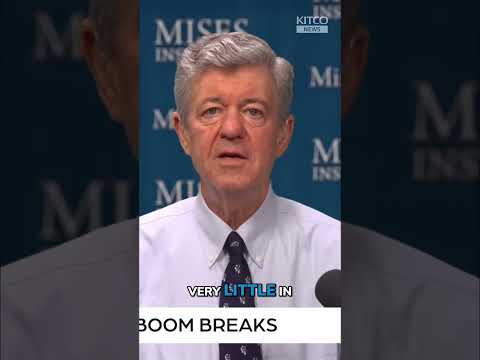
The current economic landscape presents a paradox with record low consumer sentiment juxtaposed against the strongest corporate earnings beats in five years. This divergence can be explained through Ludwig von Mises' Austrian Business Cycle Theory, which posits that inflation, driven by increased money supply from central banks, lowers interest rates, benefiting corporations and the wealthy while leaving the working class struggling with rising prices.
The K-shaped economy illustrates this divide, where the wealthy leverage low interest rates to expand their assets, while the working class faces stagnant wages that fail to keep pace with inflation. Surveys indicate that higher prices are significantly impacting consumer sentiment, particularly among those without substantial physical assets, highlighting a disconnect between corporate success and the economic realities faced by everyday consumers.
GENERAL ANALYSIS
Argument
Inflation is driven by an increase in the money supply, which reduces interest rates and facilitates borrowing for governments and corporations, thereby boosting asset prices. However, this mechanism disproportionately benefits the wealthy and powerful, leaving the working class to suffer from rising prices without corresponding wage increases. As a result, consumer sentiment reflects dissatisfaction, particularly among those with fewer assets who are most affected by inflationary pressures.
Quotes
00:00-05:00
inflation is, yes, it's a monetary phenomenon. And yes, it does increase prices. But what he showed was that by increasing price money through the central bank and the banking system, it reduced interest rates. And those reduced interest rates, of course, help government borrow money, helps businesses, corporations borrow money so they can expand. And it also helps the wealthy because they can leverage up their assets. And of course, lower interest rates, everybody knows, increases the price of assets. So it's definitely going to, you know, in terms of the K-shaped economy, it definitely helps the people, the wealthy, the powerful, the banking system, big corporations and government borrow money. So that part of the economy does very well. It doesn't help people without a lot of assets like the working class. People who have, you know, very little in the way of physical assets outside of…
MECHANISM
Mechanism
Inflation dynamics are influenced by monetary policy, particularly through increased money supply that lowers interest rates. This environment facilitates borrowing for governments and corporations, driving asset prices higher. However, the benefits are unevenly distributed, favoring the wealthy while leaving the working class to contend with rising prices and stagnant wages, leading to heightened consumer dissatisfaction.
VIDEO INSIGHTS 1
00:00-05:00Austrian Business Cycle Theory
Inflation, as a monetary phenomenon, reduces interest rates, facilitating borrowing for corporations and the wealthy, while the working class suffers from rising prices and stagnant wages.
Ludwig von Misescentral bankscorporationsworking classfive yearsinflation impact on consumer sentimentcorporate earnings vs. consumer sentiment

MATERIAL SUMMARY
Oil prices are rising amid ongoing tensions in the Middle East, with no clear resolution in the U.S.-Iran ceasefire negotiations. Market analysts suggest that while oil prices may normalize over time, current inflationary pressures and supply chain issues could keep prices elevated in the short term.
At the Shangri-La Dialogue, Philippine Defense Secretary Gilberto Teodoro emphasized the need for stronger military ties with Taiwan and other nations to counter China's expansionist activities. He noted that the Philippines' defense strategy is focused on sovereignty and deterrence, particularly in light of the geopolitical tensions in the region.
GENERAL ANALYSIS
Argument
Inflationary pressures are likely to persist due to ongoing pricing increases across various sectors. This is compounded by the geopolitical situation affecting oil prices, which could remain elevated as the market adjusts to supply chain disruptions. However, the market's optimism may overlook the long-term consequences of these price pressures.
Quotes
00:00-05:00
every manufacturer and every consumer company has already put through pricing increases through. And these, you know, these price pressure, you know, is likely to remain elevated and that might take a long time to come through and that will have real economic consequences.
MECHANISM
Mechanism
Ongoing inflationary pressures are expected to persist, driven by sustained pricing increases across various sectors. Geopolitical factors, particularly in oil markets, may further exacerbate these pressures, complicating supply chain dynamics. The long-term economic consequences of these factors remain uncertain, suggesting that inflation could remain elevated beyond current expectations.
VIDEO INSIGHTS 1
00:00-05:00oil price volatility amid geopolitical tensions
Oil prices are currently hovering at elevated levels due to geopolitical uncertainties, particularly regarding U.S.-Iran negotiations. Analysts predict that even with a potential agreement, normalization of prices may take time, influenced by ongoing supply chain disruptions and inflationary pressures.
U.S.Iran10CAPJune Behlu20%5%oil price normalizationU.S.-Iran ceasefire negotiationsinflationary pressures on commodities
10:00-15:00Philippines defense strategy and regional security
Philippine Defense Secretary Teodoro outlined the country's defensive posture in response to China's military activities, emphasizing the importance of alliances for deterrence. He highlighted the need for operational security and intelligence sharing with Japan to enhance military readiness.
PhilippinesChinaJapanGilberto Teodoro200,000Philippines defense strategyChina military expansionJapan-Philippines military cooperation

MATERIAL SUMMARY
Wall Street is experiencing record highs as discussions around a potential 60-day ceasefire between the U.S. and Iran unfold. Market sentiment suggests optimism regarding a deal, which could alleviate inflationary pressures, although skepticism remains due to past experiences with similar negotiations.
Strong earnings reports from companies like Micron and Dell, driven by advancements in AI, are fueling market momentum. The semiconductor supply chain is identified as a key area for future growth, with companies that possess unique technological capabilities expected to thrive as demand for complex computing solutions increases.
GENERAL ANALYSIS
Argument
The market's optimism regarding a potential deal between the U.S. and Iran could influence inflationary pressures, as a successful agreement may alleviate long-term economic concerns. However, the uncertainty surrounding the actual terms of any deal creates a limitation on predicting its impact on inflation.
Quotes
00:00-05:00
the market does seem to think that a deal is going to get done. And just depending on what the shape of that is that will start to take the pressure of or off, longer term considerations that are poor for inflation and for the economy.
MECHANISM
Mechanism
Optimism surrounding a potential U.S.-Iran deal may ease inflationary pressures, contingent on the agreement's terms. However, the uncertainty regarding the specifics of any deal limits the ability to predict its direct impact on inflation rates.
VIDEO INSIGHTS 1
00:00-05:00U.S.-Iran ceasefire impact on inflation
Market anticipates a potential deal between the U.S. and Iran that could ease inflationary pressures, although skepticism persists regarding the feasibility of negotiations.
U.S.IranPresident Trump60-day20292030U.S.-Iran ceasefire negotiationsinflationary pressure mitigation
00:00-05:00AI-driven earnings growth
Earnings from companies like Micron and Dell indicate significant growth expectations driven by AI, with projections extending to 2029 and 2030, suggesting a sustainable market trend.
MicronDelltrillion dollar market capAI earnings growthsemiconductor supply chain
VIDEO INSIGHTS 2
05:00-10:00semiconductor supply chain investment
Companies with competitive advantages in the semiconductor supply chain are expected to benefit from increased capital investments, positioning them as key players in the evolving AI landscape.
semiconductor supply chain investmentAI technology providers
Loading more...