Understanding the Shift in US-China Relations
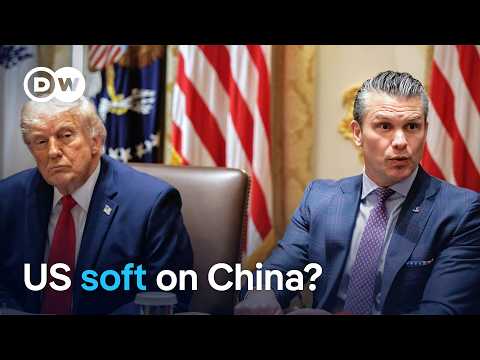
Analysis of US-China relations, based on "Trump's China shift: soft or smart?" | DW News.
OPEN SOURCEThe United States is adopting a more cautious approach towards China, moving away from previous confrontational tactics. This shift reflects an acknowledgment of China's growing influence and a reorientation in US foreign policy, particularly highlighted by the Secretary of Defense's remarks at the Shangri-La Dialogue.
The Trump administration's strategy emphasizes diplomacy over aggression, recognizing the need for a strategic reallocation of U.S. defense resources to Asia. This change is driven by the perception that China is becoming a significant military power, necessitating a collaborative defense posture among allies.
Japan is responding to a challenging security environment marked by China's military expansion and North Korea's nuclear threats. The U.S. is urging its Asian allies, including Japan, to bolster their military capabilities, indicating a shift in regional security dynamics and shared defense responsibilities against China.
Concerns have been raised about the U.S. administration's stance on Taiwan, with fears that economic negotiations could compromise Taiwan's security and erode trust among allies. The unpredictability of the Trump administration complicates the development of a consistent long-term strategy in Asia.
Countries in the region, such as Japan, South Korea, and Australia, are increasingly open to forming new alliances and collaborating on defense strategies in light of perceived threats. The evolving geopolitical landscape suggests that Japan may be at a critical juncture, similar to Germany's recent military developments.
- Advocate for a strategic reallocation of U.S. defense resources to Asia
- Emphasize the need for collaboration among allies to counter Chinas influence
- Express concerns about the U.S. potentially compromising Taiwans security for trade deals
- Highlight the unpredictability of the Trump administration undermining consistent policy
- Acknowledge Japans increasing military spending in response to regional threats
- Recognize the complexity of U.S. foreign policy with multiple strategies within the administration
- The US is taking a more cautious stance towards China, moving away from its previous confrontational approach, as highlighted by the Secretary of Defenses remarks at the Shangri-La Dialogue
- This change indicates an acknowledgment of Chinas growing influence, with the US no longer positioning itself as the sole superpower in the relationship
- US officials have shifted their language from aggressive rhetoric to a focus on quiet diplomacy, suggesting a strategic reorientation in US-China relations
- US foreign policy has historically fluctuated between engagement and rivalry with China, with recent administrations adopting a confrontational approach, especially during the COVID-19 pandemic
- The changing dynamics between the US and China are impacting broader geopolitical strategies in Asia, as regional stability is increasingly assessed through the lens of their relationship
- The Trump administration has shifted its approach to China, moving from confrontational rhetoric to a more strategic and subdued tone, emphasizing diplomacy over aggression
- This change acknowledges Chinas increasing power, particularly highlighted by its leverage during the trade war through rare earth export restrictions
- The U.S. is reallocating defense resources to Asia and encouraging its allies in the region to boost military spending in response to perceived threats from China
- Japan is enhancing its defense posture, increasing military expenditure, and recognizing the potential threat from China, especially concerning Taiwan, which has provoked strong reactions from Beijing
- The evolving geopolitical landscape in Asia suggests Japan may be at a critical juncture, similar to Germanys recent military developments, as it navigates the implications of Chinas military expansion
- Japan is responding to a challenging security environment marked by Chinas military expansion, North Koreas nuclear threats, and Russias aggression, leading to increased defense spending
- The U.S. is urging its Asian allies, including Japan, to bolster their military capabilities, indicating a shift in regional security dynamics and shared defense responsibilities against China
- Countries in the region, such as Japan, South Korea, and Australia, are increasingly open to forming new alliances and collaborating on defense strategies in light of perceived threats
- Concerns have been raised about the U.S. administrations stance on Taiwan, with fears that economic negotiations could compromise Taiwans security and erode trust among allies
- The unpredictability of the Trump administration complicates the development of a consistent long-term strategy in Asia, although some officials support a focused defense policy to counter China
- The U.S. strategy aims to prevent China from dominating Asia, particularly through the first island chain, which includes key nations like Japan, Taiwan, and the Philippines
- Elbridge Colby from the Pentagon emphasizes the need for a clear defense strategy that strengthens U.S. alliances in Asia, despite the unpredictability of the current administration
- There are concerns that the Trump administration might consider trading Taiwan for broader trade agreements, which could signal a shift in U.S. commitment to regional allies
- Asian nations, including Japan and South Korea, are increasingly inclined to form new alliances and enhance their defense capabilities in response to U.S. unpredictability and Chinas growing influence
- The complexity of U.S. foreign policy is evident in the multiple strategies within the administration, which may impede the consistent application of defense policies
The US's shift in strategy towards China raises questions about the underlying assumptions of its foreign policy. Inference: This change implies that the US may be recognizing the limits of its power in the region, yet it overlooks the potential for backlash from allies who may perceive this as weakness. The absence of a clear long-term strategy could lead to further instability in US-China relations and the broader Asian geopolitical landscape.
This analysis is an original interpretation prepared by Art Argentum based on the transcript of the source video. The original video content remains the property of the respective YouTube channel. Art Argentum is not responsible for the accuracy or intent of the original material.