SpaceX IPO: Risks and Opportunities
Analysis of SpaceX's IPO and its implications for the tech market, based on 'SpaceX: Elon Musk's Biggest Scam of All Time?' | DerStandardat.
OPEN SOURCESpaceX is preparing for a historic IPO, targeting a valuation of approximately $1.8 trillion and aiming to raise $75 billion. Critics express concerns about the sustainability of such high valuations and the potential risks to financial markets. The company’s ambitious plans include AI applications and Mars colonization, but skepticism remains regarding the feasibility of these projects.
The business model of SpaceX encompasses three primary areas: rocket launches, Starlink connectivity, and artificial intelligence. Starlink is projected to generate significant revenue, while the AI division faces challenges in profitability and growth. Critics argue that the valuation may be based on a collection of underperforming assets rather than a cohesive, profitable business.
Elon Musk's control over SpaceX, with over 80% of voting rights, raises concerns about accountability and the potential for pursuing risky ventures without sufficient oversight. The upcoming IPO could lead to significant capital inflows from passive investors, but historical trends indicate that new public offerings often underperform in their initial years.
The failure of SpaceX's IPO could dampen investor sentiment for future tech IPOs, particularly in the AI sector, which relies heavily on market enthusiasm. Chinese companies pose a competitive threat in the AI market, offering similar capabilities at much lower costs, which could impact U.S. firms.
Investors are advised to approach the SpaceX IPO with caution, considering the high valuation and potential risks. A diversified investment strategy that includes exposure to Chinese markets is suggested, but unique risks associated with those investments must be acknowledged.
Overall, the discussion highlights the need for a rational investment approach in speculative markets like SpaceX and AI, where valuations may not accurately reflect profitability and could lead to significant financial repercussions.
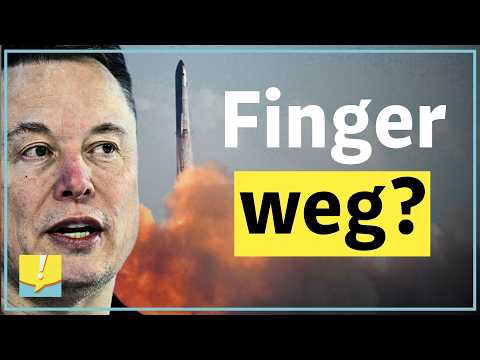
- Highlight potential for significant revenue generation from Starlink and AI
- Point out the risks associated with Musks control and the performance of underperforming assets
- Acknowledge the mixed sentiment surrounding the IPO and its implications for future tech investments
- Recognize the competitive landscape in the AI sector, particularly from Chinese companies
- SpaceX is poised to become the largest IPO in history, targeting a valuation of around $1.8 trillion and aiming to raise $75 billion, surpassing previous records set by companies like Saudi Aramco
- Concerns have been raised about the sustainability of SpaceXs valuation, with critics warning it could be a financial house of cards that destabilizes markets and contributes to a potential AI bubble burst
- Current demand for SpaceX shares is double the available supply, but this interest is weaker compared to other recent IPOs, leading to uncertainty about the companys long-term market performance
- Elon Musks journey with SpaceX began in the early 2000s, evolving from a vision of a human settlement on Mars to developing reusable spacecraft after initial attempts to purchase Russian rockets
- The companys strategy emphasizes innovative technologies, including reusable rockets and potential AI applications, which Musk believes could transform space travel and colonization efforts
details
details
details
- SpaceXs business model encompasses three primary areas: rocket launches, connectivity via Starlink, and artificial intelligence, with Starlink being the most lucrative segment
- The rocket launch segment generates around $4 billion annually, while Starlinks revenue is projected to reach $14-15 billion, although its growth rate is decelerating
- The AI division, which includes collaborations with X (formerly Twitter) and xAI, is currently a major loss-maker, growing at a sluggish rate of 12.5%, despite the broader AI markets growth
- Concerns about SpaceXs valuation suggest that investors may be purchasing a collection of underperforming companies rather than a unified, profitable business, especially given the financial difficulties of xAI and X
- Elon Musks management has resulted in significant cost reductions at X, but the platforms revenue has sharply declined compared to its past performance, complicating SpaceXs overall financial outlook
- Elon Musks strategy of merging X (formerly Twitter) with SpaceX and xAI aims to utilize SpaceXs profitability to support the struggling AI venture, which has faced challenges in securing external funding
- Despite ambitious projections for the AI market, SpaceXs valuation metrics appear unsustainable, with estimates ranging from $300 billion to $780 billion, significantly exceeding typical revenue multiples
- Musks reputation and the appeal of his visionary projects are crucial in sustaining investor interest, even as many of his commitments have not been fulfilled on time
- The integration of xAI into SpaceX is viewed as a critical support for xAI, while also adding speculative value to SpaceXs IPO, despite skepticism regarding the actual synergies between the two entities
- Musk maintains substantial control over the merged companies, holding 80% of voting rights, which raises concerns about accountability and the long-term sustainability of the combined business model
- Elon Musk is projected to control over 80% of voting rights in SpaceX, enabling him to direct the company without external oversight
- The upcoming SpaceX IPO could value the company at nearly $2 trillion, raising concerns about the sustainability of such high valuations amid historical market bubbles
- Musks ability to secure investments relies heavily on his ambitious promises, including plans for Mars colonization and humanoid robots, which may not materialize as quickly as anticipated, potentially affecting investor confidence
- The ownership structure of SpaceX, akin to that of Google and Meta, adds to doubts about accountability, as Musk could pursue risky ventures without sufficient checks
- Current investor enthusiasm for AI and space ventures may reflect a broader trend of inflated expectations, drawing parallels to past market bubbles and shifting valuation standards
- Elon Musk holds over 80% of voting rights in SpaceX, allowing him to manage the company independently, which raises concerns about accountability
- The feasibility of establishing data centers in space is under discussion, with significant challenges related to heat management and economic viability, projected to take about 10 years for practical implementation
- Musks ambitious projects, including humanoid robots and Mars colonization, are considered technically possible but economically impractical in the short term, necessitating extensive research and development
- Integrating SpaceX into major stock indices like NASDAQ may transfer the financial risks of its IPO from private investors to the general public, reflecting a historical trend in IPOs
- Despite the excitement surrounding SpaceXs IPO, historical trends indicate that new public offerings often underperform in their initial years, posing potential risks for early investors
- SpaceXs upcoming inclusion in the NASDAQ 100 index will create mandatory demand for its shares from index funds and ETFs, potentially driving up the stock price
- Elon Musk has negotiated relaxed listing rules for SpaceX, facilitating a quicker integration into the index and likely leading to significant capital inflows from passive investors
- The strategic inclusion of SpaceX in major indices aims to ensure high demand for its shares, despite ongoing concerns regarding the companys valuation and market volatility
- Investment banks and brokers are incentivized to promote the SpaceX IPO, benefiting from increased trading activity and attracting younger investors interested in ETFs
- Although SpaceXs initial weight in these indices may be under 1%, the volume of investment could still significantly impact the market, raising questions about the sustainability of its valuation
- The failure of SpaceXs IPO could dampen investor sentiment for future tech IPOs, especially in the AI sector, which relies heavily on market enthusiasm
- A poor performance by SpaceXs stock may trigger a domino effect, negatively impacting the valuations and market confidence of upcoming IPOs like OpenAI and Anthropic, which are already facing scrutiny over profitability
- Chinese companies are increasingly competitive in the AI market, offering similar capabilities at much lower costs, which poses a significant threat to U.S. firms that must innovate to justify their higher prices
- Investors holding SpaceX shares through ETFs may face losses during a market downturn, although their exposure would be less severe compared to direct investors
- Investing in SpaceXs IPO is approached with caution; while some investors see potential, others highlight significant financial risks due to the companys high valuation
- Chinese companies pose a competitive threat in the AI sector by offering similar capabilities at much lower costs, raising concerns for U.S. investors who must innovate to maintain their market position
- A diversified investment strategy that includes exposure to Chinese markets is suggested, but investors are warned about unique risks such as potential government intervention in Chinese firms
- Skepticism surrounds the sustainability of SpaceXs valuation, with indications that selling shares quickly may be preferable if the stock performs well after the IPO
- The discussion underscores the need for a rational investment approach in speculative markets like SpaceX and AI, where valuations may not accurately reflect profitability
The assumption that SpaceX's valuation is justified rests on the belief that demand will remain high despite current interest being weaker than other recent IPOs. Inference: If the market's enthusiasm wanes, the valuation could collapse, revealing the potential for significant financial instability. Missing variables include the long-term viability of SpaceX's business model and the impact of external economic factors, which could serve as confounders in assessing true market performance.
This analysis is an original interpretation prepared by Art Argentum based on the transcript of the source video. The original video content remains the property of the respective YouTube channel. Art Argentum is not responsible for the accuracy or intent of the original material.