




U.S. Education Reform in Mathematics
The U.S. education system underwent significant reforms in mathematics during the Cold War era.
OPEN SOURCEThe U.S. education system underwent significant reforms in mathematics during the Cold War era.
The launch of Sputnik by the Soviet Union in 1957 triggered fears of scientific inferiority in the U.S.
In response, the U.S. government increased funding for mathematics and science education.
The New Math movement aimed to introduce abstract mathematical concepts at an early age.
However, this approach faced criticism for being too abstract and difficult for students and teachers.
Ultimately, the New Math movement highlighted the challenges of aligning educational practices with the needs of students.
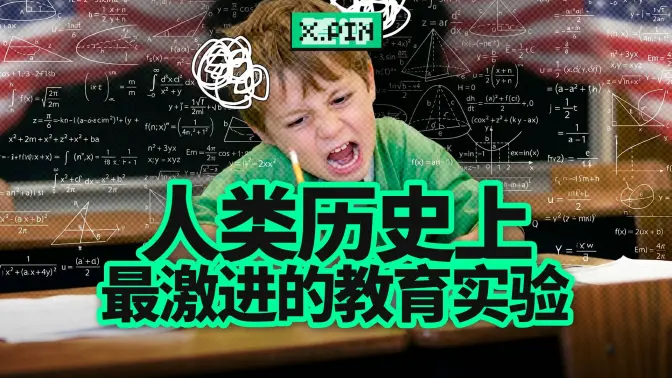
- The launch of Sputnik by the Soviet Union in 1957 intensified American concerns about its scientific and technological education, leading to major reforms in U.S. education policy
- In response to these fears, the U.S. government enhanced funding for math and science education through the National Defense Education Act of 1958, aiming to cultivate more talent in these areas
- The New Math movement arose from these reforms, with groups like the School Mathematics Study Group advocating for the inclusion of modern mathematical concepts, such as set theory and logic, in early education
- Challenges emerged within the movement as curriculum designers often underestimated the need for concrete examples, resulting in students struggling to understand abstract concepts
- Similar educational reforms occurred in France, where students were encouraged to engage with abstract mathematics, such as group theory, at an early age, reflecting a wider shift in educational philosophy
details
details
Read full analysis
- Advocate for modernizing mathematics education to improve competitiveness
- Emphasize the importance of abstract thinking in mathematics
- Claim that abstract concepts are inappropriate for elementary students
- Point out that teachers struggled to adapt to the new curriculum
- Acknowledge that the New Math movement was a response to geopolitical pressures
- Recognize that educational reforms can have unintended consequences
- The launch of Sputnik in 1957 heightened U.S. fears of falling behind in scientific education, leading to the introduction of abstract mathematical concepts in elementary schools
- The New Math movement sought to modernize math education by integrating advanced topics early in the curriculum, but many teachers struggled to effectively teach these abstract ideas, causing student confusion
- Parents voiced concerns about the relevance of complex abstract concepts for young children who had not yet mastered basic arithmetic skills
- Despite initial enthusiasm, the New Math initiative faced significant criticism, including from mathematicians like Morris Klein, who pointed out its shortcomings in ensuring foundational math skills
- These educational reforms mirrored broader geopolitical tensions, with the U.S. prioritizing modernization and abstraction in math education, contrasting with the Soviet Unions emphasis on traditional computation skills
- The decline of the New Math movement in the late 1970s was driven by increasing skepticism towards government and expert authority, particularly in the wake of the Vietnam War
- Critics argued that the abstract focus of New Math failed to provide a solid educational foundation, leading to a renewed emphasis on practical applications in mathematics and physics
- The movements legacy serves as a warning that prioritizing abstract concepts over concrete examples can hinder effective learning for elementary students
- Despite its goals of promoting critical thinking and creativity, New Math resulted in confusion for students and frustration for teachers and parents, marking a significant setback in education
- Mathematician Morris Kleins critique highlighted concerns about students struggling with basic arithmetic due to the push for advanced mathematical concepts
details
details
details
This analysis is an original interpretation prepared by Art Argentum based on the transcript of the source video. The original video content remains the property of the respective YouTube channel. Art Argentum is not responsible for the accuracy or intent of the original material.