




Transforming Taiwan's Financial Landscape
Analysis of the Virtual Asset Service Act, based on "The New Changes Brought by the Virtual Asset Service Act to Taiwan's Financial Industry" | Tech Orange.
OPEN SOURCEThe Virtual Asset Service Act has been passed in Taiwan, aiming to integrate virtual assets with traditional finance. This legislation is designed to foster innovation while ensuring financial stability within the financial sector.
Key features of the act include a flexible regulatory approach that adapts to rapidly changing technology, promoting trust between the industry and regulatory bodies. The act clarifies the legal status of virtual assets, encouraging institutional participation in the market.
Stablecoins are emerging as a crucial component for future financial transactions, reshaping payment infrastructures and serving as essential tools for settlement. The act also includes provisions for managing derivative products and addresses the regulatory landscape for non-fungible tokens (NFTs).
Taiwan's strategy emphasizes collaboration between traditional financial institutions and virtual asset service providers to maintain competitiveness in the evolving financial landscape. The integration of deposit tokens with central bank digital currencies (CBDCs) is expected to significantly impact the financial industry.
Challenges remain, including the need for effective regulatory enforcement and the potential volatility of blockchain technology. The success of the act hinges on the stability of these external factors, which could undermine its intended benefits.
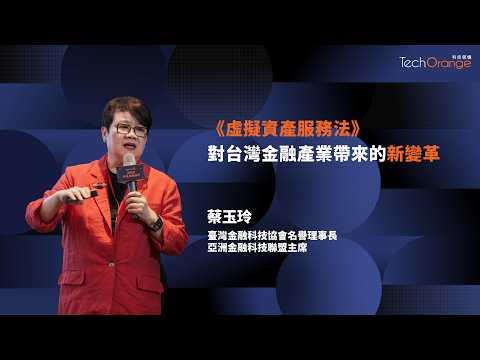
- Stablecoins are foundational for future financial payment infrastructures, establishing a new settlement ecosystem
- Asia leads in virtual asset adoption, projected to surpass the U.S. by 2030, fueled by high retail participation and cross-border payment demands
- Countries such as Japan, South Korea, Hong Kong, and Singapore are developing their own virtual asset frameworks, increasing regional competition
- The U.S. is gaining traction in the virtual asset sector through legislative initiatives and institutional investments, despite a slower start
- Political and monetary factors significantly influence the global virtual asset landscape, with Asia emerging as a key market for stablecoins and digital asset infrastructure
Read full analysis
- Promotes innovation while ensuring financial stability
- Encourages institutional participation in the virtual asset market
- Stablecoins are recognized as essential tools for future financial transactions
- The rise of stablecoins is transforming retail and cross-border transactions, with C2C growth at 75% and B2B at 65%, largely due to economic instability in various regions
- Central banks are prioritizing wholesale Central Bank Digital Currency (CBDC) as a foundation for tokenized payments, signaling a shift towards a more organized financial ecosystem
- Infrastructure development for CBDC is progressing, with initiatives like MV and Project AgoWa highlighting the necessity for international collaboration to create a dependable framework
- Taiwan aims to strategically position itself in the evolving financial landscape, responding to global advancements in digital assets and stablecoins
- The central bank supports tokenization through a wholesale CBDC, intending to meet both institutional and consumer payment needs within a cohesive trust framework
- The recent passage of the Virtual Asset Service Act represents a major transformation in Taiwans financial sector, enabling institutional entities to engage with virtual assets with greater confidence
- This legislation clarifies the legal status of virtual assets, which previously operated outside regulatory frameworks, thereby encouraging more institutional participation in the market
- A key feature of the act is its flexible regulatory approach, which adapts to the rapidly changing technology landscape, favoring principle-based regulations over rigid rules
- The act provides a clear definition of virtual assets, resolving previous uncertainties regarding their classification as securities or commodities, thus simplifying compliance for businesses
- Entities operating under the new law will face increased capital requirements and enhanced security measures, raising the entry threshold and improving consumer protection
- The legislation aligns with international standards, particularly the EUs MICA framework, while highlighting the necessity for ongoing regulatory adjustments to keep pace with technological advancements
- The new regulatory framework for virtual assets in Taiwan is designed to build trust between the industry and regulatory bodies, promoting a gradual learning process for operators
- A transitional period allows existing entities to continue operations while applying for licenses, with specific timelines for compliance and options for extensions
- The legislation includes provisions for managing derivative products, with a report expected within a year to address their regulation
- Non-fungible tokens (NFTs) and real-world assets (RWA) are currently excluded from the new law due to their complexity, reflecting a cautious regulatory approach
- The framework encourages collaboration between traditional financial institutions and virtual asset service providers, aiming to foster a balanced competitive environment
details
details
details
details
- Integrating traditional finance with virtual asset service providers (VASPs) is essential for Taiwans financial ecosystem, encouraging traditional institutions to invest in VASPs to drive innovation and maintain industry knowledge
- A stablecoin framework is being established, accommodating both local and foreign currencies, with an emphasis on ensuring adequate asset backing to mitigate risks associated with algorithmic stablecoins
- The regulatory framework mandates equal treatment for domestic and foreign operators, requiring foreign platforms to set up local entities to serve Taiwanese customers, ensuring compliance with local regulations
- New regulations aim to transition the virtual asset landscape from an unregulated environment to one that aligns with traditional financial regulations, potentially attracting institutional investment
- Classifying VASPs as financial institutions enhances their credibility and facilitates data sharing, but also imposes stricter legal obligations that may affect their operational flexibility
- The Virtual Asset Service Act in Taiwan aims to establish a new financial ecosystem that merges physical and virtual assets, promoting innovation while ensuring financial stability
- Stablecoins are emerging as a key component for future financial transactions, potentially reshaping the payment infrastructure and serving as essential tools for settlement
- Collaboration between traditional financial institutions and virtual asset service providers is vital for maintaining Taiwans competitiveness in the rapidly evolving financial landscape
- Regulatory coordination among various government agencies poses challenges, alongside the need for effective enforcement to prevent businesses from evading regulations by operating abroad
- The integration of deposit tokens with central bank digital currencies (CBDCs) is expected to significantly impact the future of Taiwans financial industry, influencing both local and international stakeholders
- The application of blockchain technology in Taiwans financial sector is essential for gaining competitive advantages in the global market, necessitating practical use cases that extend beyond local applications
- Taiwans strategy should prioritize the integration of logistics, finance, and information flows to enhance supply chain capabilities, potentially establishing the country as a leader in the Asia-Pacific financial landscape
- Effective regulatory frameworks are crucial for supporting innovation while ensuring compliance, which is vital for developing a robust virtual asset ecosystem in Taiwan
- There is a strong call for Taiwan to adopt an open approach to blockchain applications, as restricting usage to domestic contexts may limit international competitiveness and growth opportunities
- Collaboration between the technology and finance sectors is necessary to leverage regulatory advantages and drive innovation in supply chain finance, aiming for transformative impacts in the coming decade
The assumptions underlying the effectiveness of the Virtual Asset Service Act hinge on the stability of the blockchain infrastructure and the regulatory environment. Missing variables include the potential for market volatility and the adaptability of existing financial institutions to new technologies.
This analysis is an original interpretation prepared by Art Argentum based on the transcript of the source video. The original video content remains the property of the respective YouTube channel. Art Argentum is not responsible for the accuracy or intent of the original material.