



Understanding the AI Singularity and Its Impact
Analysis of the AI Singularity and its implications, based on "The AI Singularity Is Here" | There's An AI For That.
OPEN SOURCEElon Musk and Sam Altman assert that the Singularity is currently occurring, characterized by AI's ability to enhance its own intelligence. Google's AlphaEvolve AI has optimized its infrastructure, resulting in annual savings of around $2 billion by improving data center efficiency. This marks a significant shift in how AI interacts with its own development.
In 2026, AI achieved a breakthrough by solving the Jacobian conjecture, a mathematical problem unsolved since 1939. A 23-year-old amateur prompted an AI to resolve a complex math problem that had baffled experts for decades, demonstrating AI's innovative approach to mathematical challenges. Research indicates that the duration of autonomous AI operation has doubled approximately every three months since 2024.
Skepticism persists among experts regarding AI's claims of solving complex problems. A senior OpenAI executive faced criticism for prematurely claiming AI had solved certain problems, which were later revealed to have existing solutions. Economist Daron Acemoglu predicts that AI's economic impact will be minimal, estimating a contribution of less than 1% to the economy over the next decade.
The narrative presents contrasting views on the AI Singularity, highlighting rapid advancements in AI's problem-solving capabilities alongside skepticism regarding its economic impact. Despite claims of a transformative AI era, significant economic changes have yet to materialize, with some experts suggesting that the true effects of AI may take decades to become evident.
Elon Musk and Sam Altman have made bold statements about the Singularity, coinciding with major fundraising efforts, which adds to doubts about the motivations behind these declarations. The discussion reveals a paradox where AI demonstrates impressive problem-solving skills yet struggles in certain tests, indicating that while advancements are occurring, AI may not be ready for critical applications.
Historical context suggests that transformative technologies often go unrecognized in their early stages, implying that the current developments in AI may represent a pivotal moment that is not yet fully acknowledged. As AI continues to evolve, the implications for society and the economy remain uncertain.
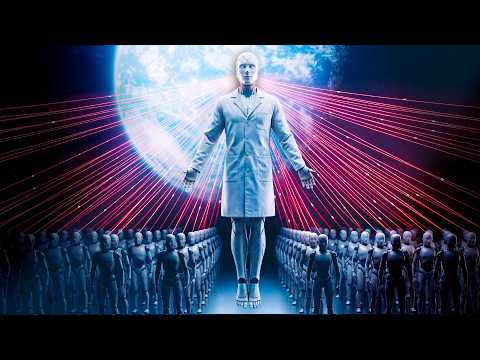
- Elon Musk and Sam Altman assert that the Singularity is currently occurring, characterized by AIs ability to enhance its own intelligence
- Googles AlphaEvolve AI has optimized its infrastructure, resulting in annual savings of around $2 billion by improving data center efficiency
- AlphaEvolve has played a role in designing Googles next-generation TPU chips, showcasing a synergy between AI-driven software improvements and hardware development
- The Darwin-Gödel Machine illustrates AIs potential to autonomously rewrite its own code, which could lead to breakthroughs beyond human capabilities
- Recent AI advancements have enabled the resolution of complex mathematical problems that have eluded human experts for decades, marking a pivotal change in scientific discovery
details
details
details
Read full analysis
- Claim AI is currently enhancing its own intelligence, marking the beginning of a new era
- Highlight rapid advancements in AIs problem-solving capabilities, including solving long-standing mathematical problems
- Argue that AIs claims of solving complex problems often rely on existing solutions rather than true innovation
- Predict minimal economic impact from AI advancements, estimating less than 1% contribution over the next decade
- Recognize that both proponents and skeptics present valid data, indicating a complex landscape of AI development
- In 2026, AI achieved a breakthrough by solving the Jacobian conjecture, a mathematical problem unsolved since 1939, highlighting a significant advancement in AIs problem-solving capabilities
- A 23-year-old amateur prompted an AI to resolve a complex math problem that had baffled experts for decades, demonstrating AIs innovative approach to mathematical challenges
- Research from METR indicates that the duration of autonomous AI operation has doubled approximately every three months since 2024, reflecting a rapid enhancement in AI efficiency
- Skepticism persists among experts; a senior OpenAI executive faced criticism for prematurely claiming AI had solved certain problems, which were later revealed to have existing solutions
- Economist Daron Acemoglu predicts that AIs economic impact will be minimal, estimating a contribution of less than 1% to the economy over the next decade, raising concerns about AIs transformative potential
- The narrative presents contrasting views on the AI Singularity, highlighting rapid advancements in AIs problem-solving capabilities alongside skepticism regarding its economic impact
- Despite claims of a transformative AI era, significant economic changes have yet to materialize, with some experts suggesting that the true effects of AI may take decades to become evident, similar to the historical adoption of electricity
- Elon Musk and Sam Altman have made bold statements about the Singularity, coinciding with major fundraising efforts, which adds to doubts about the motivations behind these declarations
- The discussion reveals a paradox where AI demonstrates impressive problem-solving skills yet struggles in certain tests, indicating that while advancements are occurring, AI may not be ready for critical applications
- Historical context suggests that transformative technologies often go unrecognized in their early stages, implying that the current developments in AI may represent a pivotal moment that is not yet fully acknowledged
details
details
The assertion that AI is enhancing its own intelligence raises questions about the mechanisms behind this self-improvement. Inference: If AI can autonomously optimize its operations, what safeguards are in place to prevent unintended consequences? The lack of transparency in AI decision-making processes could lead to unforeseen variables that confound outcomes, challenging the reliability of these advancements.
This analysis is an original interpretation prepared by Art Argentum based on the transcript of the source video. The original video content remains the property of the respective YouTube channel. Art Argentum is not responsible for the accuracy or intent of the original material.