




Congress and UAP Transparency
Analysis of UAP transparency challenges, based on "Eric Davis: Why Congress Isn't Getting the Truth on UAP" | The Sol Foundation.
OPEN SOURCEEric Davis advocates for Senate hearings similar to the Church Committee to enhance transparency regarding Unidentified Aerial Phenomena (UAP) information. He believes that Congress must engage with stakeholders at the classified level to access crucial data related to UAP.
Davis highlights the limitations Congress faces due to the executive branch's reluctance to share information. He argues that financial leverage could compel the executive branch to cooperate, emphasizing the need for Congress to utilize its oversight authority effectively.
He encourages public engagement with local universities and representatives to foster a broader discussion on UAP. Davis stresses the importance of including diverse academic perspectives, such as philosophy and social studies, in understanding UAP.
Davis notes that the executive branch's resistance to providing information complicates Congress's efforts for transparency. He points out that without explicit presidential approval, cooperation from the executive branch remains unlikely.
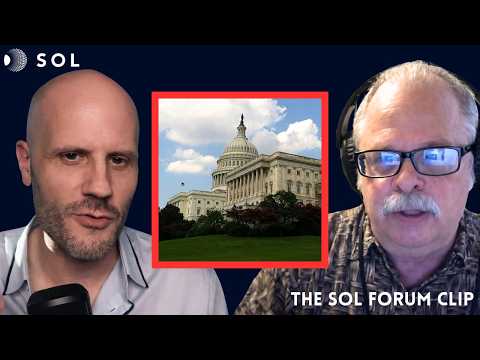
- Eric Davis calls for Senate hearings akin to the Church Committee to promote transparency in UAP information, stressing the need for Congress to interact with stakeholders of classified programs
- He points out that the executive branchs reluctance to share UAP data limits Congresss access, a situation that could be addressed through financial leverage
- Davis emphasizes the role of diverse academic fields, such as philosophy and social studies, in enhancing the understanding of UAP, encouraging public engagement with local universities and their representatives
- He observes that the executive branch has shown resistance to providing information to Congress, suggesting a lack of voluntary cooperation without explicit presidential approval
Read full analysis
- Advocates for Senate hearings to promote transparency on UAP
- Emphasizes the need for financial leverage to compel executive cooperation
- Highlights the executive branchs reluctance to share UAP data
- Notes that cooperation requires presidential authorization, complicating transparency
- Encourages public engagement with local universities for broader discussions on UAP
- Stresses the importance of interdisciplinary collaboration in understanding UAP
- Eric Davis stresses the necessity for Congress to access information on Non-Human Intelligence (NHI) and Unidentified Aerial Phenomena (UAP) to better understand their characteristics and behaviors
- He advocates for Congress to leverage its oversight authority to engage with the executive branch about crash retrieval programs and related data, which has faced significant resistance
- Davis notes that the executive branchs reluctance to share sensitive information often requires presidential authorization, complicating Congresss transparency efforts
- He urges the public to reach out to their congressional representatives to push for broader discussions on UAP, involving not only scientists but also experts from the humanities and social sciences
- The importance of an interdisciplinary approach to UAP issues, as insights from various academic fields can enhance understanding of these phenomena
The assumption that financial leverage will ensure cooperation from the executive branch overlooks potential political resistance and the complexities of classified information. Inference: The lack of voluntary cooperation may indicate deeper systemic issues within the intelligence community that cannot be resolved through subpoenas alone. Without addressing these underlying factors, any attempts at transparency may remain superficial.
This analysis is an original interpretation prepared by Art Argentum based on the transcript of the source video. The original video content remains the property of the respective YouTube channel. Art Argentum is not responsible for the accuracy or intent of the original material.