Political Pressure on Serbia
Serbia's president, during his visit to China, is confronted with multiple challenges that have visibly aged him. NATO's encirclement and the EU's stringent conditions for membership create a precarious political environment.
OPEN SOURCESerbia's president, during his visit to China, is confronted with multiple challenges that have visibly aged him. NATO's encirclement and the EU's stringent conditions for membership create a precarious political environment.
The president's health issues and the economic struggles of Serbia further complicate his leadership. The pressure from the EU to recognize Kosovo's independence and impose sanctions on Russia adds to the burden.
Despite these challenges, the strengthening relationship with China offers a potential lifeline for Serbia. Economic cooperation with China is seen as a way to counterbalance Western influence.
The president's visit is marked by a sense of urgency, as he seeks to secure support and investment from China to stabilize Serbia's economy and enhance its military capabilities.
The geopolitical dynamics in the region, including the military agreements between Croatia and Kosovo, heighten the stakes for Serbia, making the president's diplomatic efforts critical.
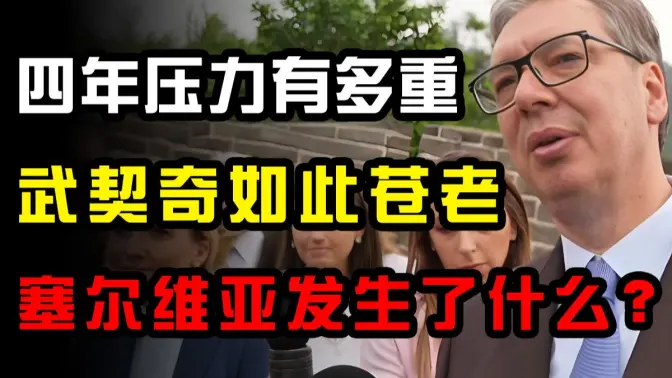
- Acknowledge the immense pressure from NATO and the EU
- Recognize the importance of strengthening ties with China
- Point out the failure to effectively manage domestic economic issues
- Critique the reliance on external powers like China for support
- Observe the visible effects of stress on the presidents health
- Note the changing geopolitical landscape in the Balkans
- Serbian President Vučićs recent trip to China has sparked discussions about his noticeably aged appearance, highlighting the pressures he faces in his role
- The geopolitical situation in Serbia is becoming increasingly precarious, with NATOs presence and a new defense agreement among neighboring countries raising concerns about Serbian sovereignty
- Vučićs government is challenged by the need to balance aspirations for EU membership with demands to recognize Kosovos independence and implement sanctions on Russia, complicating Serbias energy reliance
- The EU has suspended 1.5 billion euros in financial aid to Serbia until there is progress in normalizing relations with Kosovo, adding to the countrys economic strain
- Serbia is grappling with domestic economic issues, including a projected GDP growth of just 1.3% and high youth unemployment, prompting many young Serbians to seek opportunities abroad
details
- President Vučićs recent trip to China underscores the growing economic ties between Serbia and China, influenced by pressures from Western nations and NATO
- Despite aspirations for EU membership, Vučić faces challenges due to the EUs requirements for recognizing Kosovos independence and enforcing sanctions on Russia, which clash with Serbias economic interests
- Serbias economic landscape is troubled, marked by high inflation and a significant outflow of young talent seeking better opportunities abroad, complicating Vučićs governance
- China presents Serbia with economic prospects that the EU and NATO do not, highlighted by a notable increase in trade and investment, including potential military collaboration
- Vučićs shift towards China may alter Serbias defense capabilities, particularly with interest in acquiring Chinese military technology to bolster military readiness against regional threats
details
details
details
details
details
This analysis is an original interpretation prepared by Art Argentum based on the transcript of the source video. The original video content remains the property of the respective YouTube channel. Art Argentum is not responsible for the accuracy or intent of the original material.