Critique of Singapore
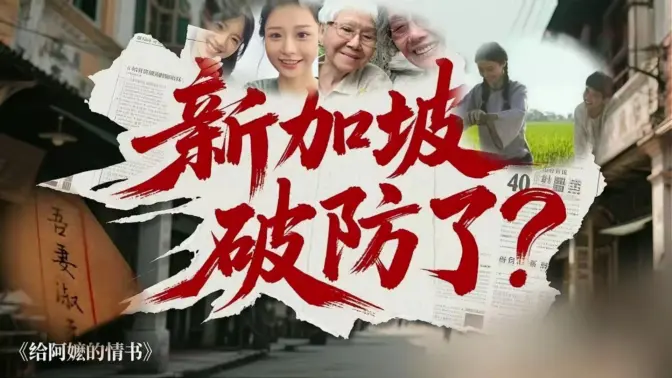
The film 'A Love Letter to Grandma' gained significant box office success, reflecting a strong emotional narrative.
OPEN SOURCEThe film 'A Love Letter to Grandma' gained significant box office success, reflecting a strong emotional narrative.
The expresses a deep dislike for Singapore, labeling it as an authoritarian state rather than a democracy.
Historical events, such as the treatment of Chinese communities during Japanese occupation, contribute to the 's negative perception.
The contrasts the Chinese community in Malaysia with that in Singapore, highlighting a lack of cultural connection in Singapore.
The criticizes Singapore's political leadership and its historical ties with Japan.
- Label Singapore as an authoritarian state, not a democracy
- Cite historical events that harmed Chinese communities
- Argue that Singapores governance is necessary for stability
- Claim that Singaporean identity is distinct from Chinese identity
- Acknowledge the films emotional impact on audiences
- The film A Love Letter to Grandma has achieved nearly 10 billion in box office revenue, with projections reaching up to 18 billion, against a production cost of 14 million
- Its emotional narrative, rooted in the historical challenges of Chinese immigrants, resonates strongly with both local and overseas Chinese audiences, especially in Southeast Asia
- The speaker expresses a strong aversion to Singapore, characterizing it as a dictatorship and noting its absence from international democratic forums, such as Bidens 2021 summit
- Criticism is directed at the political legacy of Singapores founding leader, highlighting the dynastic transition of power to his son, which raises concerns about political freedom
- The speaker compares Singapores political system to that of Myanmar, suggesting both countries manipulate leadership roles to maintain control, despite differing global perceptions
details
details
details
- Singapore operates as a dictatorship, citing the long tenure of Lee Kuan Yew and the subsequent leadership of his son, Lee Hsien Loong, as indicative of a dynastic political system
- Historical governance in Singapore is linked to Lee Kuan Yews collaboration with Japanese forces during World War II, which the speaker claims has influenced the countrys anti-China and pro-Japan policies
- Significant political actions by Lee Kuan Yew, such as Operation Coldstore in 1963, are highlighted as pivotal in establishing a one-party authoritarian regime by targeting leftist groups
- The speaker criticizes Singapores foreign policy for its support of Japan and its failure to address historical grievances, suggesting this approach undermines regional stability
- A personal disdain for Singapore is expressed, framing the nation as having betrayed its Chinese heritage by aligning with Japan, viewed as a historical adversary
details
details
details
- The speaker critiques the Singaporean Chinese community for prioritizing their Singaporean identity over their Chinese heritage, contrasting this with the active support of Malaysian Chinese during the Second Sino-Japane
- Malaysian Chinese made significant contributions to the war effort, including financial donations and active participation, while Singaporean Chinese are perceived to be less connected to their roots
- The dominance of English in Singapores administration and education has led to a decline in the use of Chinese among younger generations, highlighting cultural and linguistic shifts
- Surveys reveal that many Singaporean Chinese primarily identify as Singaporeans rather than as Chinese, indicating a cultural disconnect and diminished sense of community
- The speaker expresses skepticism about fostering positive feelings towards Singaporeans due to these cultural dynamics and their distancing from Chinese identity
This analysis is an original interpretation prepared by Art Argentum based on the transcript of the source video. The original video content remains the property of the respective YouTube channel. Art Argentum is not responsible for the accuracy or intent of the original material.