




Exploring China's Economic Landscape and Social Credit System
Analysis of China's economic model and social credit system, based on 'How China Escaped Banker Shock Therapy' | The Duran.
OPEN SOURCECynthia Chung discusses the significant changes in China's economic landscape, particularly in response to the 2008 financial crisis. She critiques Western misconceptions about China's social credit system and highlights the distinct economic strategies that allowed China to avoid the pitfalls faced by other nations.
Chung emphasizes the influence of Hank Paulson on China's economic reforms and the misconceptions surrounding its social credit system. She clarifies that the system primarily addresses predatory lending rather than extensive surveillance.
The evolution of peer-to-peer lending in China is examined, particularly in the context of the 2008 financial crisis. Chung highlights how government intervention curtailed predatory lending practices that were prevalent in the U.S.
Chung discusses the misconceptions surrounding life in China, emphasizing the contrast between Western perceptions and the reality of urban living conditions. She highlights the significant competition among decentralized economic actors within a framework that prioritizes stability.
China's economic model prioritizes stability over the shock therapy approach, avoiding potential political and social instability. The decision-making process involves practical experimentation, allowing for gradual transformation responsive to the populace's needs.
Chung argues that China's approach prevents predatory practices that have become prevalent in the West since the 2008 financial crash. She suggests that the rapid development of China raises questions about the effectiveness of Western economic management.
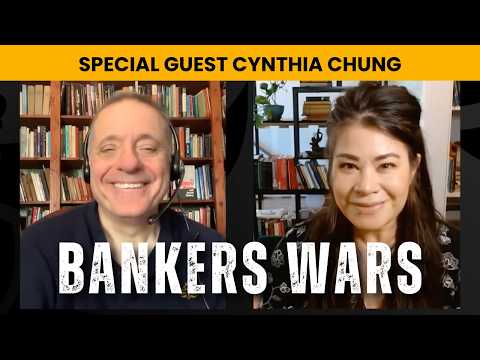
- Cynthia Chung highlights the critical shifts in Chinas economic landscape starting in the late 20th century, particularly in relation to the 2008 financial crisis
- The 2008 crash is portrayed as a turning point for China, showcasing its contrasting response to the risky financial behaviors of Western investment banks like Goldman Sachs
- Chung challenges the misconceptions surrounding Chinas social credit system, arguing that many Western views do not accurately represent the realities faced by Chinese citizens
- She discusses the influence of key figures such as Hank Paulson, who moved from Goldman Sachs to the role of U.S. Treasury Secretary, exemplifying the close ties between financial institutions and government during the crisis
- Chung intends to analyze how China sidestepped the shock therapy that impacted other nations, suggesting a distinct approach to economic reform that diverges from neoliberal policies advocated by the West
details
Read full analysis
- Argues that Chinas model prioritizes stability and avoids the pitfalls of shock therapy
- Highlights the effectiveness of government intervention in curbing predatory lending
- Questions the long-term sustainability of Chinas economic practices
- Raises concerns about potential inefficiencies and stifling of innovation
- Notes the significant competition among decentralized economic actors in China
- Acknowledges the rapid development of China and its impact on living standards
- Hank Paulson, as former CEO of Goldman Sachs and U.S. Treasury Secretary, significantly influenced Chinas adoption of radical free market reforms through his connections with Chinese leaders
- The 2008 financial crash was driven by intentional actions, including the creation of complex financial derivatives that functioned as weapons of mass destruction by investment banks
- Chinas social credit system is often mischaracterized; it is primarily focused on legal measures to combat predatory lending rather than the extensive surveillance suggested by Western narratives
- Alibaba and Tencent, both heavily supported by Goldman Sachs, initiated a social credit system that could have become more intrusive without government intervention
- The emergence of peer-to-peer (P2P) loans in China during the 2008 crash raised concerns about regulatory gaps similar to those seen in the U.S. at that time
- Peer-to-peer (P2P) lending, which allows individuals to lend and borrow money directly through platforms, gained traction during the 2008 financial crash, raising concerns about predatory lending practices
- In the U.S, platforms like Prosper and Lending Club implemented social credit systems that monitored consumer behavior, creating a rewards and punishment mechanism for loan issuance, which raised regulatory issues
- Chinas major tech companies, including Alibaba and Tencent, initially engaged in similar lending practices, but government intervention prohibited the adoption of intrusive social credit systems to protect consumers
- The lack of regulation for fintech companies in the U.S. and Europe led to minimal oversight, resulting in risks that were later reflected in Chinas financial landscape during the global financial crisis
- Under Xi Jinping, Chinas government implemented regulations that limited the influence of major tech companies like Alibaba and Tencent in the lending sector, particularly following Jack Mas critical comments about the banking system
- To prevent financial instability, the Chinese government mandated that companies maintain a 30% reserve on their lending, effectively curbing predatory lending practices
- The efforts of Western financial institutions to expand their influence in China, which may have fueled narratives about Chinas social credit system
- The segment draws comparisons between Chinas regulatory actions and historical Western operations, such as NATOs Gladio, indicating a pattern of political manipulation and instability by external forces
- Psychological warfare tactics contribute to misconceptions about life in China, leading to doubts about its urban environments and living conditions
- Many Westerners are surprised to discover that major Chinese cities offer affordable groceries and vibrant social scenes, challenging preconceived notions
- Chinas historical tendency to remain closed off from external dialogue fosters misunderstanding and intimidation regarding its internal debates and economic policies
- While the Chinese political and legal systems emphasize stability, there is significant competition among decentralized economic actors, contrasting with the centralized nature of many Western companies
- The Chinese governments focus on stability shapes economic interactions, including employer-employee relationships and lending practices, while promoting competition among smaller enterprises
- Chinas economic model emphasizes stability over the shock therapy approach, which prioritizes short-term pain for long-term gain, due to concerns about potential political and social instability
- The decision-making process in China is marked by practical experimentation, testing new policies in small settings before broader implementation, akin to crossing the river by feeling the stones
- Contrary to common beliefs, the Chinese government does not exert as much control over daily life as perceived; many changes arise organically within a competitive community framework
- The evolution of Chinas economic and political system resembles a Jenga game, where elements are carefully adjusted to maintain stability, allowing for gradual transformation responsive to the populaces needs
- The U.S. economic model has resulted in monopolies that stifle competition, while Chinas approach encourages fierce competition among a multitude of tech companies, especially in the AI sector
- In China, citizens experience less government intrusion in their daily lives, with many reporting minimal oversight and a system that actively incorporates public feedback through surveys
- The metaphor of the economy as a cage within which the bird can fly, attributed to Chen Yun, illustrates a balance between freedom and regulation, fostering innovation within a structured environment
- Unlike in many Western democracies, where political commitments often remain unfulfilled, Chinas governance emphasizes continuous public engagement to maintain accountability and responsiveness to the populace
- The contrast between Western ideals of freedom and Chinas regulatory approach suggests that well-defined boundaries can enhance creativity and innovation while curbing predatory practices
- Chinas banking regulations promote innovation by preventing exploitative corporate behaviors, a contrast to the increasing predatory lending seen in the West post-2008 financial crash
- The rise of predatory lending in the West has widened the wealth gap, with financial technology companies increasingly targeting vulnerable populations
- Cultural influences, particularly Confucianism, play a significant role in Chinas resistance to extractive capitalism, emphasizing family values and community support for the elderly, unlike the Wests approach
details
- Chinas economic practices are shaped by a combination of Confucian values and historical lessons, particularly from the Han Dynasty, rather than being solely based on Marxist ideology
- The Chinese government integrates traditional economic wisdom with modern practices, creating a unique system that blends communism, capitalism, and meritocracy through experimental methods
- Western views of China are often limited by a lack of understanding, which can obscure valuable lessons from Chinese philosophy and governance
- Historical figures such as Benjamin Franklin and Gottfried Leibniz acknowledged the significance of Confucianism and sought to learn from Chinese civilization, contrasting with contemporary Western dismissiveness towards alternative perspectives
- The academic environment in the West has become increasingly insular, with funding sources shaping narratives and stifling healthy debate, which hampers scholars ability to address societal challenges
- Chinas rapid development has significantly improved living standards, lifting many out of poverty, in stark contrast to stagnation in Western economies
- Misunderstandings about Chinas economic model, which blends communism, capitalism, and meritocracy through experimental practices, contribute to concerns about its growth
- The Wests apprehension regarding Chinas rise may be rooted in its own economic management failures, particularly in securing funding for businesses and individuals
- Geopolitical narratives often depict China as a threat, especially concerning its Belt and Road Initiative, while neglecting the negative consequences of Western military interventions
- Cynthia Chung highlights the importance of recognizing the economic sovereignty sought by nations in the Global South as a counterbalance to Western dominance
of China's economic resilience raises questions about the underlying assumptions regarding neoliberal policies and their universal applicability. Inference: The effectiveness of China's approach suggests that alternative economic models may exist, challenging the notion that Western methods are the only viable solutions. Missing variables include the role of cultural factors and government intervention, which could skew comparisons with Western economies.
This analysis is an original interpretation prepared by Art Argentum based on the transcript of the source video. The original video content remains the property of the respective YouTube channel. Art Argentum is not responsible for the accuracy or intent of the original material.