



US-China AI Rivalry and Economic Pressures
Analysis of US-China AI rivalry and economic pressures, based on "Hot Discussion! Wall Street: Has US Bailout Reached Its Limit?" | The Storm Media.
OPEN SOURCETsinghua University is emerging as a pivotal force in China's AI landscape, with its students and faculty making significant advancements that position them as formidable competitors to the U.S. This development raises concerns in the U.S. about the implications of China's rapid progress in AI technology, particularly as it relates to national security and economic competitiveness.
The founder of Yushu Technology has projected a timeline of 5 to 10 years for the integration of robots into daily life, a statement that has negatively impacted the company's stock value. This highlights the volatility in the tech sector, where market expectations can shift dramatically based on projected timelines and perceived capabilities.
In the U.S., opposition to the construction of AI data centers is growing, particularly due to environmental concerns such as excessive water and energy consumption. This backlash, especially from key Republican states like Texas, could have significant repercussions for Taiwan's AI industry, which relies heavily on these data centers for operational support.
The U.S. Treasury bond market is facing unprecedented challenges, with debt levels exceeding $40 trillion and a strong short position among investors. Analysts are closely monitoring interest rates, particularly as the 10-year bond yield approaches critical thresholds that could signal shifts in market dynamics and investor behavior.
Despite the current market volatility, some analysts are identifying opportunities within the AI sector, suggesting that traditional storage companies like Seagate and Western Digital may benefit from renewed demand driven by AI's storage needs. However, the overall sentiment remains cautious as investors grapple with the implications of high interest rates and potential economic downturns.
- Tsinghua University is emerging as a significant player in Chinas AI landscape, with its students and faculty, particularly Yang Ziling, making substantial advancements that position them as formidable competitors against the U.S
- The rapid development of AI models in China is not hindered by chip shortages, as evidenced by the performance of companies like DipSync, which is gaining recognition for its capabilities
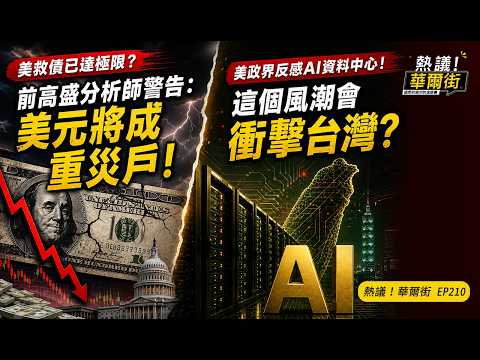
- Concerns are rising in the U.S. political sphere regarding AI data centers, prompting discussions about potential impacts on Taiwans AI demand and market dynamics
- A warning from a former Goldman Sachs analyst suggests that the U.S. debt relief measures may have reached their limits, with the dollar potentially facing significant challenges ahead
Read full analysis
- Tsinghua University is producing significant talent that poses a challenge to U.S. dominance in AI
- Growing opposition to AI data centers in the U.S. due to environmental concerns
- Political figures express discontent over halted approvals for AI projects in key states
- Analysts are divided on the future of AI stocks amidst concerns of market peaks
- Tsinghua University has become a significant player in Chinas AI sector, producing talent that poses a formidable challenge to the U.S
- The founder of Yushutech stated that the integration of robots into daily life requires extensive capabilities, projecting a timeline of 5 to 10 years for full realization, which negatively impacted the companys stock value after its IPO
- Concerns are raised about the entertainment-focused nature of current AI developments in China, suggesting that practical applications in productivity and real-world usage are still lacking
- Despite recent stock volatility, Yushutech remains a key indicator in the humanoid robotics market, with potential for future growth if it can transition from entertainment to practical applications
- The construction of AI data centers in the U.S. is facing increasing opposition, particularly from local governments that are now concerned about the environmental impact, such as excessive water and energy consumption
- Texas, a key Republican state, has reversed its previous support for AI data centers, halting the approval of multi-billion dollar projects due to these concerns, which has caused discontent among political figures like Trump
- Public support for AI data centers in the U.S. is declining, which could have significant implications for Taiwans AI industry, as many Taiwanese companies rely on these centers for their operations
- The potential slowdown in the establishment of AI data centers in the U.S. may adversely affect the overall demand for AI technologies, raising concerns about the future of the sector
- A broader trend of skepticism towards AI developments, with fears that the current market enthusiasm may be nearing its peak, as reflected in the stock market reactions in Taiwan, South Korea, and Japan
details
- An analyst from AVERCORE highlights six stocks worth considering despite concerns about the AI markets peak, including traditional storage companies like Seagate and Western Digital, which are seeing renewed demand due to AIs storage needs
- Apple is mentioned as a stock to watch, particularly with the upcoming iPhone 18 launch, which may introduce foldable technology and position Apple as a key player in consumer-grade AI
- The analyst suggests that while investor enthusiasm for Apple may be lukewarm due to perceived slow AI integration, the companys strategic positioning could lead to significant future gains in the AI sector
- The discussion also touches on the impact of U.S. Treasury actions on financial markets, noting that recent moves by the Treasury have caused market volatility, particularly in bond yields
details
- The U.S. Treasury bond market is facing significant challenges, with the 10-year bond yield recently breaking historical lows, indicating a potential upward trend in interest rates
- High levels of U.S. debt, exceeding $40 trillion, remain unresolved, complicating the financial landscape and raising concerns about the sustainability of government borrowing
- Market dynamics show a strong short position in U.S. Treasury bonds, with short sellers significantly outnumbering long positions, suggesting a bearish sentiment among investors
- The Treasurys management of its accounts, particularly the Treasury General Account (TGA), is under scrutiny as it attempts to navigate these financial pressures while maintaining liquidity
- There is speculation about the governments ability to counteract the bearish sentiment in the bond market, with analysts questioning whether current strategies will effectively address the looming debt crisis
details
details
details
details
- The U.S. Treasury bond market is experiencing increased pressure as short positions dominate, with a focus on managing the Treasury General Account to maintain liquidity
- Analysts suggest that the Federal Reserves strategy aims to counteract bearish sentiment in the bond market, particularly targeting short sellers in the 10-year and 30-year bond sectors
- Current interest rates for 10-year bonds have risen to 4.7%, with a critical threshold of 5% being closely monitored, indicating a potential shift in market dynamics
- The ongoing volatility in the capital markets is affecting investor sentiment, particularly in sectors like AI, where high interest rates are causing uncertainty
- The interconnectedness of U.S. Treasury bonds and global markets, including the Japanese yen, highlights the broader implications of U.S
details
details
The discussion highlights the growing competition between the U.S. and China, particularly in the realm of AI, with Tsinghua University emerging as a significant player. Concerns about the U.S. political response to AI developments and the potential impact on Taiwan's market dynamics underscore the strategic implications of this rivalry. The warning from a former Goldman Sachs analyst regarding the limits of U.S.
This analysis is an original interpretation prepared by Art Argentum based on the transcript of the source video. The original video content remains the property of the respective YouTube channel. Art Argentum is not responsible for the accuracy or intent of the original material.