



Understanding Maritime Chokepoints and Their Global Impact
Analysis of maritime chokepoints and their impact on global trade, based on 'Maritime Chokepoints: Lessons from the Black Sea' | Hoover Institution.
OPEN SOURCEThe conflict in Iran and the Strait of Hormuz highlights the vulnerability of global economies to disruptions in key maritime chokepoints essential for energy and trade. These narrow strategic waterways are critical arteries for international commerce, and their closure can lead to significant supply shocks.
The Turkish Straits have played a crucial role in facilitating grain exports during the ongoing Ukraine conflict. This stability is largely attributed to the 1936 Montreux Convention, which grants Turkey the authority to control military passage through the straits during wartime.
Turkey's strategic position in the Black Sea is vital for countering Russian expansionism, influenced by Russia's historical imperial identity and maritime strategy. The relationship between Turkey and Russia is transactional, shaped by energy, grain, and security interests.
The effectiveness of maritime chokepoints relies on enforceable regulations, capable regional partners, and sustained vigilance from allies. Without these elements, crises could trigger global supply shocks, affecting food and energy security.
Deteriorating relations between Turkey and Russia could threaten the security of the Turkish Straits. Such a scenario could lead to a significant food supply crisis if Ukrainian grain exports are disrupted.
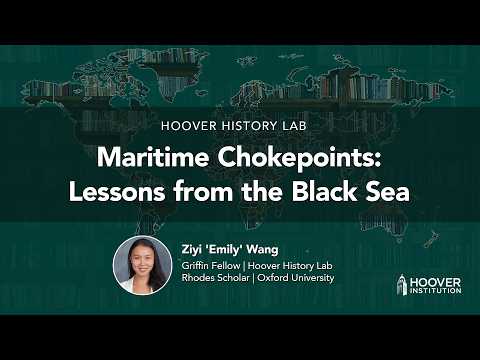
- The conflict in Iran and the Strait of Hormuz underscores the vulnerability of global economies to disruptions in key maritime chokepoints essential for energy and trade
- The Turkish Straits have facilitated grain exports during the Ukraine conflict, largely due to the 1936 Montreux Convention, which grants Turkey control over military passage
- Turkeys strategic position in the Black Sea is vital for countering Russian expansionism, which is influenced by Russias historical imperial identity and maritime strategy
- The effectiveness of maritime chokepoints depends on enforceable regulations, capable regional partners, and ongoing vigilance from allies to avert crises that could trigger global supply shocks
- Deteriorating relations between Turkey and Russia could threaten the security of the Turkish Straits, potentially leading to a significant food supply crisis if Ukrainian grain exports are affected
Read full analysis
- Highlights the importance of enforceable regulations and regional partnerships to maintain open maritime chokepoints
- Argues that Turkeys control over the Turkish Straits is crucial for global grain exports and energy security
- Acknowledges the historical significance of the Montreux Convention in regulating military passage through the Turkish Straits
- Recognizes the strategic importance of maritime chokepoints in the context of global trade and energy supply
The reliance on Turkey as a gatekeeper for the Black Sea raises questions about the stability of this arrangement. Inference: If Turkey's relationship with Russia deteriorates, the potential for conflict could disrupt grain exports, highlighting the fragility of this geopolitical balance. Missing variables include the role of other regional powers and the impact of global market fluctuations on food security.
This analysis is an original interpretation prepared by Art Argentum based on the transcript of the source video. The original video content remains the property of the respective YouTube channel. Art Argentum is not responsible for the accuracy or intent of the original material.