




Taiwan's Two-Party Problem: KMT Chairwoman Cheng Li-wun on Cross-Strait Relations
Analysis of taiwan's two-party problem: kmt chairwoman cheng li-wun on cross-strait relations, based on "Taiwan's Two-Party Problem: KMT Chairwoman Cheng Li-wun on Cross-Strait Relations" | Asia Society.
OPEN SOURCEKMT Chairwoman Cheng Li-wun emphasizes the importance of peace and collaboration for cross-strait relations amid rising geopolitical tensions. Her political journey reflects the complexities of Taiwan's political landscape and her potential role as a mediator. KMT Chairwoman Cheng Li-wun discusses the complexities of Taiwan's political landscape and the importance of cross-strait relations. She emphasizes the need for a pragmatic approach to ensure the well-being and dignity of the Taiwanese people.
KMT Chairwoman Cheng Li-wun discusses the importance of peaceful dialogue between Taiwan and China, emphasizing respect for Taiwanese self-determination. She suggests that Taiwan's democratic progress can coexist with the legitimacy of the Chinese Communist Party. KMT Chairwoman Cheng Li-wun emphasizes the importance of the 1992 consensus for maintaining the status quo in cross-strait relations. She argues that Taiwan's existence does not threaten the legitimacy of the People's Republic of China, yet acknowledges Beijing's rejection of Taiwan independence.
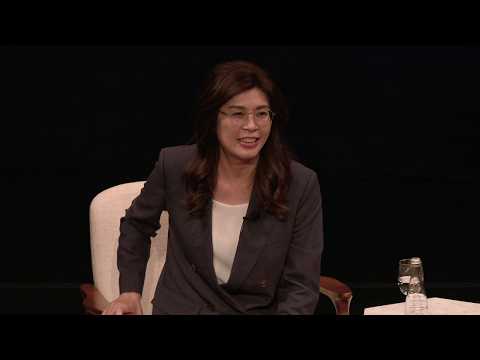
- KMT Chairwoman Cheng Li-wun advocates for peace as a fundamental principle for cross-strait relations, emphasizing the need for collaboration to foster prosperity and avoid conflict
- Chengs political journey from a pro-independence member of the DPP to her current role illustrates the complexities of Taiwans political environment
- Her recent meeting with Xi Jinping positions her as a potential mediator in the context of increasing geopolitical tensions between Taiwan and mainland China
- The panel discussion focuses on the viability of Chengs vision for a peaceful resolution, considering the challenges posed by Taiwans internal political divisions and external influences
Read full analysis
- Cheng Li-wun criticizes the Democratic Progressive Partys inconsistent stance on Taiwan independence, reflecting internal conflicts within the party
- She asserts that Taiwans future is closely tied to cross-strait relations, prioritizing the well-being and dignity of the Taiwanese people over the binary options of independence or reunification
- Cheng contends that the notion of Taiwan independence does not resonate with the current sentiments of the Taiwanese population, emphasizing the need to respect self-determination while navigating complex geopolitical factors
- Her transition from the Democratic Progressive Party to the Kuomintang was driven by a desire for a more pragmatic approach to Taiwans future, highlighted by her participation in a significant visit to Beijing with KMT leaders
details
- Cheng Li-wun advocates for peaceful dialogue between Taiwan and China, emphasizing the need to respect Taiwanese self-determination while navigating complex cross-strait relations
- In her meeting with Xi Jinping, she suggested that Taiwans democratic progress does not undermine the legitimacy of the Chinese Communist Party, indicating a potential for coexistence without formal independence
- Cheng points out that historical differences have shaped Taiwans unique social institutions, asserting that these differences do not imply a desire for separation from China
- The discussion also addresses the implications of U.S. policy towards Taiwan, highlighting the necessity for a resolution that is acceptable to both Taiwan and China amid escalating geopolitical tensions
details
- Cheng Li-wun highlights the 1992 consensus as essential for preserving the status quo in cross-strait relations, asserting a shared identity between Taiwan and mainland China
- She contends that Taiwans existence does not undermine the legitimacy of the Peoples Republic of China, while recognizing that Beijing finds the notion of Taiwan independence unacceptable
- Cheng believes that peaceful negotiations and institutional relations with China are possible as long as Taiwan refrains from pursuing independence
- The KMTs position is grounded in the Constitution of the Republic of China, which she argues supports a one China policy while allowing for Taiwans democratic freedoms
- Cheng expresses concerns about the PRCs acceptance of a democratic Taiwan, even if independence is not sought, reflecting the complexities of future cross-strait relations
- Cheng Li-wun asserts that sustainable cross-strait relations must not require either Taiwan or mainland China to compromise their systems or way of life, emphasizing the importance of preserving Taiwans democracy and freedoms
- She advocates for a framework that combines one China with an anti-independence stance, suggesting that both sides can engage in dialogue and coexist while respecting each others achievements
- The KMT maintains that Taiwan and mainland China are part of the same Chinese nation, yet operate as distinct political entities, contrasting this with Beijings one country, two systems approach, which is deemed unacceptable in Taiwan
- Cheng argues that Taiwans situation is fundamentally different from that of Hong Kong, highlighting the historical context and unique political landscape of Taiwan since the end of Japanese colonial rule in 1945
details
- The historical context of Taiwans return to China in 1945 is significant, as Taiwan has developed into a democracy with a distinct legal system, contrasting sharply with Hong Kongs situation
- Respecting the will of the Taiwanese people is essential in any discussions regarding changes to the current status quo, ensuring their preferences are prioritized in potential agreements
- Cheng Li-wun promotes a perspective that views differences between Taiwan and mainland China as strengths that can enhance dialogue and cooperation, rather than as points of contention
- She envisions a win-win scenario from cross-strait exchanges, where both sides can gain from collaborative efforts
- Cheng expresses optimism for improved relations with China, particularly if the KMT regains power and adopts a non-independence stance, which could lay the groundwork for constructive dialogue
details
- Recent polls show that 80% of the Taiwanese population supports dialogue and exchanges with mainland China, indicating strong public backing for cross-strait communication
- Over a century of separation has fostered skepticism among the Taiwanese regarding peaceful reunification, particularly in light of recent government policies that have strained cross-strait relations
- The Chinese governments military build-up during past dialogue efforts has instilled fear and complicates public sentiment towards unification and peace
- There is a consensus on the necessity of ongoing communication to avoid misunderstandings and hostility, which could potentially lead to military conflict
- The KMT Chairwoman underscores the critical need to respect the preferences of the Taiwanese people in discussions about the future of cross-strait relations
details
- Taiwan should pursue a pragmatic strategy to minimize the risk of military conflict with mainland China, highlighting the necessity of a robust national defense
- The differing political systems of Taiwan and mainland China complicate the potential for harmonious relations, akin to a strange marriage
- Historical conflicts, including a civil war, underscore the importance of dialogue and peaceful exchanges to resolve cross-strait issues, as both sides have endured significant losses
- The 1992 agreement between the KMT and CCP created a vital framework for dialogue, essential for preventing permanent separation and facilitating gradual resolution of differences
- Future exchanges across the Taiwan Strait are critical for enhancing understanding and cooperation as both sides navigate their intricate relationship
- Cheng Li-wun highlights the importance of establishing multiple mechanisms to ensure smooth exchanges and protect the rights of individuals across the Taiwan Strait, aiming to stabilize relations
- She suggests that a model similar to the European Unions integration approach could be beneficial for addressing the complexities of cross-strait relations
- Cheng emphasizes that any new system must prioritize the needs and well-being of people on both sides, indicating that public support is essential for future frameworks
- Presenting herself as a pragmatic leader, she argues for a realistic approach to prevent the use of force and promote peaceful dialogue
- Cheng warns that neglecting a pragmatic stance could have serious repercussions, underscoring the need to understand the realities of cross-strait dynamics
- Cheng Li-wun advocates for a gradual approach to improve cross-strait relations, emphasizing the importance of fostering goodwill and mutual trust between Taiwan and mainland China
- The KMTs vision for 2032 aims to stabilize and deepen peaceful relations through increased exchanges, addressing public expectations, and shifting from hostility to cooperation
- Cheng underscores the necessity of establishing security mechanisms and mutual trust to mitigate military threats, which contribute significantly to tensions across the Taiwan Strait
- Mainstream public opinion in Taiwan favors efforts to cultivate a peaceful relationship, reflecting a strong desire for dialogue and collaboration over conflict
- Cheng Li-wun stresses the importance of convincing the Taiwanese public of the benefits of peace with China, which she views as essential for the KMTs success in the 2032 presidential election
- She draws comparisons to the European Unions integration process, advocating for a pragmatic approach to cross-strait relations that addresses the needs of both Taiwan and mainland China
- While some Taiwanese may disagree with Xi Jinpings perspective on shared identity, Cheng believes that many recognize the significance of her meeting with him, reflecting a nuanced public sentiment towards dialogue
- The difficulties in maintaining stable relations with China, using historical examples like Brexit to illustrate the unpredictability of political negotiations and the need for resilience
details
- A significant majority of people in Taiwan prefer to maintain the status quo rather than pursue independence or reunification, reflecting a stable trend in public sentiment
- Cheng Li-wun highlights the necessity of dialogue and negotiation to address military and cyber threats from China, emphasizing the complexities of cross-strait relations
- She warns that confrontational policies towards China could have detrimental effects on U.S. interests, advocating for mutual trust and cooperation
- Cheng suggests that the U.S. should enhance its relationships in East Asia, noting that most countries in the region, excluding China, are U.S
- The discussion emphasizes the need for pragmatic strategies to navigate geopolitical challenges, drawing parallels with the historical evolution of the European Union
- The region offers significant potential in talent, technology, capital, and market opportunities, highlighting the importance of U.S. leadership in transforming conflicts into cooperation
- A proactive U.S. role in fostering dialogue could lead to substantial peace dividends, especially regarding emerging technologies like AI, benefiting both regional countries and U.S
- Cheng Li-wun stresses the critical need for U.S. support in Taiwans peace efforts, warning that without it, Taiwan risks becoming a battleground, threatening its progress and future generations
- Achieving peace across the Taiwan Strait is a complex challenge that requires a strong commitment from Taiwan and its leaders to pursue stability and dialogue
- Cheng expresses optimism that cooperation between President Trump and President Xi Jinping could facilitate a peaceful transformation, underscoring the importance of their collaboration
- Cheng Li-wun advocates for establishing dialogue platforms in East Asia to promote peaceful mechanisms, enhance technological integration, and improve supply chain cooperation, thereby reducing conflict risks
- She is dedicated to engaging Taiwans youth through social media and public discussions, aiming to build confidence in democracy and the KMTs vision for peace
- Cheng emphasizes the necessity of achieving a broad consensus within Taiwanese society to support her peace roadmap, which must be confirmed through significant elections
- In addressing fishing rights in the East China Sea, she criticizes the current Taiwanese administration for failing to protect Taiwans fishing interests
details
- The Taiwanese government is called to take decisive measures to safeguard its fishing rights, particularly during maritime emergencies where nationality should not impede rescue operations
- During a previous administration, Taiwan successfully navigated territorial disputes with Japan and the Philippines, highlighting a contrast with the current governments handling of similar issues, which has led to public dissatisfaction
- Proactive governance is emphasized as crucial for maintaining Taiwans rights and interests, especially concerning maritime matters
- The KMT Chairwoman stresses the necessity of achieving a consensus within Taiwanese society to support a roadmap aimed at fostering peace and stability in cross-strait relations
- The DPP governments refusal to restore tourism links with mainland China post-COVID has significantly harmed Taiwans tourism industry, which is crucial for its service sector
- Tourism operators in Taiwan are frustrated by the lack of communication from the government regarding cross-strait exchanges, highlighting a demand for political change
- Geopolitical tensions, particularly between the US and China, complicate potential cross-strait exchanges, especially in critical sectors like semiconductors
- Taiwans semiconductor industry is heavily dependent on the US market, necessitating careful navigation of its relations with both the US and China
- KMT Chairwoman Cheng Li-wun stresses the necessity for improved communication between the KMT and DPP to resolve Taiwans internal governance challenges, such as budget approvals and judicial appointments
- Cheng expresses her frustration with the political deadlock in Taiwan, noting her willingness to engage with Chinese President Xi Jinping while being unable to meet with Taiwans President Lai
- She underscores the need for reconciliation both across the Taiwan Strait and within Taiwan to mitigate political infighting, which she believes is harmful to effective governance
- Chengs comments reflect a broader concern regarding the declining political climate in Taiwan, which she argues obstructs the countrys ability to tackle urgent issues
- The dialogue between Taiwan and Beijing is hindered by conflicting views on sovereignty, with Taiwan emphasizing self-governance and democracy, while Beijing advocates for unification
- Concerns about the nature of peace are prevalent, with questions about whether it will stem from Taiwans autonomy or from subjugation by China
- Cheng Li-wun highlights the KMTs historical role in establishing the first democratic republic in Asia and fostering Taiwans economic growth, positioning the party as a potential catalyst for future peace
- The KMT seeks to promote dialogue and reconciliation both across the Taiwan Strait and within Taiwans domestic political environment, which is currently characterized by significant infighting
- Cheng expresses optimism regarding the KMTs capacity to create new opportunities for peace and progress, indicating that the party can navigate challenges to achieve important milestones for Taiwan
The assumption that peace can be achieved through collaboration overlooks the entrenched political divisions within Taiwan and the influence of external powers. Inference: The viability of Cheng's vision hinges on her ability to unify disparate factions in Taiwan, which remains untested. Without addressing these internal conflicts, any proposed solutions may lack the necessary support to be effective.
This analysis is an original interpretation prepared by Art Argentum based on the transcript of the source video. The original video content remains the property of the respective YouTube channel. Art Argentum is not responsible for the accuracy or intent of the original material.