




Understanding Small Modular Reactors in Modern Energy Systems
Analysis of Small Modular Reactors, based on "SMRs Explained | Why Small Modular Reactors Are Changing Nuclear Deployment" | World Nuclear Association.
OPEN SOURCESmall modular reactors (SMRs) represent a transformative approach to nuclear energy deployment, designed for factory production and modular installation. This innovation allows for reduced costs and quicker deployment compared to traditional large nuclear power plants, making them suitable for smaller grids and industrial applications.
With a capacity of up to 300 megawatts, SMRs can effectively serve towns, industrial parks, and remote locations, thereby broadening the role of nuclear energy in the energy transition. Their modular design enhances predictability and efficiency, allowing essential components to be manufactured off-site and assembled on-site.
Global interest in SMRs is driven by rising electricity demand, the urgency for emission reductions, and a focus on energy security. Over a hundred designs are currently under development, with leading initiatives in countries like China and Canada, showcasing the potential for SMRs to complement traditional large-scale reactors.
The BWRX-300 SMR is co-licensed by Canadian and US regulators, with plans for deployment in various locations. SMRs offer flexibility by providing both electricity and heat, expanding their application beyond grid support into industrial processes and desalination.
Collaborations between companies like Dow Chemicals and X Energy highlight the growing interest in SMRs for industrial applications. The compact size of SMRs allows for installation in diverse locations, including remote areas and sites previously used for fossil fuels.
While SMRs may not be a universal solution, they signify a notable evolution in nuclear deployment strategies, focusing on factory production and modular design to cater to specific energy demands.
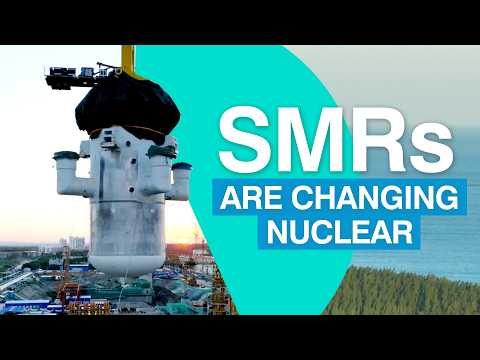
- Small modular reactors (SMRs) are engineered for factory production, resulting in reduced costs and quicker deployment compared to traditional large nuclear power plants
- With a capacity of up to 300 megawatts, SMRs are ideal for smaller grids, industrial applications, and remote areas, thereby broadening the scope of nuclear energy in the energy transition
- The modular design allows for the off-site manufacturing of essential components, which enhances the predictability and efficiency of nuclear deployment when assembled on-site
- Global interest in SMRs is growing due to increasing electricity demand, the urgency for emission reductions, and a focus on energy security, with over a hundred designs currently under development
- Leading countries in SMR initiatives include China and Canada, featuring projects like the worlds first modular high-temperature gas-cooled reactor and the GE BWRX-300 SMR being built in Ontario
details
details
details
Read full analysis
- Highlight the potential for reduced costs and quicker deployment compared to traditional nuclear plants
- Argue that SMRs can serve smaller grids and industrial applications, broadening nuclear energys role
- Question the logistical challenges in manufacturing and transporting SMR modules
- Raise concerns about the integration of SMRs into existing energy systems and regulatory frameworks
- Acknowledge the growing global interest in SMRs due to rising electricity demand and emission reduction needs
- The BWRX-300 SMR is undergoing co-licensing by Canadian and US regulators, with plans for similar designs to be deployed in various locations
- SMRs offer versatility by providing both electricity and heat, making them suitable for industrial processes and desalination in addition to traditional grid support
- Examples like the Lomonosov floating nuclear power plant in Russia and Chinas modular high-temperature gas-cooled reactor demonstrate SMRs ability to integrate with local heating grids
- Collaborations, such as those between Dow Chemicals and X Energy, as well as Chyros Power and Google, reflect the increasing interest in SMRs for industrial applications and advanced reactor development
- The compact size of SMRs enables installation in diverse locations, including remote areas and sites previously used for fossil fuels, addressing various energy needs
- While not universally applicable, SMRs signify a notable evolution in nuclear deployment strategies, focusing on factory production and modular design to cater to specific energy demands
details
The assumption that SMRs will significantly reduce deployment timelines overlooks potential logistical challenges in manufacturing and transporting modules. Inference: If the supply chain fails to scale efficiently, the promised benefits of SMRs may not materialize. Additionally, the focus on smaller applications may neglect the need for large-scale energy solutions, raising questions about their overall impact on energy security.
This analysis is an original interpretation prepared by Art Argentum based on the transcript of the source video. The original video content remains the property of the respective YouTube channel. Art Argentum is not responsible for the accuracy or intent of the original material.