



The Intersection of AI and Fashion: Insights from Nick Knight
Analysis of AI's transformative role in fashion, based on "Nick Knight Is Building His Own AI" | The Business of Fashion.
OPEN SOURCENick Knight's ongoing dialogue with Imran Amed reflects a deep exploration of technology's transformative role in the fashion industry. Over 15 years, they have discussed how the concept of the metaverse has evolved, with Knight noting a decline in the term's appeal, yet he believes the foundational ideas surrounding digital innovation remain pertinent. He critiques the fashion industry's waning engagement with these innovations, suggesting a disconnect from the potential of digital advancements.
Knight expresses concern over the fashion industry's reliance on historical styles, which he views as a barrier to true innovation. He highlights the impact of Plato's Atlantis, which democratized access to fashion shows, allowing a broader audience to engage with fashion imagery. This shift has empowered individuals to express themselves visually, marking a significant change in how fashion is perceived and distributed.
In discussing societal values, Knight argues that the pursuit of fame and wealth detracts from meaningful human connections. He emphasizes the importance of individual contributions to the fashion landscape, contrasting them with larger entities that prioritize profit over creativity. Knight believes that everyone has a unique story worth telling, and he sees the current moment as ripe for artistic exploration, particularly with the advent of AI.
Knight is actively developing proprietary AI datasets, photographing models extensively to create a unique learning environment for the AI. This approach allows the AI to generate outputs that are not merely imitations of existing works but rather new creations that reflect Knight's artistic vision. He critiques the current use of AI in art, arguing that many creators fail to push beyond established norms.
The conversation also touches on the ethical implications of AI in fashion, particularly regarding models' digital likenesses. Knight advocates for models to have ownership and control over their images, highlighting the need for legislation to protect their rights. He encourages emerging creators to focus on personal fulfillment and self-expression rather than replicating past techniques.
Knight's reflections on the environmental impact of data centers and the need for artistic integrity underscore his belief that technology should serve as a tool for deeper understanding and expression. He envisions a future where the boundaries between art and science blur, allowing for a richer exploration of creativity that transcends traditional mediums.
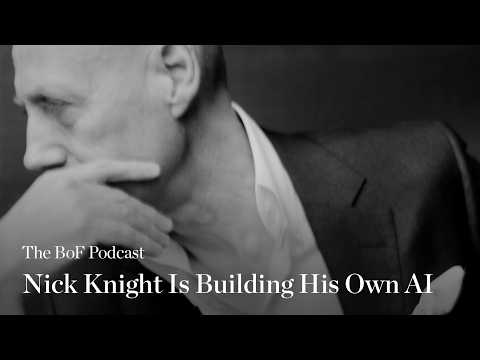
- Nick Knight and Imran Amed reflect on their ongoing conversations about technologys impact on fashion, marking their fourth in-depth interview over 15 years
- Knight discusses the current state of the metaverse, suggesting that while the term has lost some appeal due to negative associations, the underlying concepts like NFTs and virtual worlds remain relevant
- He emphasizes that fashions engagement with digital innovations has waned, with a notable shift away from exploring virtual fashion shows and digital products
- Knight argues that the fashion industry is somewhat trapped in outdated 20th-century perspectives, which hinders its ability to adapt to 21st-century changes
- He expresses excitement about redefining relationships to imagery and communication, highlighting the potential for innovation in how fashion is perceived and created
Read full analysis
- Critiques the fashion industrys reliance on past styles and advocates for innovation
- Emphasizes the importance of models owning their digital likenesses
- Continues to prioritize profit and historical references over creativity
- Engagement with digital innovations has diminished
- AI presents both opportunities and ethical challenges in the creative process
- Nick Knight critiques the current state of fashion imagery, noting it heavily references past styles rather than innovating, which he finds limiting
- He emphasizes the transformative impact of Platos Atlantis on the fashion industry, opening up live shows to the public and changing how fashion is distributed and perceived
- Knight discusses the democratization of fashion through technology, highlighting how social media has empowered individuals to express themselves visually, a shift that began around 2010
- He questions the industrys focus on profit and fame, arguing that true success should not be measured solely by financial gain, as many powerful and wealthy individuals do not find happiness in their status
- Knight expresses concern that the pursuit of power and fame may distract from more meaningful pursuits in life, suggesting a need for a reevaluation of core values in the fashion industry
details
- Nick Knight expresses skepticism about the societal emphasis on fame, power, and wealth, suggesting that true fulfillment lies in meaningful human connections rather than superficial status
- He highlights the importance of individuals who are making significant contributions to the fashion industry, contrasting them with larger companies that prioritize profit and attention over creativity
- Knight believes that everyone has a unique story to tell, emphasizing that interest and value are not exclusive to celebrities but are inherent in all individuals
- He acknowledges the transformative potential of AI in art and fashion, noting that it allows for new forms of interaction with creative work, such as generating poetry or three-dimensional representations from photographs
- Knight sees the current moment as an exciting time for art, indicating that the AI revolution is just beginning and holds vast possibilities for the future
- Nick Knight is developing proprietary AI datasets by photographing models extensively, allowing the AI to learn solely from his references rather than scraping the internet
- He emphasizes the creation of a new medium that blends still images and motion, producing a hybrid form that retains the emotional and visual qualities of the original photograph
- Knight critiques the current use of AI in art, noting that many creators are merely mimicking existing works instead of exploring new creative possibilities
- He discusses the importance of how datasets are constructed, highlighting that his approach aims to foster originality by avoiding references to established art forms
- The process involves creating a dataset from a conventional fashion shoot, which is then used to prompt the AI to generate unique outputs without external influences
- Nick Knight discusses the issue of referencing in art and the fine line between inspiration and plagiarism, emphasizing that many AI-generated images simply replicate existing works rather than fostering originality
- He critiques the reliance on mood boards in creative projects, which often include established artists works without proper acknowledgment or compensation, highlighting a systemic issue in the industry
- Knight argues that creating great art requires not just technology but also artistic integrity and vision, asserting that true artistry involves significant effort and time, regardless of the tools used
- He raises concerns about the ethical implications of using AI to extend the careers of fashion models, suggesting that while it could be beneficial, it also necessitates careful consideration of rights and protections for individuals likenesses
- Nick Knight advocates for fashion models to have ownership and control over their digital likenesses, arguing that current practices allow for exploitation without proper rights or compensation
- He highlights a lack of engagement from model agencies in protecting models digital identities, as they prioritize immediate profits over long-term investment in digital rights
- Knight emphasizes the need for legislation to ensure models can dictate how their likeness is used, including the ability to choose how they are represented at different ages
- He encourages emerging image makers to abandon traditional methods and instead focus on personal fulfillment and self-expression, rather than replicating past techniques
- Knight draws a parallel between the current AI revolution and the industrial revolution, suggesting that the rapid changes in technology require a forward-thinking mindset rather than a reliance on historical practices
- He believes that the division between arts and sciences is diminishing, allowing for a broader range of creative expression and encouraging individuals to explore various forms of art without being confined to a single identity
- Nick Knight emphasizes the importance of viewing AI as a new lens through which to understand the world, akin to how X-rays and thermal photography reveal different aspects of reality
- He critiques the environmental impact of data centers, arguing that the issue lies not with AI itself but with the greed and capitalism driving harmful practices
- Knight highlights the potential of AI to address significant health challenges, suggesting that advancements in technology can lead to positive outcomes in areas like communication and disease treatment
- He reflects on the democratization of image-making, comparing it to the historical shift when writing became accessible to the masses, allowing for greater self-expression
- Knight dismisses the pursuit of fame, money, and power as false goals, advocating instead for a richer emotional experience that encompasses a range of feelings, including sadness and anger
- His fulfillment comes from human interactions and the creative process, rather than from accolades or the perfection of his work, viewing his creations as part of a broader conversation
- Nick Knight emphasizes the unpredictability of his creative process, suggesting that the best work is often the next piece yet to be created, rather than past achievements
- He recommends reading Alvin Tofflers works, particularly Future Shock and The Third Wave, which he believes accurately predicted societal changes that are now unfolding
- Knight expresses a desire to move beyond traditional photography, advocating for a broader understanding of mediums that can capture emotions and life experiences
- He critiques the limitations of photography as a medium, arguing that it should not be the sole focus for artists and creators, as new technologies continue to evolve
- Knight maintains an optimistic outlook on the future, believing that society is evolving towards a better state despite the challenges that may arise
The conversation between Nick Knight and Imran Amed highlights the transformative impact of technology on the fashion industry, particularly through the lens of AI. Knight's approach to creating proprietary datasets raises questions about originality and the ethical implications of using AI in art, as he critiques the industry's reliance on past styles.
This analysis is an original interpretation prepared by Art Argentum based on the transcript of the source video. The original video content remains the property of the respective YouTube channel. Art Argentum is not responsible for the accuracy or intent of the original material.