



The Decline of Luxury Bag Quality
Analysis of the decline in luxury bag quality, based on 'Why $3,000 Luxury Bags Are Falling Apart' | The Fashion Fable.
OPEN SOURCEConsumers invest significantly in luxury bags, often viewing them as lifelong investments. However, many of these bags deteriorate quickly, raising concerns about the true value of such products. The luxury industry has shifted from traditional craftsmanship to a profit-driven model, prioritizing shareholder interests over product quality.
Brands have replaced high-quality materials with cheaper alternatives while maintaining premium price points. This shift has led to a perception of declining quality, as consumers notice issues like fraying stitching and tarnished hardware. The marketing narrative surrounding luxury products has gained importance, often emphasizing sustainability and innovation, even when actual craftsmanship may be lacking.
The label 'made in Italy' can be misleading, as it does not guarantee the quality or origin of all components. In some cases, luxury brands have been linked to exploitative labor practices, with workers in poor conditions. Hermes stands out by prioritizing craftsmanship and ethical production, contrasting with larger conglomerates that chase volume and speed.
Luxury brands have adopted a fast-fashion model, introducing multiple collections each year while sacrificing quality. Despite growing concerns about quality and labor practices, luxury prices have continued to rise significantly, highlighting a disconnect between production quality and pricing.
The price of luxury handbags has increased dramatically, often outpacing normal inflation. This pricing strategy has become part of the branding, where higher prices are used to manufacture desirability rather than reflect quality. Consumers are increasingly aware of this disconnect, leading to a shift towards vintage and independent craftsmanship.
As consumers become more informed, the luxury industry's reliance on price as a status symbol may backfire. The erosion of consumer trust and the sustainability of current pricing strategies are critical issues that could lead to significant backlash against brands that fail to uphold their promises.
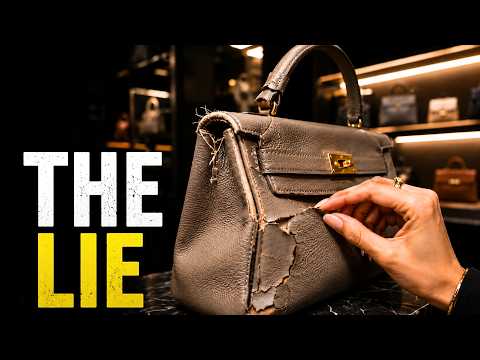
- Consumers are facing disappointment with luxury bags, which are deteriorating rapidly despite their high prices, prompting questions about their true value
- The luxury industry has transitioned from traditional craftsmanship to a profit-driven model, prioritizing shareholder interests over product quality
- Brands have substituted high-quality materials, such as real gold hardware, with cheaper alternatives while maintaining premium price points, contributing to a perception of declining quality
- The marketing narrative surrounding luxury products has gained importance, often emphasizing sustainability and innovation, even when actual craftsmanship may be lacking
- The label made in Italy can be misleading, as it does not ensure the quality or origin of all components, often obscuring a more complex supply chain
details
Read full analysis
- Prioritize profit margins over craftsmanship, leading to declining quality
- Use marketing narratives to distract from actual product quality
- Demand higher quality and transparency in luxury products
- Shift towards vintage and independent craftsmanship due to dissatisfaction
- Luxury prices have increased significantly, often outpacing inflation
- Luxury brands, including Dior, have been linked to exploitative labor practices, with workers in Italy earning as little as two to three euros an hour under conditions similar to fast-fashion sweatshops
- The made in Italy label, once a mark of quality and ethical labor, has become a marketing tool that often misrepresents actual production and labor conditions
- Hermes distinguishes itself by prioritizing craftsmanship and ethical production, employing over 15,500 artisans in France and maintaining a slower, more controlled production process compared to larger conglomerates
- The luxury industry has adopted a fast-fashion model, introducing multiple collections each year while sacrificing quality, resulting in customer dissatisfaction due to defects like crooked stitching and peeling finishes
- Despite growing concerns about quality and labor practices, luxury prices have continued to rise significantly in the U.S. market, highlighting a disconnect between production quality and pricing
details
details
details
- The source block primarily promotes luxury handbags and critiques the quality and pricing strategies of high-end brands
details
details
details
details
details
The luxury market's transformation raises critical questions about the mechanisms driving this shift. Inference: The reliance on cheaper materials and marketing narratives suggests a fundamental assumption that consumers will prioritize brand over quality, potentially overlooking the long-term implications of such practices on brand loyalty and consumer trust.
This analysis is an original interpretation prepared by Art Argentum based on the transcript of the source video. The original video content remains the property of the respective YouTube channel. Art Argentum is not responsible for the accuracy or intent of the original material.