




Givenchy's Identity Crisis and Transformation
Analysis of Givenchy's identity crisis and transformation, based on 'How Greed Destroyed Givenchy' | The Fashion Fable.
OPEN SOURCEGivenchy has experienced a significant identity crisis, transitioning from aristocratic elegance to a focus on celebrity culture and streetwear. The brand's legacy, once defined by its collaboration with Audrey Hepburn, has become obscured by changing leadership and creative directions.
The evolution of Givenchy's identity raises critical questions about the assumptions underlying luxury branding. The brand's shift towards streetwear may alienate traditional customers while failing to attract a new, loyal audience.
Givenchy's journey has included controversial designers like John Galliano and Alexander McQueen, whose theatrical and punk styles conflicted with the brand's traditional values. Riccardo Tisci's tenure was pivotal, merging high-end couture with streetwear to attract a younger audience.
Following Tisci's exit, Claire Waight Keller aimed to restore Givenchy's elegance, exemplified by her design of Meghan Markle's wedding dress, but faced challenges in sustaining cultural momentum. Matthew M. Williams' hiring signaled a shift back to a streetwear-focused strategy.
Sarah Burton's appointment as creative director represents a potential reset for Givenchy, emphasizing heritage and craftsmanship. Her debut collection highlighted the brand's roots with precision and elegance, receiving positive critical acclaim.
Burton's success will hinge on her ability to merge the heritage of Hubert de Givenchy with the fast-paced demands of the luxury market, which seeks growth and visibility. Concerns remain about whether there is still an audience for the refined, aristocratic style that originally characterized Givenchy.
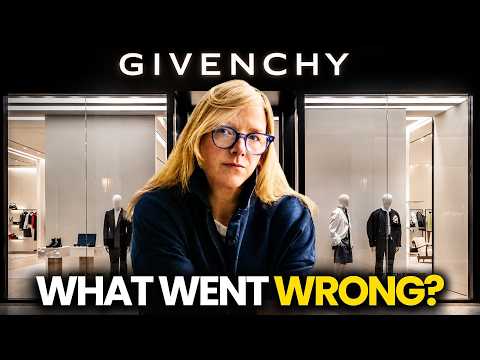
- Givenchy has struggled to maintain its identity, shifting from aristocratic elegance to a focus on celebrity culture and streetwear
- The brands transformation began after its acquisition by LVMH in 1988, leading to a series of designers with differing visions, including John Galliano and Alexander McQueen
- Gallianos tenure introduced a theatrical approach that contrasted with Givenchys refined roots, while McQueens punk aesthetic further complicated the brands identity
- The collaboration between Hubert de Givenchy and Audrey Hepburn was crucial in establishing the brands legacy, but changes in leadership have obscured this clarity
- Sarah Burtons recent appointment suggests a potential reset for Givenchy, prompting questions about the brands ability to regain desirability while preserving its foundational elegance
details
details
Read full analysis
- Emphasizes the importance of maintaining Givenchys aristocratic roots
- Argues that luxury branding should focus on heritage and craftsmanship
- Supports the integration of streetwear and contemporary styles to attract younger audiences
- Highlights the necessity of adapting to market demands for growth and visibility
- Recognizes the challenges faced by Givenchy in balancing tradition with modernity
- Notes the impact of leadership changes on the brands identity
- Givenchys identity has evolved from aristocratic elegance to a blend of celebrity culture and streetwear, creating confusion about its core brand identity
- The brands journey has included controversial designers like John Galliano and Alexander McQueen, whose theatrical and punk styles conflicted with Givenchys traditional values
- Riccardo Tiscis tenure was pivotal, merging high-end couture with streetwear to attract a younger audience and redefine the brands cultural relevance
- Following Tiscis exit, Claire Waight Keller aimed to restore Givenchys elegance, exemplified by her design of Meghan Markles wedding dress, but faced challenges in sustaining cultural momentum
- Matthew M. Williams hiring signals a shift back to a streetwear-focused strategy, highlighting Givenchys ongoing struggle to balance its heritage with modern market demands
details
- Matthew M. Williams time at Givenchy aimed to align the brand with modern street culture but resulted in a divisive identity, marked by controversial designs and public backlash
- The brand faced criticism for its judgment and sensitivity, particularly due to incidents like a t-shirt that offended Chinese consumers and a runway show featuring necklaces resembling hangmans nooses
- Williams industrial aesthetics and aggressive silhouettes did not establish a clear identity for Givenchy, leading to his departure in January 2024
- Sarah Burtons appointment as creative director in September 2024 represents a potential reset for Givenchy, emphasizing heritage and craftsmanship from her previous experience
- Burtons debut collection in March 2025 highlighted the brands roots with precision and elegance, receiving positive critical acclaim but facing challenges in a competitive luxury market
details
details
details
details
- Sarah Burton is tasked with redefining Givenchys identity in a fashion landscape that often favors hype and controversy over traditional elegance
- The challenge lies in maintaining the brands relevance without resorting to streetwear trends or provocative designs that have defined recent years
- Burtons success will hinge on her ability to merge the heritage of Hubert de Givenchy with the fast-paced demands of the luxury market, which seeks growth and visibility
- There are growing concerns about whether there remains an audience for the refined, aristocratic style that originally characterized Givenchy
The shift in Givenchy's identity raises questions about the underlying assumptions of luxury branding. Inference: The brand's struggle to maintain its core values amidst changing market demands suggests a missing variable in understanding consumer loyalty. The reliance on celebrity culture as a mechanism for relevance may overlook the importance of heritage and craftsmanship, which could serve as a falsifier for its long-term desirability.
This analysis is an original interpretation prepared by Art Argentum based on the transcript of the source video. The original video content remains the property of the respective YouTube channel. Art Argentum is not responsible for the accuracy or intent of the original material.