



Hedge Fund Innovation and Market Dynamics
Analysis of Hedge Fund Innovation and Market Dynamics, based on "Sir Paul Marshall: Why Markets Are Getting More Competitive | Podcast | In Good Company" | Norges Bank Investment Management.
OPEN SOURCEMarshall Wace, co-founded by Sir Paul Marshall in 1997, has transformed from a $50 million startup to managing approximately $90 billion today. This growth is attributed to continuous innovation, particularly through the development of the Alpha-Capture system, which has redefined interactions between buy-side and sell-side entities. Marshall emphasizes that the firm's success is rooted in its ability to adapt and innovate, contrasting it with other funds that have faltered due to complacency.
The hedge fund landscape has become increasingly competitive, with rising capital requirements and a greater reliance on technology. Marshall notes that starting a hedge fund now requires an estimated $300 to $500 million, a significant increase from the $50 million needed in 1997. This shift underscores the challenges new entrants face in a market that demands both operational excellence and technological integration.
Marshall Wace's resilience was tested during the 2008 financial crisis, where assets under management fell dramatically from $14 billion to $3.5 billion. However, the firm avoided gating investments, which allowed it to recover and grow in the subsequent years. Marshall's perspective on stress and crisis management reflects a unique tolerance that has shaped the firm's culture and operational strategies.
The integration of AI and algorithmic trading has positioned Marshall Wace at the forefront of hedge fund management. The firm is not only enhancing its investment strategies through technology but also anticipating a significant increase in quant researchers to further improve data analysis. This evolution highlights the balance between human judgment and machine efficiency, which Marshall believes is crucial for navigating complex market dynamics.
Marshall's philanthropic efforts through the ARK charity and his ventures into media reflect his commitment to societal improvement and challenging conventional narratives. His acquisition of The Spectator and involvement with GB News illustrate a desire to provide alternative viewpoints in a media landscape often criticized for its biases. Marshall's insights on Brexit reveal a nuanced understanding of the economic implications of regulatory environments, advocating for a more innovative approach in the UK.
In conclusion, Marshall Wace's journey exemplifies the importance of adaptability, innovation, and a strong philosophical foundation in investment strategies. As the market evolves, the firm remains committed to leveraging both human insights and technological advancements to maintain its competitive edge.
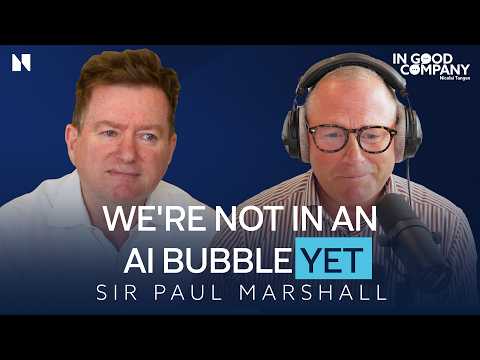
- Sir Paul Marshall reflects on his worst investment during the first Iraq war, highlighting the significant losses he faced due to a long position in oil services
- Marshall Wace, co-founded by Paul Marshall in 1997, has grown to manage approximately $90 billion, distinguishing itself through its innovative Alpha-Capture system that connects trade ideas from brokers
- The firm successfully integrates discretionary and systematic investing, allowing for a synergistic approach that enhances both strategies
- Continuous innovation is identified as the key to Marshall Waces success over nearly 30 years, contrasting with other funds that have failed due to hubris and lack of discipline
- Marshall emphasizes that many fund management careers are shaped by failures, warning that firms can become too large and lose control over their positions in the market
Read full analysis
- Continuous innovation is essential for success in the hedge fund industry
- Human judgment combined with AI provides a competitive edge in investment strategies
- Philanthropic efforts reflect a commitment to societal improvement
- Sir Paul Marshall reflects on the challenges of managing a hedge fund, noting that even successful managers often face a high failure rate, which can lead to feelings of inadequacy
- Marshalls decision to co-found Marshall Wace in 1997 stemmed from a long-held desire to run his own business, and he partnered with Ian Wace, who brought a strong technological focus to their operations
- The landscape for starting a hedge fund has drastically changed since 1997, with initial capital requirements rising from $50 million to an estimated $300 to $500 million due to increased regulations and operational complexities
- Marshall highlights the shift from a fragmented hedge fund industry to a more concentrated one, emphasizing the growing importance of technology and financial capabilities in establishing a successful fund
- He recounts securing half of their initial capital from George Soros, illustrating the competitive nature of fundraising in the hedge fund industry
details
details
details
- Marshall Wace faced significant challenges during the 2008 financial crisis, with assets under management plummeting from $14 billion to $3.5 billion, primarily due to a weak client base reliant on fund-of-funds
- Despite the downturn, the firm did not gate investments, allowing them to become a cash point for clients, which ultimately helped them recover and grow post-crisis
- Marshall expresses a unique perspective on stress, indicating a high tolerance for it and an enjoyment of crises, which he attributes to his personality traits assessed during hiring
- The firm began to see substantial growth and solid returns around 2013-2014, following strategic adjustments made in the aftermath of the financial crisis
- Marshall Waces partnership with KKR was motivated by KKRs interest in being a minority investor, which aligned with Marshalls desire to maintain control over the firm
- Marshall Waces partnership with KKR provided a significant endorsement that aided in institutional fundraising, although Marshall believes they would have succeeded without it
- The development of the TOPS alpha capture system began in 2002, aiming to measure sell-side contributions more scientifically, which led to a radical shift in the buy-side and sell-side relationship
- Initially skeptical, Marshall recognized the value generated by the sell-side, which was previously unmonetized, and this realization led to the launch of a monetized portfolio under the Marshall Wace brand
- TOPS has evolved into a comprehensive systematic strategy, incorporating algorithmic trading and machine learning to optimize data extraction and signal identification across global markets
- The platform has expanded from Europe to the US and Asia, now involving hundreds of external contributors, reflecting a commitment to continuous innovation in trading strategies
details
- AI is enhancing the analysis of sentiment data by providing deeper context, allowing for more sophisticated investment strategies compared to traditional methods
- Marshall Wace is leveraging AI to revolutionize fundamental investing, enabling rapid information absorption and the development of a genetic portfolio management system
- The firm anticipates a significant increase in the number of quant researchers, suggesting a shift towards recursive self-improvement in data analysis and portfolio management
- While markets are becoming more efficient due to real-time data processing, the analytical edge remains, indicating that human judgment still plays a crucial role in investment success
- The rise of retail investors, empowered by access to information, may lead to increased competition in the market, although their skill level may not match that of top hedge funds
- Markets with higher retail participation, such as China and the US, may exhibit greater inefficiencies, presenting opportunities for skilled investors to capitalize on
details
details
details
details
- The retail investor is becoming more empowered, but they lack the same risk management culture and decision-making criteria as institutional investors, particularly hedge funds
- Despite advancements in AI and productivity, the current headcount in hedge funds is expected to remain stable, with a shift towards needing different skill sets rather than fewer employees
- Marshall Wace emphasizes a philosophy where human judgment combined with AI outperforms purely machine-driven approaches, particularly in market analysis and situational awareness
- The firm does not plan to compete directly with high-frequency trading, focusing instead on maintaining low trading costs while leveraging human insights in decision-making
- Understanding market dynamics, such as buyer-seller behavior and leverage in specific markets, is crucial for hedge funds, especially during volatile periods
details
details
- Paul Marshall argues that the current market is not in a bubble yet, but anticipates a potential bubble in AI-driven sectors due to significant technological advancements
- He compares the current moment in AI to a Cambrian moment in biological evolution, suggesting a transformative phase in capitalism driven by intelligence explosion
- Marshall highlights that hedge fund management is at the forefront of AI adoption, while larger corporations lag due to bureaucratic hurdles, indicating a disparity in technological integration
- He notes that stock valuations, particularly in the semiconductor sector and the Korean market, are at historically low levels, suggesting potential for growth as productivity benefits from AI adoption materialize
- Marshall warns that while the market may experience periods of excitement and overheating, the underlying fundamentals remain strong, with low interest rates and extended valuations being key factors for future bubbles
- Leverage in ETFs has significantly decreased from $60 billion to $20 billion in five weeks, indicating a shift in market dynamics
- Marshall anticipates a major bull market with a potential bubble top, but believes the market is not yet at that stage
- He suggests that AIs impact on inflation is currently slightly inflationary due to increased demand for chips and energy, but expects significant productivity growth in the near future
- Marshall predicts a weakening labor market, particularly for entry-level positions, which could relieve pressure on interest rates and be bullish for markets
- He discusses the potential of physical AI and robotics, suggesting they could transform household dynamics and reduce domestic conflicts
- Investment success requires balancing short-term market perceptions with long-term cash flow evaluations, emphasizing the importance of both aspects in decision-making
details
details
- Successful investment strategies require a balance of analytical skills and gut instincts, with an emphasis on experience and pattern recognition gained over time
- Short selling is inherently challenging due to market structures favoring long positions, risk management complexities, and high borrowing costs, making it a less appealing profession despite its potential for generating alpha
- Experience in the market is increasingly valuable, but it must be coupled with flexibility and the ability to adapt to changing conditions to avoid becoming stagnant
- Marshall reflects on his personal preference for shorting over long positions, noting the psychological challenges faced by short sellers, who often deal with a more pessimistic outlook
- Marshall Wace emphasizes portfolio-level risk management over individual stock performance, focusing on overall construction rather than specific trades
- The firm employs a debriefing process that analyzes metrics like success ratios and slugging ratios, which measure the concentration of gains in a few high-conviction stocks
- A culture of humility is instilled within the firm, encouraging team members to learn from their mistakes rather than shy away from them, as arrogance is not tolerated
- Marshall Wace maintains a stable team of portfolio managers, requiring a proven track record for new hires, while also nurturing internal talent through a gradual process of increasing capital access
- The firm recognizes the importance of adaptability and learning from failures, which is crucial for long-term success in the competitive hedge fund landscape
details
- Marshall Wace emphasizes a rigorous training and evaluation process for new portfolio managers, typically requiring around 10 years to prove their capabilities before managing significant funds
- The firm has implemented an elevate program to train potential stars from business schools, combining internal mentorship with external training opportunities
- In the age of AI, Marshall Wace prioritizes personality traits over traditional academic credentials, focusing on qualities like agency, curiosity, and the ability to challenge consensus
- Disagreeableness is valued as a trait that allows managers to engage in constructive dissent, which is seen as essential for success in a competitive environment
- The speaker critiques the current educational system for producing graduates who excel in rote memorization rather than fostering creativity and independent thinking
details
- Marshall Wace emphasizes the importance of identifying high-agency individuals through evidence of creativity and entrepreneurialism, rather than relying solely on traditional academic credentials
- The charity ARK, co-founded by Paul Marshall, focuses on transforming the UK education sector by applying business disciplines to improve failing schools, resulting in the establishment of 39 schools with plans to expand to 50
- Marshalls Christian faith influences his philanthropic approach, driving his commitment to equality of opportunity and the belief that every individual deserves a fair start in life
- His foray into media, motivated by dissatisfaction with existing outlets, includes the establishment of UnHerd, aimed at challenging conventional thinking, and involvement in GB News, which has sparked controversy
- Paul Marshall discusses his acquisition of The Spectator, highlighting its historical significance and the potential for technological improvements in its management
- He addresses the skepticism journalists have towards wealthy media owners, attributing it to a perceived power imbalance and a tribal mentality within journalism that prioritizes pleasing specific audiences over seeking truth
- Marshall aims to challenge this tribalism through his media ventures, including UnHerd and GB News, which provide alternative viewpoints to the dominant progressive narratives in UK television news
- Despite GB News achieving significant market share and becoming the leading news channel in the UK within five years, it struggles financially due to advertiser boycotts influenced by campaigns against it
- Reflecting on Brexit, Marshall expresses support for the sovereignty aspect but acknowledges concerns about the economic implications of leaving the single market
details
- Sir Paul Marshall acknowledges that while he was correct about the sovereignty issues related to Brexit, he underestimated the economic consequences, suggesting that a more decisive break with the EU could have fostered innovation in the UK
- He contrasts the regulatory environment of the EU, which he believes stifles innovation, with the more dynamic and innovative landscape of the US economy, highlighting the UKs missed opportunities in areas like blockchain and AI
- Marshall points out that the UKs embrace of net zero policies has led to high electricity prices, while he notes that the country has made strides in biotech and genetics due to separate regulations in those fields
- He expresses a desire for the UK to lead in innovation, potentially influencing the EU to follow suit, and emphasizes the importance of understanding global markets, particularly in the US and Asia
- In discussing his personal legacy, Marshall aims to positively impact peoples lives and contribute to addressing the challenges facing Britain, while also sharing his interests in gardening, sports, and historical literature, particularly related to the Holocaust
- He advises young people to be proactive and skeptical, encouraging them to question information rather than accept it at face value, reflecting a broader critique of the recent trend of following the science
- Young people should critically evaluate information they encounter at university, rather than accepting the prevailing consensus
- Patience is essential, as life offers ample time to pursue various interests and opportunities
- The current investment landscape is described as the most exciting ever, presenting significant opportunities for making a difference
The discussion highlights the evolution of Marshall Wace and the hedge fund industry, emphasizing the importance of continuous innovation and the integration of technology in investment strategies. While the firm has successfully navigated challenges, including the 2008 financial crisis, it raises questions about the sustainability of its growth model in an increasingly competitive landscape.
This analysis is an original interpretation prepared by Art Argentum based on the transcript of the source video. The original video content remains the property of the respective YouTube channel. Art Argentum is not responsible for the accuracy or intent of the original material.