



Understanding Air India's Financial Crisis
Analysis of Air India's financial struggles, based on "AIR INDIA IS BROKEN: Why Air India Can Never Be Fixed?" | Think School.
OPEN SOURCEAir India is currently facing severe financial difficulties, losing ₹42 crore daily under the Tata Group, which is more than double the ₹19.2 crore loss per day experienced during its government ownership. This alarming increase raises significant questions about the management effectiveness of the Tata Group, especially given their successful track record with other ventures.
Despite substantial investments totaling ₹15,300 crore in debt absorption and a historic order of 470 new aircraft, Air India continues to grapple with operational challenges. These include outdated systems inherited from the government, which have resulted in recurring technical defects across its fleet, and a delayed retrofit program due to supply chain issues.
The merger with Vistara and Air India Express has led to inconsistent customer experiences, further diminishing brand loyalty. Passengers face uncertainty regarding aircraft quality, which complicates the airline's efforts to regain market share in a competitive landscape dominated by foreign airlines.
The new CEO's strategy aims to transform India into a major aviation hub, leveraging Delhi's strategic location to attract international traffic. This plan includes the concept of sixth freedom traffic, allowing Air India to connect passengers between two other countries via its own airport, similar to Emirates' operational model.
However, the success of this ambitious strategy is contingent upon timely aircraft deliveries from Airbus and Boeing, as well as resolving ongoing supply chain issues, particularly those related to material shortages. Without these critical improvements, Air India's prospects for recovery remain uncertain.
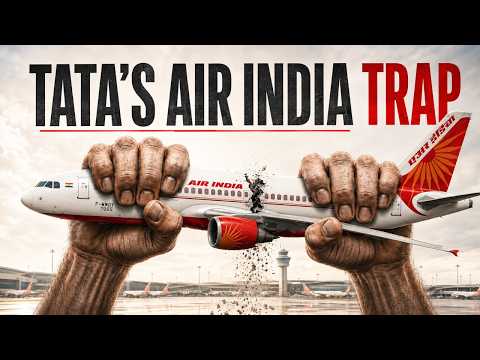
- Air India, under the Tata Group, is losing ₹42 crore daily, more than double the ₹19.2 crore loss per day when it was government-owned, raising questions about the Tatas management capabilities
- Despite significant investments of ₹9,558 crore from Tata and Singapore Airlines, and a historic order of 470 aircraft, Air India remains in a dire financial state
- The airlines operational challenges have been exacerbated by geopolitical issues, particularly the closure of Pakistani airspace to Indian carriers, which has forced Air India to take longer, less efficient routes, increasing operational costs significantly
- As a result of these challenges, foreign airlines now dominate 58.4% of Indias international flights and 95% of its international cargo, highlighting Air Indias struggle to compete in both domestic and international markets
- The primary competition for Air India is not just other airlines but also geographical and geopolitical factors that hinder its operational efficiency
details
Read full analysis
- Air India is losing more money under Tata Group than it did under government ownership
- Despite significant investments, operational challenges persist
- A new CEO with a successful track record has been appointed to lead the turnaround
- Air Indias operational challenges are compounded by geopolitical factors
- The Tata Group has invested heavily in Air India, absorbing ₹15,300 crores in debt and launching a significant retrofit program, yet the airline continues to struggle with profitability, losing ₹42 crores daily
- Air Indias merger with Vistara and Air India Express has led to inconsistent customer experiences, as passengers face uncertainty over aircraft quality, which has diminished brand loyalty
- The retrofit program for upgrading aircraft seats is delayed due to a limited number of certified manufacturers and supply chain issues, including a shortage of materials and production backlogs from major aircraft manufacturers like Airbus and Boeing
- Air Indias operational challenges are compounded by an outdated 69-year-old operating system inherited from the government, which has resulted in recurring technical defects across its fleet
- The appointment of a new CEO, Thivodek Gebrahmarium, who previously transformed Ethiopian Airlines into a profitable entity, signals a potential shift in strategy aimed at revitalizing Air India
details
details
details
details
details
details
- Air Indias new CEO aims to transform India into a major aviation hub, leveraging Delhis strategic location to attract international traffic and compete with foreign airlines like Emirates
- The concept of sixth freedom traffic is central to the plan, allowing Air India to connect passengers between two other countries via its own airport, similar to how Emirates operates
- Delhis geographical advantage positions it as a viable alternative to Dubai, with shorter detours for international flights, potentially increasing route viability and frequency
- The hub model could enable Air India to aggregate traffic from multiple markets, enhancing demand for routes that would otherwise be unprofitable
- The success of this strategy hinges on timely aircraft deliveries from Airbus and Boeing, as well as resolving supply chain issues, particularly related to titanium shortages
Air India's current financial struggles under the Tata Group raise significant questions about management effectiveness, especially given the stark increase in daily losses compared to its government ownership. Despite substantial investments and a historic aircraft order, the airline's operational challenges, including outdated systems and geopolitical constraints, hinder its recovery.
This analysis is an original interpretation prepared by Art Argentum based on the transcript of the source video. The original video content remains the property of the respective YouTube channel. Art Argentum is not responsible for the accuracy or intent of the original material.