Mohammed VI Tower: Transforming Morocco's Skyline
Analysis of the Mohammed VI Tower's impact on Morocco's urban landscape, based on "Morocco Takes Control of Africa's Skies - $700 Million Mohammed VI Tower Changes Everything!" | The New Africa Wealth.
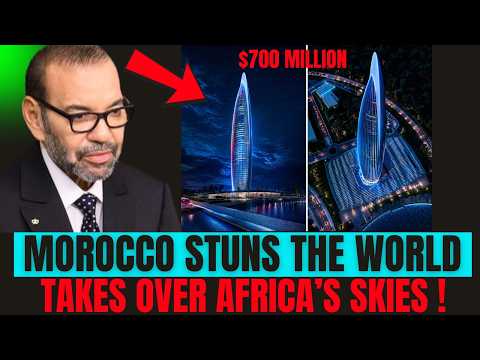
OPEN SOURCEMorocco inaugurated the Mohammed VI Tower, now recognized as Africa's second tallest building, symbolizing the nation's architectural ambition and modern urban development. The tower, part of the Rabat City of Light initiative, aims to transform Rabat into a global cultural and financial hub.
Standing at 250 meters and comprising 55 floors, the tower offers 102,800 square meters of space, including luxury apartments, offices, and a Waldorf Astoria hotel. Its design incorporates advanced engineering features, ensuring resilience against seismic activity and energy efficiency.
The project, completed in March 2026, cost approximately $400 million, showcasing Morocco's ability to attract significant domestic and international investment. The tower is expected to create thousands of jobs and enhance tourism, contributing to the local economy.
The Mohammed VI Tower's unique blend of luxury living, business activity, and cultural symbolism positions Morocco as a leader in modern architectural projects across Africa. Its construction reflects a commitment to sustainable design and urban transformation.
As a monumental achievement, the tower not only enhances Rabat's skyline but also serves as a beacon of Morocco's aspirations for economic growth and global visibility. It represents a bold statement of national pride and ambition.
- Highlight the towers potential to attract global investment and enhance tourism
- Argue that the project symbolizes Moroccos ambition and capability in modern architecture
- Express concerns about the reliance on luxury tourism as a primary growth driver
- Acknowledge the towers role in transforming Rabats skyline
- Recognize the collaboration of international and local expertise in the projects development
- The Mohammed VI Tower, inaugurated in Rabat, is now the second tallest building in Africa, representing Moroccos aspirations in modern urban development
- With a cost of $700 million, the tower is part of the Rabat City of Light initiative, which aims to transform the capital into a global cultural and financial center
- The tower stands at 250 meters and comprises 55 floors, offering 102,800 square meters of space that includes luxury apartments, offices, and a Waldorf Astoria hotel
- Designed to withstand seismic activity, the tower incorporates advanced features such as photovoltaic technology for energy efficiency and 36 elevators for efficient vertical transport
- Developed by O Tower and financed by Bank of Africa, the project highlights a collaboration of international and Moroccan expertise, underscoring Moroccos strategic role in global architecture
details
details
details
- The Mohammed VI Tower, completed in March 2026, stands at 250 meters, making it Moroccos tallest building and a symbol of the countrys aspirations in modern urban development
- With a construction cost of approximately $400 million, the project highlights Moroccos capacity to attract significant domestic and international investment for large-scale infrastructure
- The tower includes luxury apartments, office spaces, and hospitality venues, such as a Waldorf Astoria, aimed at enhancing tourism and driving economic growth in the region
- Its energy-efficient design, featuring solar technology, sets a new benchmark for sustainable architecture in Africa, reflecting Moroccos commitment to environmentally responsible development
- The Mohammed VI Tower is anticipated to create thousands of jobs and transform the surrounding Borgreg Valley into a vibrant waterfront district, strengthening economic ties between Rabat and Saleh
- The King Mohammed VI Tower, with a construction cost of $400 million, represents Moroccos ambition in infrastructure and urban development, aiming to attract global investors and tourists
- Anticipated to create thousands of jobs in hospitality and tourism, the tower is expected to significantly boost the local economy and enhance Rabats global visibility
- Featuring a unique combination of luxury living, business spaces, and cultural significance, the tower positions Morocco as a leader in modern architectural projects across Africa
- The construction of the tower showcases Moroccos ability to execute world-class mega-projects, potentially serving as a model for urban transformation in other African nations
details
The ambitious Rabat City of Light initiative assumes that infrastructure alone can drive economic growth and tourism, overlooking potential socio-economic disparities that may arise. Inference: The tower's success in attracting investment and tourism is contingent on broader economic stability and accessibility for local populations, which remains unaddressed.
This analysis is an original interpretation prepared by Art Argentum based on the transcript of the source video. The original video content remains the property of the respective YouTube channel. Art Argentum is not responsible for the accuracy or intent of the original material.