Chipotle's Decline: The Impact of Financial Manipulation
Analysis of Chipotle's decline due to hedge fund manipulation, based on 'How One Hedge Fund Killed Chipotle' | Modern MBA.
OPEN SOURCEChipotle's transformation from a beloved dining option to a criticized brand is largely attributed to a decade of financial manipulation by a hedge fund. This shift has resulted in reduced portion sizes and a decline in food quality, impacting customer satisfaction. Once celebrated for its fresh ingredients and generous portions, Chipotle now faces criticism for its operational changes and staffing challenges.
The rise and fall of Chipotle illustrates the tension between founder-driven ideals and investor-focused strategies. Financial decisions made by hedge funds have prioritized short-term gains over long-term brand integrity, leading to a significant erosion of customer trust. The company's shift to a decentralized supply chain for local and sustainable ingredients contributed to widespread food safety crises.
Despite efforts to restore its reputation, Chipotle has struggled with recurring food safety issues, resulting in a public relations crisis and significant stock value decline. The narrative surrounding Chipotle's downfall raises questions about the sustainability of profit-driven strategies in the food industry. The assumption that maximizing shareholder value can occur without considering customer experience and product quality is a critical oversight.
As Chipotle navigated its challenges, the influence of hedge fund management shifted its operational focus and customer experience. The company's leadership changes reflect a broader trend in the fast-casual market, where financial engineering often undermines the foundational values that initially drove success. The case of Chipotle serves as a cautionary tale for other brands in the industry.
In the wake of its struggles, Chipotle's management has attempted to implement cost-cutting measures and operational efficiencies. However, these strategies have often led to customer dissatisfaction and a decline in brand loyalty. The balance between maintaining quality and achieving profitability remains a significant challenge for the company.
Ultimately, Chipotle's journey highlights the complexities of navigating growth in a competitive market. The company's experience underscores the importance of aligning business practices with customer expectations and the potential consequences of prioritizing short-term financial gains over long-term brand health.
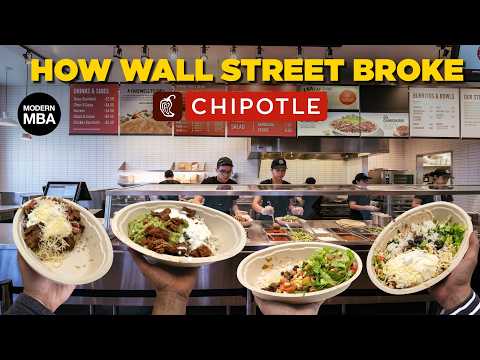
- Prioritizes short-term profits over long-term brand integrity
- Utilizes financial engineering to extract value at the expense of quality
- Emphasizes quality ingredients and customer experience
- Struggles to maintain brand values amid financial pressures
- Chipotles operational changes have led to mixed customer responses
- The block primarily serves as a promotional piece for various financial and business resources, highlighting tools for credit cards, insurance, and investment opportunities
- Chipotles decline from a popular dining choice to a struggling brand is attributed to a decade of financial manipulation by a single hedge fund, resulting in a $3 billion profit for the fund
- Once celebrated for its fresh ingredients and generous portions, Chipotle now faces criticism for reduced food quality and smaller servings amid staffing challenges
- The case of Chipotle illustrates the tension between founder-driven ideals and investor-focused strategies, highlighting the impact of financial decisions on brand integrity
- While Chipotle thrived under McDonalds ownership, maintaining its vision, the influence of hedge fund management has shifted its operational focus and customer experience
- The source block primarily promotes financial strategies and investment opportunities related to Chipotles corporate history
details
details
details
- The source block primarily promotes various financial and business tools and services
- In 2015, Chipotle experienced a significant public health crisis due to multiple foodborne illness outbreaks, including Salmonella, Norovirus, and E. coli, affecting over 500 customers across 14 states
- The companys shift to a decentralized supply chain for local and sustainable ingredients contributed to the widespread nature of these outbreaks, moving away from reliance on larger suppliers
- Following the health incidents, Chipotles sales and consumer trust suffered dramatically, resulting in a 70% drop in stock value within a year, erasing nearly all previous gains
- The rapid succession of outbreaks was unprecedented in the restaurant industry, leading to conspiracy theories among investors about potential sabotage, despite supply chain issues being a more straightforward explanation
- The fallout from these events not only caused a public relations crisis but also prompted investigations by the CDC, FDA, and Department of Justice, underscoring serious food safety implications
details
- The source block primarily contains promotional content related to business tools and services
details
details
- The block primarily serves as a promotional piece for financial services and tools, highlighting various offers related to credit cards, car insurance, and business management
details
details
- The source block primarily promotes financial strategies and corporate leadership changes, focusing on the impact of a hedge fund on Chipotles management and operations
details
details
details
- The block primarily promotes financial services and tools, highlighting various offers related to credit cards, insurance, and business resources
details
details
details
- Brians leadership at Chipotle encountered difficulties as he attempted to sustain the companys valuation through high-risk strategies, including international expansion and labor automation, which demanded substantial investment
- Ackman acknowledged the unsustainability of the rapid growth he had initiated and sold off 85% of his shares prior to Brians resignation, taking advantage of the stocks peak
- The hedge fund Pershing Square gained $3 billion from its $1.2 billion investment in Chipotle, reflecting a successful extraction of value that compromised the companys long-term health
- As customer dissatisfaction grew due to reduced quality and squeezed margins, the new CEO is tasked with promoting operational upgrades as innovations, which do not effectively address the decline in demand
details
details
The narrative surrounding Chipotle's downfall raises questions about the sustainability of profit-driven strategies in the food industry. Inference: The hedge fund's actions suggest a prioritization of short-term gains over long-term brand integrity, potentially alienating loyal customers and undermining the company's foundational values.
This analysis is an original interpretation prepared by Art Argentum based on the transcript of the source video. The original video content remains the property of the respective YouTube channel. Art Argentum is not responsible for the accuracy or intent of the original material.