U.S. Military Strategy in the Taiwan Strait
Analysis of U.S. military presence near Taiwan, based on "America is massing troops near Taiwan" | TheEconomist.
OPEN SOURCEDeploying over 10,000 troops to the Philippines, the U.S. aims to deter a potential Chinese invasion of Taiwan. These troops are engaged in annual military exercises that coincide with a period of calm weather in the Taiwan Strait, which is strategically significant for any potential military action.
The exercises include the firing of long-range missiles and the sinking of practice ships, showcasing U.S. military capabilities. A Tomahawk missile was launched from a new mobile platform, raising concerns in China due to its extensive range.
Japan and the Philippines are strengthening their defense collaboration, recognizing their vulnerabilities in the event of a conflict between the U.S. and China. This marks a significant shift in relations since World War II.
Political changes in the Philippines could impact U.S. military access, especially with the upcoming elections. The frontrunner, Sarah de Torte, is perceived as more pro-China, which may alter the current administration's stance on U.S. troop presence.
The military exercises have expanded to include participation from allied nations such as Australia, Canada, New Zealand, and France, indicating a collective effort to deter aggression in the region.
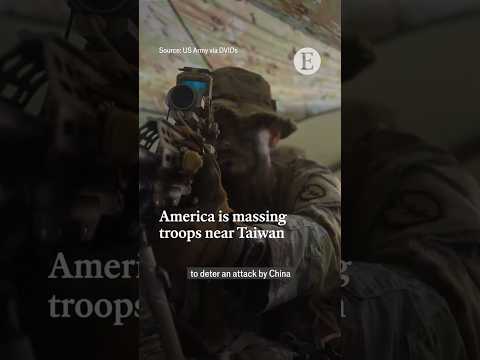
- Deploys troops to deter a Chinese invasion of Taiwan
- Conducts military exercises to showcase capabilities and readiness
- Views U.S. military presence as a direct threat
- Considers Taiwans status a critical issue in negotiations
- Japan and the Philippines are enhancing defense collaboration
- The U.S. is deploying over 10,000 troops to the Philippines for annual exercises, which also act as a deterrent against a potential Chinese invasion of Taiwan
- These military exercises are strategically timed during a calm weather period in the Taiwan Strait, indicating preparation for a possible Chinese attack
- The U.S. demonstrated its military capabilities by successfully launching a Tomahawk missile from a mobile platform during the drills, posing a threat to both the Taiwan Strait and the Chinese mainland
- Japan and the Philippines are enhancing their defense collaboration, acknowledging their vulnerabilities in a potential U.S.-China conflict, marking a notable shift since World War II
- Upcoming elections in the Philippines could alter the political landscape, with frontrunner Sarah de Torte viewed as more pro-China, potentially affecting U.S. military access in the region
- The exercises have expanded to include troops from Australia, Canada, New Zealand, and France, highlighting a broader coalition effort to deter regional aggression
details
The assumption that military exercises alone can deter a Chinese invasion overlooks the complex geopolitical dynamics at play. Inference: The effectiveness of these exercises as a deterrent is contingent on China's perception of U.S. resolve and the potential for miscalculation in a high-stakes environment. Missing variables include the internal political shifts in the Philippines and the broader implications of U.S.-China relations, which could undermine the intended deterrent effect.
This analysis is an original interpretation prepared by Art Argentum based on the transcript of the source video. The original video content remains the property of the respective YouTube channel. Art Argentum is not responsible for the accuracy or intent of the original material.