Key Issues in US-China Relations Ahead of the Trump-Xi Summit
Analysis of US-China relations, focusing on arms sales and trade, based on "What can Donald Trump get from Xi Jinping?" | The Economist.
OPEN SOURCEThe upcoming summit between Donald Trump and Xi Jinping is crucial for shaping US-China relations, particularly regarding Taiwan, trade, and AI safety. The discussions may reveal shifts in the US's stance on arms sales to Taiwan amidst rising tensions.
Trump's administration may show increased openness to AI safety discussions, especially in light of recent advancements, contrasting with China's focus on practical applications. China's concerns about AI regulation stem from fears that private companies could uncover insights that challenge the Communist Party's control over society and the economy.
The US's historical arms sales to Taiwan illustrate a complex dynamic, with accusations of the US violating commitments to limit sales, while justifying continued support due to China's military threats. There are signs that Trump might reconsider the US's firm position on arms sales to Taiwan, potentially leading to negotiations with Beijing and a shift in longstanding policy.
The summit will also address the sensitive issue of arms sales to Taiwan, with Xi urging caution. Trump's recent comments about negotiating arms sales have alarmed Taiwanese officials, as they contradict prior US commitments to keep such discussions private.
A proposed US-China trade board seeks to improve dialogue on trade matters, but its success hinges on high-level engagement, given past failures due to lower-level authority issues. Xi Jinping maintains strong political control, allowing him to manage domestic pressures, but he is wary of making concessions that could harm China's economy.
China's economic challenges, including overcapacity and low domestic consumption, significantly affect Xi's readiness to negotiate trade with the US.
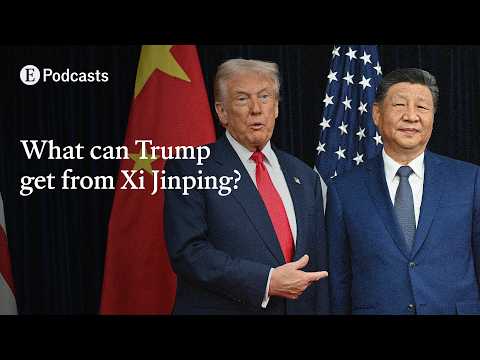
- Seeks to negotiate arms sales to Taiwan, potentially altering longstanding commitments
- Aims to establish a trade board to facilitate dialogue and manage trade relations
- Demands caution regarding arms sales to Taiwan, emphasizing the need for careful handling of the issue
- AI safety discussions highlight differing approaches between the US and China
- The upcoming Trump-Xi summit is pivotal for US-China relations, focusing on Taiwan, trade, and AI safety
- The Trump administration may show increased openness to AI safety discussions, especially in light of recent advancements, contrasting with Chinas focus on practical applications
- Chinas concerns about AI regulation stem from fears that private companies could uncover insights that challenge the Communist Partys control over society and the economy
- The USs historical arms sales to Taiwan illustrate a complex dynamic, with accusations of the US violating commitments to limit sales, while justifying continued support due to Chinas military threats
- There are signs that Trump might reconsider the USs firm position on arms sales to Taiwan, potentially leading to negotiations with Beijing and a shift in longstanding policy
- The upcoming summit between Donald Trump and Xi Jinping will focus on the sensitive issue of arms sales to Taiwan, with Xi urging caution
- Trumps recent comments about negotiating arms sales have alarmed Taiwanese officials, as they contradict prior U.S. commitments to keep such discussions private
- A proposed U.S.-China trade board seeks to improve dialogue on trade matters, but its success hinges on high-level engagement, given past failures due to lower-level authority issues
- Xi Jinping maintains strong political control, allowing him to manage domestic pressures, but he is wary of making concessions that could harm Chinas economy
- Chinas economic challenges, including overcapacity and low domestic consumption, significantly affect Xis readiness to negotiate trade with the U.S
details
details
The assumption that the Trump administration will significantly alter its approach to arms sales to Taiwan overlooks the complex interplay of domestic and international pressures. Inference: The potential for negotiations with Beijing may be constrained by the need to maintain a strong stance against perceived military threats from China. Missing variables include the influence of domestic political factions and the broader implications of AI safety discussions on national security.
This analysis is an original interpretation prepared by Art Argentum based on the transcript of the source video. The original video content remains the property of the respective YouTube channel. Art Argentum is not responsible for the accuracy or intent of the original material.