Gaza Flotilla Activism: Challenges and Humanitarian Efforts
Analysis of Gaza Flotilla activism, based on "Activist Dilek Tekocak from the Gaza Flotilla Reveals What Happened on the Sumud Flotilla" | Cnnturk.
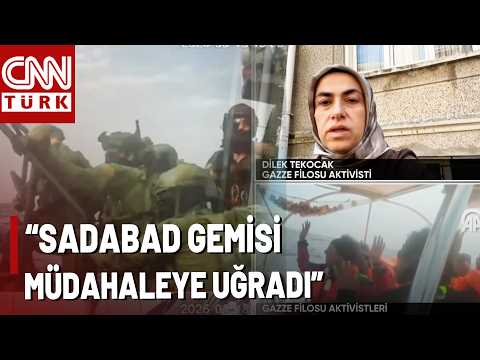
OPEN SOURCEDilek Tekocak, an activist from the Gaza flotilla, reported ongoing Israeli military interventions against their ships, which are part of a global humanitarian mission involving activists from over 40 countries. Despite Israeli propaganda portraying the flotilla as solely Turkish, it comprises hundreds of activists from diverse nationalities, aiming to break the blockade and provide humanitarian aid.
Recent incidents include the Sabavat ship being the first to face intervention, with reports of multiple ships being harassed by Israeli forces, although no casualties have been confirmed so far. Tekocak emphasized the importance of global awareness and support for the activists, stating that their safety relies on public attention and solidarity against what she described as Sionist terrorism.
The flotilla intends to continue its mission of delivering aid and breaking the blockade, maintaining a commitment to non-violence and humanitarian principles despite the threats they face. Activists highlighted that the flotilla's mission extends beyond humanitarian aid, seeking to raise global consciousness about the situation in Gaza.
Organizing the flotilla involves significant financial and logistical challenges, with costs for a single ship exceeding $100,000, reflecting the scale of commitment required. There is a strong call for increased media attention and public support to ensure the safety of activists, as their efforts are deemed essential in confronting Israeli policies.
Activists contend that the silence of global leaders and media on these issues exacerbates the ongoing crisis, urging a unified response to what they describe as state-sponsored terrorism.
- Highlight ongoing Israeli military interventions against the flotilla
- Emphasize the need for global awareness and support for their humanitarian mission
- Portray the flotilla as a Turkish initiative rather than a diverse coalition
- Claim that the flotilla does not carry essential humanitarian goods
- Acknowledge the logistical challenges faced by the flotilla
- Recognize the importance of media attention in ensuring activist safety
- Dilek Tekocak, an activist from the Gaza flotilla, reported ongoing Israeli military interventions against their ships, which are part of a global humanitarian mission involving activists from over 40 countries
- Despite Israeli propaganda portraying the flotilla as solely Turkish, it comprises hundreds of activists from diverse nationalities, aiming to break the blockade and provide humanitarian aid
- Recent incidents include the Sabavat ship being the first to face intervention, with reports of multiple ships being harassed by Israeli forces, although no casualties have been confirmed so far
- Tekocak emphasized the importance of global awareness and support for the activists, stating that their safety relies on public attention and solidarity against what she described as Sionist terrorism
- The flotilla intends to continue its mission of delivering aid and breaking the blockade, maintaining a commitment to non-violence and humanitarian principles despite the threats they face
- Dilek Tekocak, an activist from the Sumud flotilla, reported ongoing challenges as they strive to break the Israeli blockade, with participants from over 40 countries involved in their humanitarian mission
- Recent Israeli military interventions have disrupted communication with one of the flotillas ships, raising safety concerns for the activists on board, including those from Turkey
- Tekocak emphasized that, contrary to Israeli claims, the flotilla is a diverse coalition of activists committed to humanitarian efforts, not solely a Turkish initiative
- The flotillas cargo includes humanitarian aid and medical supplies, countering Israeli assertions that it does not carry essential goods, while addressing misinformation from Israeli authorities
- She called for global solidarity against what she termed Israeli terrorism, urging world leaders and citizens to support the flotillas mission to deliver aid to Gaza
- The recent flotilla aimed to challenge the psychological blockade imposed by Israel, emphasizing the importance of international awareness and action against perceived injustices
- Activists highlighted that the flotillas mission extends beyond humanitarian aid, seeking to raise global consciousness about the situation in Gaza
- Organizing the flotilla involves significant financial and logistical challenges, with costs for a single ship exceeding $100,000, reflecting the scale of commitment required
- There is a strong call for increased media attention and public support to ensure the safety of activists, as their efforts are deemed essential in confronting Israeli policies
- Activists contend that the silence of global leaders and media on these issues exacerbates the ongoing crisis, urging a unified response to what they describe as state-sponsored terrorism
The assumption that public awareness alone can ensure the safety of activists overlooks the complexities of geopolitical dynamics and the potential for misinformation. Inference: The reliance on global solidarity as a protective mechanism may be flawed, as it does not account for the varying levels of international response or the potential for escalation in military actions against the flotilla.
This analysis is an original interpretation prepared by Art Argentum based on the transcript of the source video. The original video content remains the property of the respective YouTube channel. Art Argentum is not responsible for the accuracy or intent of the original material.