Escalating Global Health Crises: Hantavirus and Ebola Outbreaks
Analysis of escalating global health crises, based on "Director of the World Health Organization: The outbreak of Hantavirus and Ebola represents the latest crises facing the world" | Al Jazeera.
OPEN SOURCEThe Director-General of the World Health Organization has raised alarms about increasing global health crises, particularly the recent outbreaks of Hantavirus and Ebola. These outbreaks are seen as significant threats to public health worldwide.
Ebola is currently spreading in the Democratic Republic of the Congo and Uganda, prompting concerns about its potential to spread regionally, as noted by African Union Chairperson Mahmoud Ali Yusuf. The situation necessitates urgent attention and action from health authorities.
The WHO has reported nearly fifty suspected cases and dozens of suspected deaths related to the Ebola outbreak, highlighting the urgent need for early clinical support for those affected. Effective response measures are critical to mitigate the impact of these outbreaks.
Ebola transmission requires direct contact with infected bodily fluids, distinguishing it from airborne viruses like COVID-19. However, the current strain is rare and poses significant risks, with no licensed vaccine or effective treatment available.
Weak infrastructure and instability in the affected regions hinder effective monitoring and response efforts. Health authorities are enhancing border screening and coordinating with neighboring countries to manage the situation.
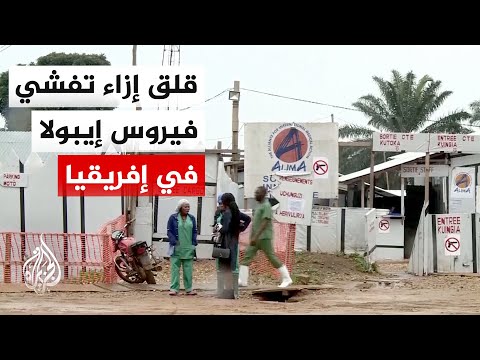
- Raises alarms about the outbreaks of Hantavirus and Ebola as significant global health crises
- Reports nearly fifty suspected cases and dozens of suspected deaths related to the Ebola outbreak
- Expresses deep concern regarding the outbreak of Ebola in the Democratic Republic of the Congo and Uganda
- Warns of the increasing risk of Ebolas regional spread within Africa
- Ebola transmission requires direct contact with infected bodily fluids
- Weak infrastructure in affected regions hinders effective monitoring and response efforts
- The Director-General of the World Health Organization, Tedros Adhanom Ghebreyesus, has raised alarms about increasing global health crises, particularly the recent outbreaks of Hantavirus and Ebola
- Ebola is currently spreading in the Democratic Republic of the Congo and Uganda, prompting concerns about its potential to spread regionally, as noted by African Union Chairperson Mahmoud Ali Yusuf
- The WHO has reported nearly fifty suspected cases and dozens of suspected deaths related to the Ebola outbreak, highlighting the urgent need for early clinical support for those affected
- Ebola transmission requires direct contact with infected bodily fluids, distinguishing it from airborne viruses like COVID-19; however, the current strain is rare and poses significant risks, with no licensed vaccine or effective treatment available
- Weak infrastructure and instability in the affected regions hinder effective monitoring and response efforts, leading health authorities to enhance border screening and coordinate with neighboring countries
The assertion that Ebola and Hantavirus represent the latest crises assumes a direct correlation between these outbreaks and global health infrastructure failures. Inference: This overlooks the role of socio-political factors and resource allocation in epidemic management, which could skew the perceived urgency of these health threats.
This analysis is an original interpretation prepared by Art Argentum based on the transcript of the source video. The original video content remains the property of the respective YouTube channel. Art Argentum is not responsible for the accuracy or intent of the original material.